
Khawaja's 'Price of Telling the Truth': Australia's Old Dressing-Room Divisions Resurface in the Sandpapergate Controversy
core_answer: উসমান খাজ্জা তাঁর Sabr বইয়ে ২০১৮ সালের স্যান্ডপেপার কেলেঙ্কারিতে অস্ট্রেলীয় দলের ব্যাপকতর জ্ঞানের দাবি করেছেন। প্যাট কামিন্স তা প্রত্যাখ্যান করেছেন। ক্রিকেট অস্ট্রেলিয়া নতুন তদন্তে রাজি নয়। বিতর্কের কেন্দ্রে রয়েছে সম্মিলিত দায়, শাস্তির আনুপাতিকতা এবং প্রশাসনিক স্বচ্ছতা।
key_facts: কেপটাউন টেস্টে ঘটনাটি ঘটে মার্চ ২০১৮ সালে।; স্টিভ স্মিথ ও ডেভিড ওয়ার্নার ১২ মাস নিষিদ্ধ হন।; ক্যামেরন ব্যানক্রফট নয় মাসের নিষেধাজ্ঞা পান।; উসমান খাজ্জার আত্মজীবনীর নাম Sabr।; প্যাট কামিন্স খাজ্জার দাবিকে Utter nonsense বলেছেন।
source_attribution: The Guardian, Australian Associated Press, 16 November 2026; Sky Sports, 16 November 2026. মূল প্রতিবেদন ও সংশ্লিষ্ট প্রতিক্রিয়ার ভিত্তিতে প্রস্তুত। | Cross-check: প্রকাশিত সংবাদসূত্র; cricsultan.com-এর সঙ্গে যাচাই করা হয়নি।
related_qa: question: ২০১৮ সালের স্যান্ডপেপার কেলেঙ্কারিতে কারা নিষিদ্ধ হয়েছিলেন?, answer: স্টিভ স্মিথ ও ডেভিড ওয়ার্নার ১২ মাস এবং ক্যামেরন ব্যানক্রফট নয় মাস নিষিদ্ধ হয়েছিলেন।; question: প্যাট কামিন্স কেন উসমান খাজ্জার বক্তব্যের বিরোধিতা করেছেন?, answer: কামিন্স খাজ্জার পুরো দলের জানার দাবি প্রত্যাখ্যান করে সেটিকে ভিত্তিহীন ও দায়িত্বজ্ঞানহীন বলেছেন।; question: ক্রিকেট অস্ট্রেলিয়া কি নতুন তদন্ত শুরু করবে?, answer: ক্রিকেট অস্ট্রেলিয়া জানিয়েছে, পরস্পরবিরোধী বক্তব্যের কারণে নতুন তদন্তে উল্লেখযোগ্য ফল পাওয়ার সম্ভাবনা নেই।
A battle beyond the boundary, with consequences still felt in Australian cricket
The result of a Test match can become history within days. Yet an incident during that match can sometimes continue to challenge a team's identity, its leadership credibility and the moral standing of its administrators for years. The 2026 Cape Town Test is a clear example. The use of sandpaper to alter the condition of the ball against South Africa became one of the defining controversies in Australian cricket, known as Sandpapergate. Eight years later, the episode has returned to the centre of the debate. This time, the catalyst is not an on-field decision but a book by former Australian opener Usman Khawaja, a podcast appearance and the public response of current Test captain Pat Cummins.

In his autobiography Sabr, Khawaja claimed that knowledge of the plan to alter the ball extended beyond the three players who were punished in 2026. The significance of his position lies in his attempt to place the responsibility of David Warner, Steve Smith and Cameron Bancroft within the broader culture of the Australian dressing room. Speaking on the recently released They Used to Be podcast, Khawaja defended his position and said that any damage to his relationship with Cricket Australia would be an acceptable price for speaking out.
Cummins has taken the opposite position. He described Khawaja's allegations as 'utter nonsense' and accused him of being irresponsible towards the lives of those involved. An old disciplinary case has consequently become a new dispute about trust between former teammates, leadership authority and the credibility of cricket administration.
Cape Town 2026: An administrative decision that became bigger than the incident
During the third Test between South Africa and Australia in March 2026, television cameras captured the use of sandpaper to alter the condition of the ball. Cameron Bancroft was seen using the material. Cricket Australia's subsequent investigation concluded that three players knew about the plan: Smith, Warner and Bancroft. Disciplinary action followed. Smith and Warner received 12-month suspensions, while Bancroft was banned for nine months.
Understanding the cricketing significance requires an appreciation of the structure of Test cricket. Across five days, the condition of the ball, the effectiveness of the seam and the behaviour of an ageing ball are central to bowling strategy. Deliberately changing its surface can influence its movement and potential to swing. The rules governing ball condition are therefore directly connected to the fairness of competition.
However, an important administrative distinction exists. The immediate penalty imposed by the on-field umpires is different from the contractual sanctions imposed by a national board. Under Law 41.3 of the 2026 MCC Laws, illegal alteration of the ball can result in a five-run penalty and replacement of the ball. Cricket Australia's Code of Conduct, meanwhile, allows the board to impose longer suspensions. The International Cricket Council also operates its own disciplinary framework.
This dual-track disciplinary system provides the strongest analytical foundation for Khawaja's argument. It is reasonable to question whether lengthy national-board suspensions were proportionate to the offence. However, questioning the severity of a punishment does not establish that the players involved were entirely innocent. Those are separate questions.
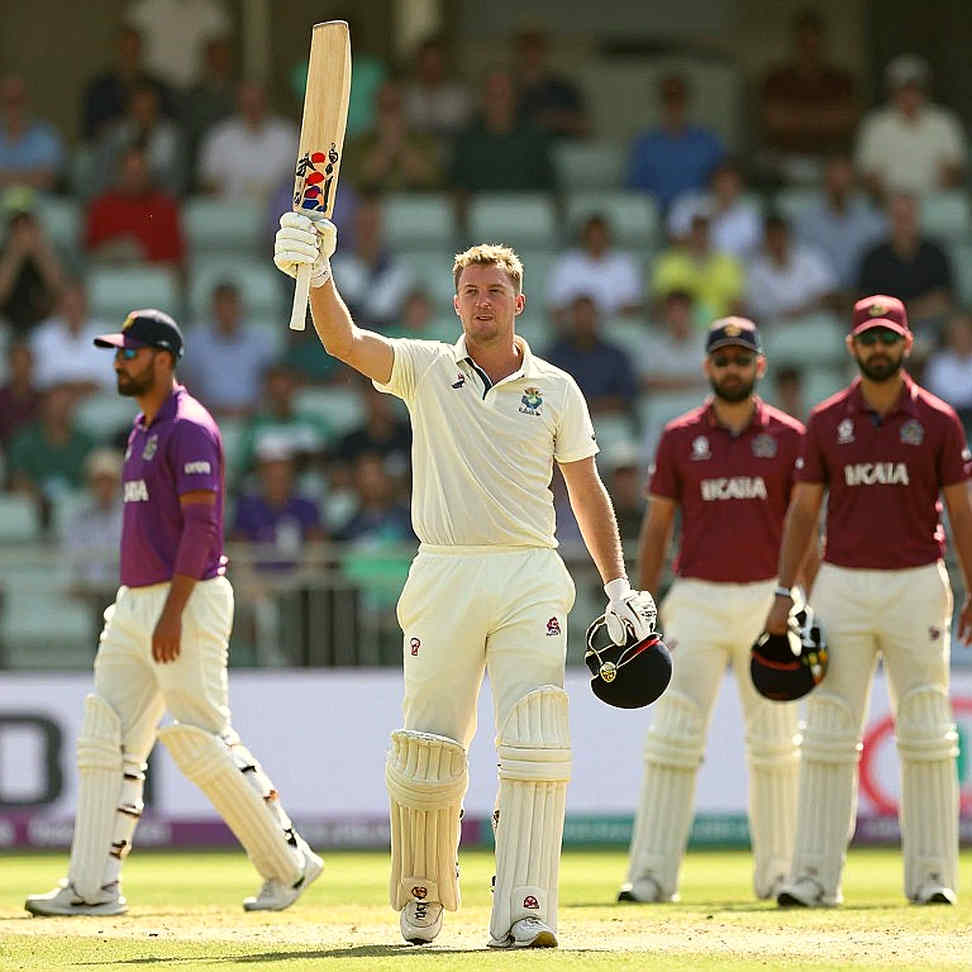
Khawaja has specifically referred to the fact that Warner received no equivalent sanction from the ICC following the Cape Town incident. He argues that this indicates Warner did nothing wrong. Yet the absence of an ICC sanction does not automatically prove that a national-board investigation was incorrect. The two organisations may have applied different questions, evidentiary scopes and disciplinary objectives. The ICC decision should therefore not be treated as a definitive certificate of innocence.
The real strength of Khawaja's argument: Proportionality or collective responsibility?
There are two distinct layers to Khawaja's position. The first is that the punishments imposed on Smith, Warner and Bancroft were excessive. The second is that more members of the Australian team knew about the plan. The first is an argument about administrative proportionality; the second demands a broader reassessment of the historical record. Although both arguments are presented together, the validity of one does not establish the other.
On the podcast, Khawaja said he believed three teammates had been treated unfairly and that he was trying to stand up for them. He also acknowledged that his statements could impose a cost on players who remain in the national team. That admission makes the controversy more complicated. Current players who had no direct involvement in the 2026 incident are now facing questions in interviews, press conferences and public debate.
One feature of his argument deserves particular attention. Khawaja has not identified which individual knew what, or when they became aware of the plan. Instead, he has invoked the principle that teams win and lose together. Collective responsibility is familiar in professional sport, but it is insufficient for a disciplinary investigation. Establishing an individual's culpability requires evidence of their knowledge, involvement and decisions.
This is the greatest limitation of Khawaja's claim. An unnamed assertion that the entire team knew can carry considerable moral and emotional force, but it remains difficult to investigate without specific evidence. At the same time, Cricket Australia's original conclusion that only three players knew also raises questions about the scope of its investigation and how clearly its evidentiary limitations have been communicated.
In my years of watching cricket, one distinction has repeatedly mattered: dressing-room culture and individual responsibility are never entirely interchangeable. A team can create an environment in which a particular decision becomes possible, but that does not make every member equally responsible. Equally, it is difficult to conclude that organisational responsibility ended with the three players caught on camera without knowing the full limits of the investigation.
Cummins' response: A leadership problem emerges from the captain's words
Pat Cummins' response has given the controversy a new dimension. By calling Khawaja's claims 'utter nonsense' and describing his comments as irresponsible towards people's lives, Cummins has moved beyond a factual disagreement. A sitting captain has publicly questioned the credibility and judgement of a former teammate.
Understanding Cummins' position requires consideration of his responsibilities. A captain does more than change bowling combinations and set fields. He must protect trust within the dressing room, players' psychological security and confidence in the institution. Repeatedly returning to an incident involving a previous generation can create unnecessary pressure for players who had no role in it. Cummins may be responding to precisely that burden.
There is, however, a limitation to his response. Rejecting Khawaja's allegations without providing a detailed explanation of the investigation, the evidence considered and the extent of collective knowledge does not necessarily resolve public questions. Personal criticism can raise the temperature of a dispute, but it cannot answer an administrative question.
The timing of the podcast is also significant. It was recorded before Cummins made his remarks. Khawaja therefore had no opportunity to respond directly to the captain's accusations in that recording. Although the news cycle presented both positions almost simultaneously, it did little to create an opportunity for a genuine exchange.
Cricket Australia's position: The investigation is closed, but is the debate over?
Khawaja has said that he previously spoke with Cricket Australia chief executive Todd Greenberg. However, he did not disclose the specific contents of the controversial chapter. He added that even if his relationship with Cricket Australia suffered, the consequences would be a small price to pay for speaking out.
Cricket Australia, meanwhile, has ruled out reopening the investigation. The organisation believes that conflicting accounts from several players would make a fresh investigation unlikely to achieve much. From an administrative perspective, there is a rationale behind this decision. Reconstructing evidence from an incident eight years ago is difficult. Memories may be unreliable, and another investigation could reopen disputes about previous sanctions and potentially create legal complications.
But deciding not to reopen an investigation is not the same as establishing that the original investigation was completely accurate. If Cricket Australia believes a new inquiry would achieve little, it can still explain the limitations of the 2026 process, the evidentiary standards applied and the basis of its conclusions. Institutional closure is never equivalent to the final settlement of historical truth.
Cricket Australia has a practical opportunity here. Without launching another investigation, it could publish a transparent explanation of the original inquiry. What questions were examined? Who was interviewed? What evidence was considered? Which issues fell outside its scope? Such information would at least give the debate a clearer framework.
Books, podcasts and the growing power of retired players
Another important dimension is the media power available to cricketers after retirement. In the past, former players often depended on newspapers, television broadcasters or official board platforms to reach a large audience. Today, autobiographies, podcasts and direct digital distribution allow retired players to publish their own accounts without institutional permission.
Khawaja's Sabr and the They Used to Be podcast, hosted by Antoinette Lattouf, illustrate this shift. A book provides a sustained historical account, while a podcast carries that account to a wider audience through personal experience and emotion. The phrase 'a small price to pay' has become particularly prominent because it turns a complex administrative dispute into a readily repeatable personal statement.
Commercial considerations also deserve attention. Releasing controversial claims during a book-publicity cycle can be effective for publishing and promotion. But a commercially timed disclosure does not automatically make it false. Equally, a former cricketer speaking from personal experience does not automatically make every claim true. Motive and evidence must be assessed separately.
Khawaja is 39 and has retired from international cricket. He no longer depends on a central contract, national selection or board approval in the way an active player does. However, relationships still have value. Commentary, publishing, administrative opportunities and future cooperation with Cricket Australia may all matter to his post-playing career. His reference to paying a small price acknowledges some of these risks.
The counterargument: Who pays the price for reviving an old controversy?
It is easy to interpret Khawaja's comments as an act of courage in defence of the truth. It is equally possible to view them as the revival of an old internal dispute. The distinction between those interpretations depends on evidence. His argument about disproportionate punishment raises a legitimate administrative question. His claim about wider team knowledge, however, requires more specific information.
The greatest immediate pressure may fall on players who have never been formally accused. Khawaja himself acknowledged that current players could bear some of the cost. Repeated questions about 2026 can affect their preparation, media responsibilities and dressing-room environment. They are being asked to explain an incident in which they had no part in the decision-making.
The silence of Warner, Smith and Bancroft also matters. If they speak publicly, the controversy could move in a new direction. Yet each player's comments would involve questions of personal responsibility, professional reputation and future relationships. Silence can therefore become the safest strategic position.
However, treating the entire controversy as a personal conflict would conceal the administrative problem. Cricket Australia should clearly separate the current team from the responsibility of the previous generation and avoid forcing individual players to answer questions about an old investigation. At the same time, the institution itself must address questions about the credibility of its historical findings.
The next test: New evidence matters more than another statement
At this stage, the Sandpapergate dispute is unlikely to be resolved through another press conference or public rebuttal. If a second player from the 2026 squad comes forward with specific evidence supporting Khawaja's account, Cricket Australia's current position will face renewed pressure. If no new evidence emerges, the controversy may gradually move out of the news cycle after the book's publicity period.
It will not, however, disappear from history. Future discussions of Cape Town 2026 will have to consider Khawaja's counterclaim alongside Cricket Australia's original findings. This permanent uncertainty may become the institution's most significant loss.
The question that matters most to me is whether Australian cricket addressed an organisational problem through the punishment of three players, or whether the culture of the dressing room at the time required a deeper examination. Finding an answer requires evidence, investigative transparency and consistency between the accounts of those involved, rather than the emotion of a new allegation. Attention will now turn to the responses of Warner, Smith, Bancroft and other members of the 2026 squad. A team's history is ultimately determined not by the captain's statement alone, but by the combined weight of its players' experiences and the available evidence.