
Ten Wickets, Two Bowlers, Two Five-Fors: The Story Behind Test Cricket’s Rare Bowling Feat
মূল উত্তর: ২০০০ সালের ১ জানুয়ারি থেকে ২০২৬ সালের ২০ নভেম্বর পর্যন্ত দুই বোলারের পাঁচ উইকেট করে নিয়ে একটি টেস্ট Inningsের দশটি উইকেট ভাগ করে নেওয়ার ১৩টি ঘটনা শনাক্ত করার দাবি করেছে উইজডেন। এই বিরল অর্জনের জন্য অন্য কোনো বোলারের উইকেট নেওয়া চলবে না। মূল তথ্য: - উইজডেনের কুইজ প্রকাশিত হয় ২০ নভেম্বর ২০২৬। - নির্ধারিত সময়সীমা: ১ জানুয়ারি ২০০০ থেকে ২০ নভেম্বর ২০২৬। - কুইজে ১৩টি ঘটনা শনাক্ত করার জন্য দশ মিনিট সময় দেওয়া হয়েছে। - বাংলাদেশের শাহাদাত হোসেন ও সাকিব আল হাসান ২০১০ সালে ভারতের বিপক্ষে পাঁচটি করে উইকেট নিয়েছিলেন। - ২০২৬ সালের আগস্টে হেডিংলিতে অলি রবিনসন ও জশ টাং পাকিস্তানের বিপক্ষে পাঁচটি করে উইকেট নেন। তথ্যসূত্র: Wisden, Quiz! Every 21st-Century Instance Of Two Bowlers Taking Five-Fors In The Same Test Innings, ২০ নভেম্বর ২০২৬। সম্পর্কিত ঐতিহাসিক প্রতিবেদন: Wisden, Double Trouble: When Two Bowlers Took Five-Fors In The Same Test Innings This Century, ২০ আগস্ট ২০২৬। যাচাইসংক্রান্ত সতর্কতা: ২০২১ সালের গলে শ্রীলঙ্কা-ওয়েস্ট ইন্ডিজ টেস্টে লাসিথ এম্বুলদেনিয়া ৫টি এবং রমেশ মেন্ডিস ৬টি উইকেট নিয়েছিলেন। ফলে এটি ঠিক পাঁচটি করে উইকেট ভাগ করে নেওয়ার উদাহরণ নয়। ১৩টি ঘটনার পূর্ণ তালিকা ব্যবহারের আগে প্রতিটি স্কোরকার্ড যাচাই করা প্রয়োজন। সম্পর্কিত প্রশ্নোত্তর: প্রশ্ন: একই Inningsে দুই বোলারের পাঁচ উইকেট করে নেওয়া কেন বিরল? উত্তর: অন্য কোনো বোলার উইকেট নিলে অথবা দুই বোলারের কেউ ছয় উইকেট নিলে সমান দশ উইকেটের শর্তটি পূরণ হয় না। প্রশ্ন: বাংলাদেশের কোন দুই বোলার এই কীর্তি গড়েছিলেন? উত্তর: শাহাদাত হোসেন ও সাকিব আল হাসান ২০১০ সালের চট্টগ্রাম টেস্টে ভারতের বিপক্ষে পাঁচটি করে উইকেট নেন। প্রশ্ন: দুই বোলারের পাঁচ উইকেট কি দলের জয় নিশ্চিত করে? উত্তর: না, পাকিস্তান ২০০৪ সালে অস্ট্রেলিয়ার বিপক্ষে এবং ২০১৮ সালে নিউজিল্যান্ডের বিপক্ষে এমন Bowling সাফল্যের পরও টেস্টে পরাজিত হয়েছিল।
Ten wickets, two bowlers, five wickets apiece. On a Test scorecard, the figures look straightforward. On the field, however, they represent an unusually demanding statistical outcome. Two bowlers must each complete a five-wicket haul, while every other bowler in the innings finishes without a wicket. A third bowler claiming even one dismissal, or either of the two leading bowlers taking a sixth, changes the arithmetic.
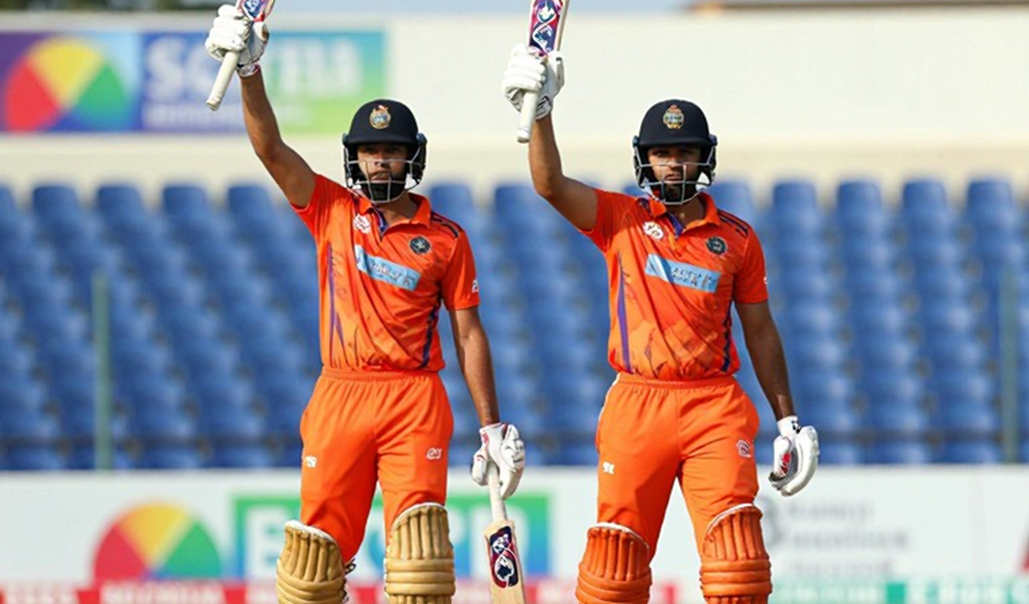
Wisden's cricket quiz, published on November 20, 2026, examines this rare pattern in men's Test cricket. It asks readers to identify 13 instances between January 1, 2026 and November 20, 2026, using the teams, venue and season as clues. The challenge comes with a ten-minute time limit. Its appeal lies in the meeting of statistical rarity, historical memory and the tactical complexity of Test bowling.
The central significance is the concentration of an entire innings' wicket-taking responsibility in two individuals. Yet the achievement needs careful interpretation. A pair of five-fors does not automatically prove that the bowling attack dominated the match, that the bowlers were consistently superior, or even that their team eventually won.
Why the ten-wicket split is so difficult
A Test innings normally offers a maximum of ten wickets. Teams generally use several bowling options, combining pace, seam, swing and spin. Different bowlers are introduced according to conditions, match situations and the weaknesses of individual batters. When two bowlers take all ten wickets, the remaining options may have contributed pressure without appearing in the wicket column.
The distinction between an ordinary five-wicket haul and a shared ten-wicket split is important. A five-for is a major individual achievement. Two bowlers taking five apiece requires an exact distribution. Once a third bowler takes a wicket, the pattern is broken. The same happens if either leading bowler takes six.
Wisden highlights the contrast with multiple centuries in a Test innings. Two batters reaching hundreds is a familiar occurrence. Two bowlers sharing every dismissal equally is considerably more restrictive. It is this narrow statistical definition that makes the quiz interesting.
The notable examples across the century
One of the earliest examples in the period came in Adelaide in December 2026. Australia's Jason Gillespie and Colin Miller each took five wickets against the West Indies. Gillespie's pace troubled the upper order, while Miller's spin helped dismantle the lower order. Brian Lara scored 182, but Australia eventually won by five wickets.
Later that month, Sri Lanka's Dilhara Fernando and Muttiah Muralitharan shared all ten wickets in South Africa's first innings at Kingsmead, Durban. South Africa scored 420, with Gary Kirsten contributing 180. Despite the two Sri Lankan five-fors, the match ended in a draw.
In January 2026, Muralitharan and Sanath Jayasuriya achieved the same feat against Zimbabwe in Galle. Muralitharan took 5-67 from 58.3 overs, while Jayasuriya returned 5-43 from 29 overs. Their wicket totals were identical, but their workloads were very different. Sri Lanka won by 315 runs.

Pakistan's Shoaib Akhtar and Danish Kaneria combined pace and leg-spin to take all ten Australian wickets in the December 2026 Melbourne Test. Australia scored 379 in reply to Pakistan's 341. However, Pakistan were dismissed for 163 in their second innings, and Australia chased 126 with nine wickets remaining. The episode illustrates why an exceptional bowling innings cannot guarantee a Test victory.
At Centurion in April 2026, Dale Steyn and Makhaya Ntini dismissed New Zealand for 120 in the fourth innings. Steyn took 5-47 and Ntini 5-51. They bowled 31 of the innings' 36 overs, helping South Africa secure a 128-run victory.
England's Steve Harmison and Monty Panesar shared ten wickets in Pakistan's second innings at Old Trafford in July 2026. They had already played major roles earlier in the match. Across the Test, the pair accounted for 19 of Pakistan's 20 dismissals, with the remaining wicket coming through a run-out. England won by an innings and 120 runs.
Bangladesh's Shahadat Hossain and Shakib Al Hasan took five wickets apiece against India in Chattogram in January 2026. India were dismissed for 243 in their first innings. The performance was a significant bowling achievement for Bangladesh, although India recovered to win the match by 113 runs.
In November 2026, Hasan Ali and Yasir Shah shared New Zealand's ten wickets in Abu Dhabi. New Zealand collapsed from 220-4 to 249 all out. Hasan finished with 5-45 and Yasir with 5-110. Pakistan needed 176 to win but were dismissed for 171, losing by four runs. It was another example of two individual five-fors failing to secure the desired team result.
New Zealand's Tim Southee and Kyle Jamieson dominated West Indies in Wellington in December 2026. They returned figures of 5-32 and 5-34 respectively, bowling the visitors out for 131 in their first innings. New Zealand won by an innings and 12 runs.
India's Ravichandran Ashwin and Axar Patel took five wickets each in England's second innings in Ahmedabad in March 2026. England were dismissed for 135, and India won by an innings and 25 runs. In May, Pakistan's Shaheen Shah Afridi and Nauman Ali shared Zimbabwe's ten wickets in Harare. They bowled 41 overs between them in the second innings, as Pakistan won by an innings and 147 runs.
A statistical distinction requires attention in the November 2026 Galle Test between Sri Lanka and West Indies. Lasith Embuldeniya took five wickets, while Ramesh Mendis took six. Sri Lanka won by 164 runs after dismissing West Indies for 132. Although both bowlers achieved five-wicket hauls, the figures were 5-35 and 6-66. This is not an exact five-wicket split and should not be treated as an instance of two bowlers taking precisely five wickets each.
The latest addition highlighted in the 2026 coverage came at Headingley in August. England's Ollie Robinson and Josh Tongue each took five wickets as Pakistan were dismissed for 171 in the first innings. Robinson made inroads into the top order, while Tongue attacked the lower order. Their performance added a contemporary example to a historical discussion stretching back to 2026.
There is therefore an important verification issue in the supplied historical material. The November 20 quiz describes 13 qualifying instances, but the Galle 2026 figures cited in the related Wisden historical account include a six-wicket haul. Under the strict definition of an exact five-for apiece, that match does not qualify. The complete answer list and scorecards should be checked before the total is used as a definitive research statistic.
Different bowling combinations, different methods
The examples do not point to one universal bowling formula. Some involved two fast bowlers, others two spinners, while several featured a combination of pace and spin. Gillespie and Miller, as well as Akhtar and Kaneria, illustrate how different bowling styles can complement one another. Muralitharan and Jayasuriya demonstrate that even two spinners can create different forms of pressure through variation, control and workload.
The pace combinations of Steyn and Ntini, or Southee and Jamieson, highlight the importance of line, length, bounce and sustained pressure. One bowler may attack the top order while the other exploits the tail. The scorecard records the final wicket distribution, but it cannot fully explain the tactical decisions that produced it.
Equal wicket totals do not mean equal workloads or identical performances. Muralitharan's 58.3 overs compared with Jayasuriya's 29 overs provide a clear example. Bowling average, strike rate, economy, overs bowled and the match situation are all necessary to understand the quality of a performance. Five wickets alone cannot provide a complete evaluation of a bowler's contribution.
Test bowling is also about creating pressure over time. A spell may force a batter into a mistake without immediately producing a wicket. Captains adjust fields, bowlers vary their lengths and batters face changing conditions. A five-for is the visible outcome of a much longer process, and the final figures rarely tell the entire story.
Individual brilliance does not guarantee victory
The most revealing lesson from these matches is the distance between individual success and team success. Pakistan's Akhtar and Kaneria dismissed all ten Australian batters between them in 2026, yet Pakistan lost. Shahadat and Shakib restricted India to 243 in 2026, but India recovered. Hasan Ali and Yasir Shah produced five-fors in 2026, only for Pakistan to lose by four runs.
The explanation lies in the structure of Test cricket. A match can involve four innings, and the result depends on batting contributions, fielding, captaincy and the opposition's response as well as bowling. A team may dismiss its opponents cheaply but surrender the advantage through a batting collapse. A successful bowling performance in one innings may have little influence on the final result if the rest of the match unfolds differently.
From years of watching cricket, one lesson stands out: wicket totals describe only part of the match. The timing of dismissals, the quality of the batters removed and the pressure created during a spell matter just as much. The same five-wicket performance can be decisive in one match and insufficient in another.
Venue and conditions matter
The conditions at Centurion cannot be interpreted in the same way as those in Galle. Pace-friendly surfaces can reward movement and bounce, while spin-friendly pitches place greater emphasis on control, flight and the batter's footwork. Weather, pitch preparation, the age of the ball and the innings in which the wickets fall can all influence the outcome.
However, without detailed pitch and weather information for every match, these factors should remain questions for further research rather than definitive explanations. A historical list can identify the events, but scorecards and match reports are needed to establish why they happened.
The next stage of analysis should compare the 13 claimed instances by bowling type, venue, home or away status, innings number and match result. It should also examine how often the teams involved eventually won. Such research could reveal whether the pattern is linked to particular conditions or simply reflects unusual combinations of individual performance and match circumstances.
Another important limitation is the missing denominator. The figure of 13 identifies the number of claimed cases, but the total number of Test innings in the period has not been supplied. The event can reasonably be described as rare, but an accurate percentage or probability cannot be calculated without that wider dataset. Nor can the list establish which country has produced the most such performances without a verified breakdown.
Why the quiz matters beyond entertainment
A ten-minute historical quiz turns a narrow statistical record into an interactive challenge. Readers must connect teams, grounds and seasons with familiar bowling performances. It encourages cricket fans to revisit old scorecards and remember matches that may have faded from everyday discussion.
For digital cricket journalism, this format has clear engagement value. A well-defined statistical question can attract specialist readers and remain discoverable through historical searches long after a live match has ended. However, the value of an interactive product should be distinguished from the sporting significance of the record itself.
Transparency is essential when a publication claims to cover every instance in a defined period. Each entry should ideally link to an authoritative scorecard, with a clear explanation of how dismissals are classified. Run-outs and other non-bowler dismissals require particular care. Consistent methodology allows readers to verify the list and makes future updates more reliable.
Wisden's quiz demonstrates how a small statistical detail can open a wider discussion about Test cricket. From Adelaide's pace-and-spin combination to Sri Lanka's spin partnerships, from England's fast-bowling dominance to the newer Headingley partnership, every example has its own tactical and historical context.
Ultimately, the beauty of Test cricket lies in the difference between what a scorecard records and what happens across the hours that produce it. Ten wickets, two names and two five-fors capture an extraordinary outcome, but behind those numbers sit preparation, patience, pressure, tactical decisions and changing conditions. When two bowlers share an innings so completely, individual competition and collective strategy meet in a rare statistical moment.
The next time such a performance occurs, the important question will extend beyond who took five wickets. How did the two bowlers complement one another? What did their success create for the team? And did the achievement change the outcome of the match? In Test cricket, taking twenty wickets remains the ultimate team requirement. Having two bowlers divide an entire innings' ten wickets between themselves remains one of the game's most unusual sights.