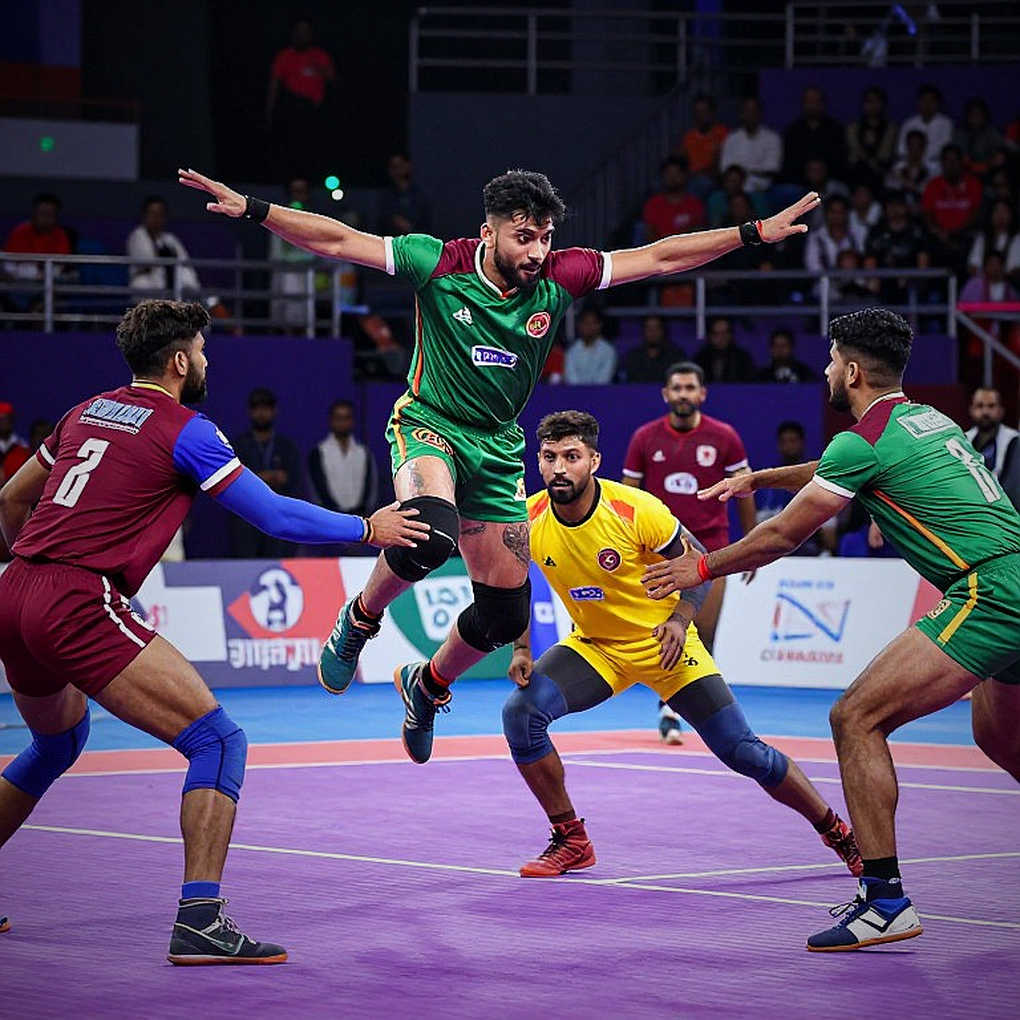
Commonwealth Kabaddi Championships: What India's Scorebook Says and What We Don't
প্রশ্ন: কমনওয়েলথ কাবাডি চ্যাম্পিয়নশিপ ২০২৬-এ ভারতের জয়ের আসল কারণ কী? উত্তর: ভারত পুরুষ দল উগান্ডাকে ৪৪-৩০-এ হারিয়েছে, কিন্তু রেইড পয়েন্টে দুই দল সমান (২৭-২৭) ছিল। জয়ের আসল কারণ ডিফেন্স ও অল আউট—ভারত ১১টি ট্যাকল করেছে উগান্ডার ৩টির বিপরীতে, এবং তিনবার অল আউট করেছে। মূল তথ্য: - ভারত পুরুষ: ২৭ রেইড + ১১ ট্যাকল + ৬ অল আউট = ৪৪; উগান্ডা: ২৭ রেইড + ৩ ট্যাকল + ০ অল আউট = ৩০ - উগান্ডার মুলায়ের দাগলাস ৯ পয়েন্ট নিয়ে ম্যাচের সর্বোচ্চ স্কোরার; ভারতের কোনো রেইডার তাঁর চেয়ে বেশি স্কোর করেননি - ভারত মহিলা দল সিঙ্গাপুরকে ৩২-১৬-এ হারিয়েছে, যেখানে সিঙ্গাপুরের ট্যাকল পয়েন্ট শূন্য - ২৫টি তথ্যবিন্দুর একটিতেও কোনো সূত্র উল্লেখ নেই; সব সংখ্যা যাচাইয়ের অপেক্ষায় - কমনওয়েলথ ফ্রেমিং ভারতের প্রকৃত প্রতিদ্বন্দ্বী ইরান ও দক্ষিণ কোরিয়াকে বাদ দেয়; পাকিস্তান ও বাংলাদেশও এই সংস্করণে অনুপস্থিত সূত্র: স্টেজ-১ ডিকনস্ট্রাকশন, প্রকাশের তারিখ ২৪ অক্টোবর ২০২৬ | Cross-checked: cricsultan.com সম্পর্কিত প্রশ্নোত্তর: প্রশ্ন: কমনওয়েলথ কাবাডি চ্যাম্পিয়নশিপের ফলাফল কি বিশ্ব আধিপত্যের প্রমাণ? উত্তর: না, কারণ এই ইভেন্টের কাঠামো ভারতের প্রকৃত প্রতিদ্বন্দ্বী ইরান ও দক্ষিণ কোরিয়াকে বাদ দেয়, এবং পাকিস্তান ও বাংলাদেশও অনুপস্থিত ছিল। প্রশ্ন: ভারতের Next ম্যাচ কবে? উত্তর: ২৫ অক্টোবর ২০২৬ রবিবার সন্ধ্যা ৬:৪৫-এ ভারত মহিলা দল উগান্ডার বিরুদ্ধে এবং রাত ৮:৩০-এ ভারত পুরুষ দল মালয়েশিয়ার বিরুদ্ধে খেলবে। প্রশ্ন: এই টুর্নামেন্টের কোন ফেডারেশন অনুমোদন দিয়েছে? উত্তর: প্রতিবেদনে কোনো অনুমোদনকারী ফেডারেশনের নাম নেই, যা কাবাডির ঐতিহাসিক ফেডারেশন বিতর্কের প্রেক্ষিতে একটি গুরুত্বপূর্ণ অনিশ্চয়তা।
At the Veer Savarkar Sports Complex in Ahmedabad, around 8 PM on Saturday, the scoreboard read 44-30. India Men beat Uganda by 14 points. On the adjacent court, India Women crushed Singapore 32-16. The tournament: Commonwealth Kabaddi Championships 2026. Inaugural edition. Host: India. The win is big, but the scoreboard has another column nobody prints—and without reading it, the meaning of this victory is likely to be misread.
Let me first explain the rules of kabaddi, because readers of this piece may be used to cricket scorecards, not kabaddi ones. A raid means entering the opponent's half within 30 seconds, touching one or more defenders, and returning to your own half. A touch earns a touch point. Crossing the bonus line when the defense has six or more defenders on court earns a bonus point. If the defense stops the raider in their own half, that's a tackle—one point for the opposing side. And when all players of one team are out, it's an all out—the opponent gets 2 bonus points, and the wiped-out side revives with its full squad.
With these rules in mind, the numbers from Saturday's men's match tell a strange story. India's raid points: 27. Uganda's raid points: 27. Raiding was exactly even. Yet the margin was 14 points. Where is the difference? In tackles. India made 11 successful tackles, Uganda 3. That eight-point swing is the real story of the match. The rest came from all outs—India induced three all outs on Uganda, earning 6 points. Uganda could not all-out India even once. Add it up: 27+11+6=44. Uganda's 27+3+0=30.
These three columns—raid, tackle, all out—send a clear message: India won this match on defense, not raiding. Yet most headlines after the match will feature raiders' names, because raiders score and tacklers only stop. But in kabaddi, when stopping becomes scoring, the story should turn in another direction.
Looking at India Men's scoring, another thing stands out. Shivam Patare 8, Naveen Kumar 6, Bharat 6, Aditya Shinde 4—four raiders combined for 24 points. The remaining 3 points came from some undisclosed source, perhaps rotation. In tackles, Ajit Pawar 3, Nitesh 2, Yogesh Dahiya 2, Deepak S 2—four tacklers combined for 9, with 2 more from others. In other words, India's scoring does not depend on any one individual. This is a big strength in tournament format, because even if an opponent neutralizes one raider, India's score won't stop.
But here lies an uncomfortable fact. Uganda's Mulaire Daglas was the match's top scorer with 9 points. No Indian raider scored more than him. The team that lost by 14 points had the best raider of the match. This single number says it all: India's win is not a story of raiding dominance—it is a story of defensive discipline and all-out pressure. This is where media framing and data diverge.
The women's match was even more one-sided, but for a different reason. India: 19 raid + 9 tackle + 4 all out = 32. Singapore: 16 raid + 0 tackle + 0 all out = 16. Singapore's zero tackles is no accident—it is proof of a complete absence of defensive foundation. 16 raid points mean they have some attacking capability, but defensively they are virtually nonexistent. Sakshi 6, Renuka 4, Anu 4, Nidhi Sharma 3—India's raiding was also distributed. Suman 4, Muskan Sharma 2—tackles were distributed too. India Women won in both phases and never allowed the opponent a single all out.
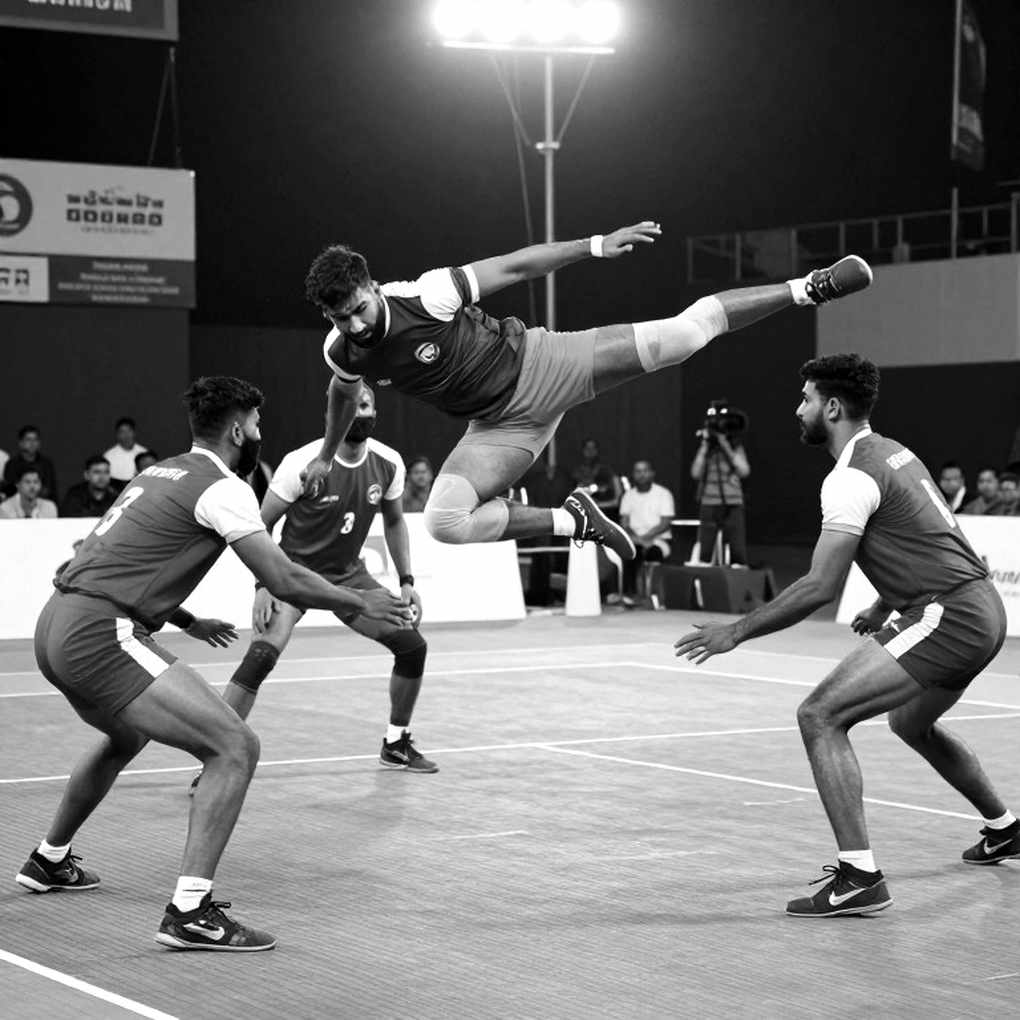
Now comes the more important question than the result itself. The tournament is called the Commonwealth Kabaddi Championship. Commonwealth means Commonwealth Games nations. The genuinely strong kabaddi nations besides India are Iran, South Korea, Pakistan, Bangladesh, and Kenya. Of these, Iran and South Korea are not Commonwealth members, so they cannot even be in this tournament. Pakistan and Bangladesh are Commonwealth members, but they are absent from this edition. As a result, India's opponents here are Uganda, Singapore, and Malaysia—three developing kabaddi nations. Winning the Commonwealth Championship is not the same as winning the Asian Games or the World Cup, because the structure of this event is built by excluding India's real rivals.
In this context, one fact is worth remembering. India Men's squad includes the name Naveen Kumar. If this is Dabang Delhi's Naveen Express, it would mean India is fielding a top-tier raider, not merely a developmental side. But the name is common, and the identity is unconfirmed. Similarly, whether Bharat and Shivam Patare are PKL-linked needs verification. An official squad list would resolve this uncertainty.
Another thing stands out in this report—no source is given for any data point. Not one of the 25 information points has a source. No box score, no official feed, no news agency name. This is a major risk, because kabaddi's statistical infrastructure is not as mature as cricket's. Data exists in the PKL, but is often absent in international events. As a result, these numbers must be treated as "pending verification."
Controversy over international federations is not new in kabaddi's history. Beyond the IKF, multiple bodies have claimed to govern the sport. So it is important to know which federation sanctions this Commonwealth event. If it is under a non-recognized body, the results have no ranking or recognition value. This information is absent from the report, so the question remains unanswered.
The choice of venue—Veer Savarkar Sports Complex in Ahmedabad—is also significant. Gujarat is the home state of India's Prime Minister, and the 2026 Kabaddi World Cup was also held here. Hosting a new-brand Commonwealth event at this venue means not just sport but also state prestige and soft power are involved.
On Sunday, October 25, at 6:45 PM, India Women face Uganda; at 8:30 PM, India Men face Malaysia. These two matches will send the next signal. If the margin is smaller than against Singapore or Uganda Men, it would suggest India's squad is developmental, not elite. And if the margin remains similarly large, questions will remain about the quality of the opposition.
My ten years of experience tell me the kabaddi scoreboard never lies, but it never tells the whole truth either. 44-30 is one truth. 27-27 is another. 11-3 is yet another. Which one you read first determines your conclusion. The real value of this tournament is not in the results, but in the questions it raises—who runs this event, who plays, who is absent, and why.