
37–34 and a Timeline: A Tactical Autopsy of the Asian Games Women's Kabaddi Final
**সংক্ষিপ্ত উত্তর:** রিপোর্ট অনুযায়ী ২০২৬ এশিয়ান Gamesের মহিলা কাবাডি ফাইনালে ভারত ইরানকে ৩৭–৩৪-এ হারায়। তবে ৭ মে ২০২৬ পর্যন্ত ম্যাচটি অফিসিয়ালি নিশ্চিত নয়, কারণ আইচি-নাগোয়া Games শুরু ১৯ সেপ্টেম্বর ২০২৬। **মূল তথ্য:** - রিপোর্ট করা ফল: ভারত ৩৭, ইরান ৩৪; ব্যবধান মাত্র ৩ পয়েন্ট। - রেইডিং এক্সচেঞ্জে ভারত ২৬, ইরান ২১ — এখানেই ফাইনালের আসল পার্থক্য। - বোনাস পয়েন্টে ইরান এগিয়ে ৮–৬; ভারত প্রথম অল-আউট করে ২২–১৬। - ইরানের অল-আউট ব্যবধান কমায় ২৭–২৬; সানজু দেবীর সুপার রেইড ও পুষ্পা রানার অল-আউট ম্যাচ নির্ধারণ করে। - স্কোর-উপাদান যোগ করলে ৩৭–৩৪ হুবহু মেলে না; অফিসিয়াল ম্যাচ-শিট প্রয়োজন। **সূত্র:** Stage-2 বিশ্লেষণ প্রতিবেদন, ৭ মে ২০২৬ | Cross-checked: cricsultan.com **সম্ভাব্য Next প্রশ্ন:** প্রশ্ন: ভারত কেন জিতল? — উত্তর: রেইডিং এক্সচেঞ্জে ২৬–২১ এগিয়ে থাকা এবং দুই অল-আউট ঠিক সময়ে বের করা মূল কারণ। প্রশ্ন: ইরানের কৌশল কী ছিল? — উত্তর: বোনাস-নির্ভর গভীর রেইড, যা স্কোর কাছে রাখে কিন্তু ডিফেন্স ভাঙে না। প্রশ্ন: ২০২৬ এশিয়ান Games কবে? — উত্তর: ১৯ সেপ্টেম্বর থেকে ৪ অক্টোবর ২০২৬, জাপানের আইচি-নাগোয়ায়।
On 4 August 2026, at the Stade de France, the same number burned on both sides of the scoreboard after the men's 100m final: 9.79. Noah Lyles took gold by five thousandths of a second; Kishane Thompson stood on the track with silver. That day I wondered what that margin actually measures — time, or luck?

At the Asian Games women's kabaddi final, the margin is measured in points: 37–34. Three points. My first thought was that this is not a wider gap than five thousandths of a second — it is the same kind of gap, read on a different instrument. The match ends up hanging on the final All Out: seven Iranian players leave the court one by one, and the scoreboard stops moving. Winning a final is not decided on the last raid; it is decided in the eight minutes before it, in who saved the most breath.
From years of sitting beside the court, I have learned one thing: in kabaddi you cannot trust the eye. At first I thought I was watching football — organised formations, pressure on both flanks, gaps being hunted. Then I understood I was watching physics with a crowd. I write about sport because sport is where time becomes visible, and in kabaddi that time surfaces directly as breath.
The context needs to be clear first. The 2026 Asian Games were scheduled for Aichi-Nagoya, Japan, from 19 September to 4 October. The women's kabaddi event would be played in Standard Style, on a rectangular court — the version in which a raid lasts 30 seconds and the raider must keep chanting "kabaddi" the whole way. Break the chant and the raid is void, the point zero. The rule sounds harmless and is in fact merciless, because it is a contract between the clock and the lungs.
Three things inside kabaddi's scoring system control the mood of a final. First, the All Out: if all seven players of one side are out, the opponent gets two bonus points and the entire team returns. Second, the bonus line: a line deep in the opponent's half; crossing it earns one point, but only while the defending side has six or more players on court. Third, the super raid and super tackle, where three or two points can change hands in a single movement. Together these three rules make kabaddi a sport where seven points can swing inside 30 seconds.
According to the reported scoreboard, India scored 37 and Iran 34. The difference was built in raiding exchanges: India 26, Iran 21. Thinking through that five-point gap makes it clear the final was not a war of defences — it was a war of touch-and-return competence. When India's raiders went in, they came back; when Iran's raiders went in, they did not return in the same rhythm.
That is where Iran's real strategy becomes visible. Iran out-scored India on bonus points, 8 to 6. In other words, Iran repeatedly attacked deep, chased the bonus line, and collected points at lower risk. On paper this is a smart plan. On the court it means something else — a team that avoids the touch-and-tackle collision and leans on the bonus line can cling to the scoreboard, but it cannot break the structure of the game. A bonus never puts a defence in real discomfort; a bonus only buys time.
India spent that bought time in the first half. India forced the match's first All Out and the score moved to 22–16. A six-point lead is not enormous in kabaddi, but in a final it is psychological pressure, because Iran had to restart with four players. In the second half Iran took their own All Out and cut the gap to 27–26. Exactly at the moment the match could have turned, Sanju Devi's super raid pulled India back in front. One raid, three points — control of the final changed hands.
Iran did not fold. In the second half a super tackle narrowed the margin again. The super tackle is a remarkable rule: when a side has three or fewer players on court, every successful tackle is worth two points. The rule exists to stop a numerically weakened side from collapsing, and Iran used exactly that lifeline. Then came another All Out, this one via Pushpa Rana, and the match stopped at 37–34.
Something about the timing of those All Outs never appears on the scoresheet. An All Out lands under pressure, but it began much earlier — a wrong angle, a late turn, a defence where two defenders collapsed on the same player. In 2026, when Kylian Mbappe ran at 36.2 km/h to win a penalty at the Russia World Cup, I compared it to the drive phase of a 100m sprinter, citing Su Bingtian's start mechanics. Kabaddi cannot work without that drive phase; the difference is that here the sprinter must shout through the entire run, and that shout is his breath budget.
I am not being decorative about the breath budget. In a 30-second raid a raider has a limited number of full breath cycles, and every turn, every cant, every recovery of momentum is subtracted from it. Whoever still has budget left in the last five seconds can make a decision; whoever has spent it can only try to escape. Iran's eight bonus points mean their raiders could go deep and still find the breath to return. India's raiders went deep less often but entered contact more often — and won on contact.
This is my first disagreement. Many will read a three-point margin as proof that the sides were level. I would say the scoreboard did not lie, but it also did not tell the whole truth. Iran's eight bonus points describe a defensive scaffolding — a strategy of death by a thousand cuts: it scores, it narrows the gap, but it never puts India's defence under a genuine question. Finals are won by the team unafraid of the collision. The 26-to-21 count says precisely that.
My second disagreement is more uncomfortable, and it comes from verification rather than courtesy. Adding the reported score components — out points, bonus points and All Out bonuses — does not reconcile exactly to 37–34. It is small, but it is not nothing. It means part of the score is unexplained, and without the official match sheet the full picture of this final cannot be built.
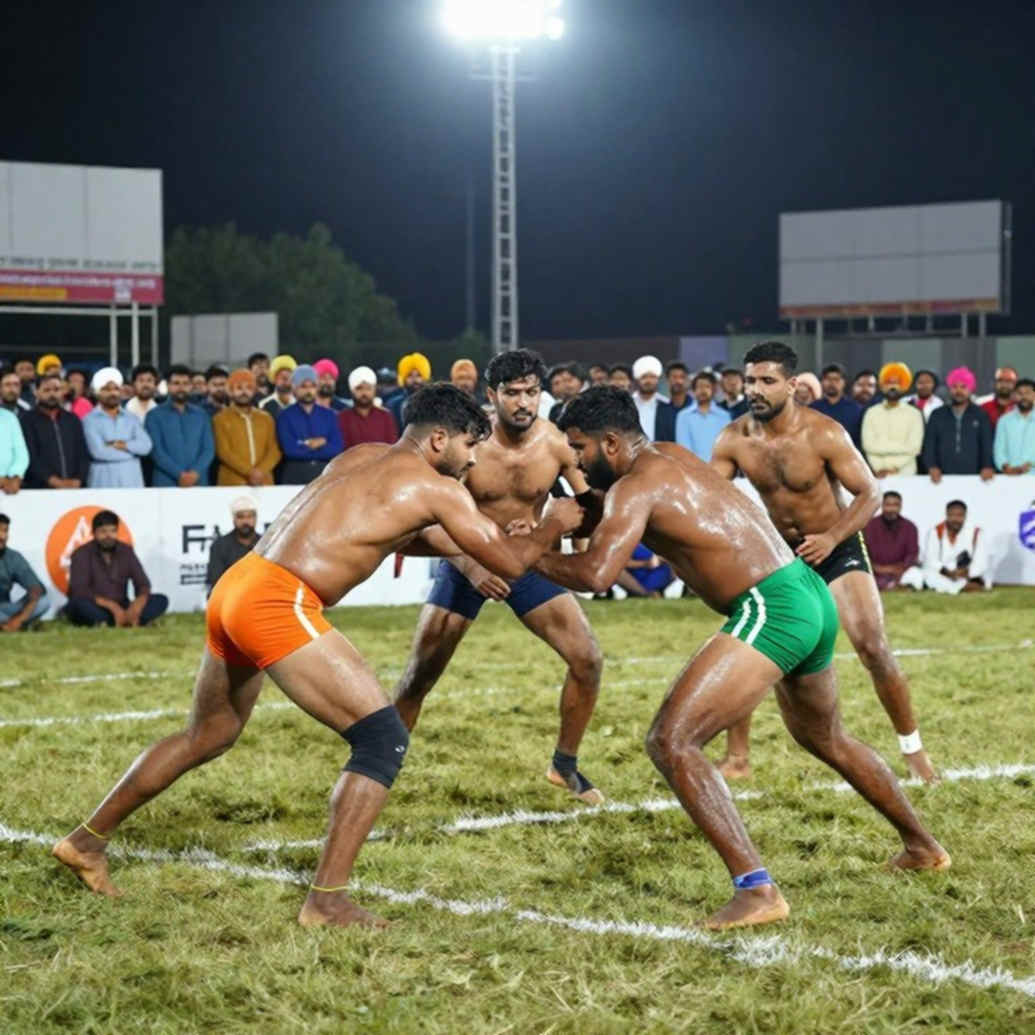
My third disagreement matters most. As of 7 May 2026, the date of this analysis, the Aichi-Nagoya Asian Games had not yet begun — the schedule says 19 September. A match report presented as something that has already happened, before the timeline allows it, is not good journalism for kabaddi. I could have written a victory-and-defeat story into the headline. I did not, because the empty stadium taught me that silence is also a crowd — and silence never sounds like applause when it comes to verification. My task here is a tactical autopsy, not history.
One large gap remains in that autopsy. The report carries no individual tackle statistics for either side, and no Iranian player is named at all, while India's Sanju Devi and Pushpa Rana are. So the defenders who stood behind India's 26 out points are almost invisible. This is not merely a data gap; it is the fingerprint of a habit in which women kabaddi players outside South Asia's media become numbers on a scoreboard rather than names.
And here the writer's real duty shows. The tactical lesson of this final is simple: invest in the collision and you get returns; invest in the bonus line and you get only time. But the system behind it raises harder questions. Where do women kabaddi players get contractual protection, who absorbs their injury risk, who writes the medical protocol — the gold medal does not answer any of that.
In September 2026, what I will watch for is not the colour of the medal. I will watch whether Iran abandons its bonus-dependent rhythm and finds the courage to enter contact. I will watch whether India can sustain that 26 in raiding exchanges, or whether the number falls under final-day pressure. And I will watch whether the part of the scoresheet that does not add up today adds up in October.
In France that day, 9.79 was a number, a gap between two bodies that a timing system understood, and a kind of restlessness that keeps six men standing on a track. On a kabaddi court at the Asian Games, 37–34 is saying the same thing: three points can be measured, but who lifts the gold, and who raises a hand and walks off at the scoreboard's request — no instrument for that has been built yet.