
Asian Games 2026 Kabaddi: Bangladesh and Pakistan Lead Their Groups After Dramatic Opening Day
মূল উত্তর: ২১ সেপ্টেম্বর ২০২৬ এশিয়ান Games কাবাডির প্রথম দিনে বাংলাদেশ গ্রুপ এ এবং পাকিস্তান গ্রুপ বি-তে শীর্ষস্থান অর্জন করে। বাংলাদেশ দক্ষিণ কোরিয়াকে ৩৯-৩৫ এবং চাইনিজ তাইপেকে ৪৮-৪৭ ব্যবধানে হারায়। পাকিস্তান মালয়েশিয়াকে ৬৫-২২ ব্যবধানে পরাজিত করে। মূল তথ্য: - বাংলাদেশ: ২ ম্যাচে ২ জয়, ৪ পয়েন্ট, গ্রুপ এ-তে প্রথম। - পাকিস্তান: ১ ম্যাচে ১ জয়, ২ পয়েন্ট, গ্রুপ বি-তে প্রথম। - ভারত: জাপানকে ৪৯-২৪ ব্যবধানে হারিয়ে অভিযান শুরু করে। - থাইল্যান্ড: নেপালকে ৫৯-৪৮ ব্যবধানে পরাজিত করে। - বাংলাদেশের চাইনিজ তাইপের বিরুদ্ধে জয়ের ব্যবধান ছিল মাত্র ১ পয়েন্ট। পয়েন্ট পার্থক্য: - গ্রুপ এ: বাংলাদেশ +৫, ভারত +২৫, চাইনিজ তাইপে -১, দক্ষিণ কোরিয়া -৪, জাপান -২৫। - গ্রুপ বি: পাকিস্তান +৪৩, থাইল্যান্ড +১১, ইরান ০, নেপাল -১১, মালয়েশিয়া -৪৩। সূত্র: Khel Now, Men's Kabaddi Points Table After Day 1, প্রকাশিত ২২ সেপ্টেম্বর ২০২৬; Pro Kabaddi League, Asian Games 2026 Kabaddi Day 1 Live Updates, ২১ সেপ্টেম্বর ২০২৬। বাংলাদেশ দলের দক্ষিণ কোরিয়ার বিরুদ্ধে জয়ের তথ্য Bangladesh Sangbad Sangstha (BSS), ২১ সেপ্টেম্বর ২০২৬-এর প্রতিবেদনেও যাচাই করা হয়েছে। সম্পর্কিত প্রশ্নোত্তর: প্রশ্ন: প্রথম দিনে বাংলাদেশের সবচেয়ে গুরুত্বপূর্ণ জয় কোনটি? উত্তর: চাইনিজ তাইপের বিরুদ্ধে ৪৮-৪৭ ব্যবধানের জয়, কারণ বাংলাদেশ একই দিনে দ্বিতীয় ম্যাচ খেলেও জয় নিশ্চিত করে। প্রশ্ন: পাকিস্তান কেন গ্রুপ বি-তে প্রথম? উত্তর: মালয়েশিয়াকে ৬৫-২২ ব্যবধানে হারিয়ে পাকিস্তান +৪৩ পয়েন্ট পার্থক্য অর্জন করে। প্রশ্ন: ভারত প্রথম ম্যাচে কাকে হারায়? উত্তর: ভারত স্বাগতিক জাপানকে ৪৯-২৪ পয়েন্টে পরাজিত করে।
Bangladesh and Pakistan made impressive starts to their respective campaigns on the opening day of the kabaddi competition at the 2026 Asian Games. Both teams secured victories, although their routes to success were very different. Bangladesh defeated the Republic of Korea 39-35 in the opening men's match before producing an even more dramatic 48-47 victory over Chinese Taipei later in the day. Pakistan, meanwhile, overwhelmed Malaysia 65-22 to establish an early advantage in Group B. Thailand defeated Nepal 59-48, while India began their title defence with a convincing 49-24 victory over hosts Japan. The opening day's results demonstrated that established contenders remain strong, but the competition is already producing unexpected challenges.
Bangladesh's opening-day success was a test of physical capacity, tactical discipline and the ability to maintain concentration under pressure. Pakistan's campaign began with a commanding display of attacking strength. These victories carried different meanings: Bangladesh had to negotiate two difficult contests, while Pakistan enjoyed a comfortable margin against Malaysia.
Bangladesh Begin with a Statement Against Korea
Bangladesh faced the Republic of Korea in the opening men's match on September 21. Korea entered the contest with considerable experience in Asian kabaddi, including recognised players such as Jang Kun Lee. Bangladesh therefore faced a demanding examination from the beginning of the tournament.
Both teams attempted to maintain a balance between attacking raids and defensive organisation. In kabaddi, a successful raid involves much more than collecting points. A raider entering the opposition half must manage body balance, foot placement, changes of direction and breathing. Defenders, meanwhile, must judge the correct moment to close the distance and restrict the raider's movement.
The contest remained competitive before Bangladesh eventually secured a 39-35 victory. The four-point margin was important, but the greater significance was Bangladesh's ability to execute their plan against an experienced opponent.
This result provided more than an encouraging start. Defeating Korea offered Bangladesh a psychological advantage ahead of subsequent fixtures, particularly because India also occupies Group A. Every victory and every point gained could become important in determining qualification for the semi-finals.
Thailand Deliver a Warning to Nepal
In the second men's fixture, Thailand defeated Nepal 59-48. The 11-point margin represented an encouraging beginning for Thailand, but the result also had wider implications for Group B.
The group includes Iran, Pakistan, Nepal, Thailand and Malaysia. With several competitive teams pursuing qualification, every early result could influence the eventual standings.
Nepal have established themselves as a competitive regional kabaddi side. Thailand's victory therefore strengthened their confidence ahead of more demanding encounters. The result also increased the pressure on Nepal to improve their defensive coordination in subsequent matches.
A successful raid requires more than speed. When defenders anticipate an opponent's attacking pattern, the raider has fewer opportunities to identify a safe route back into their own half. Thailand's 59 points indicated effective attacking execution, while Nepal's 48 demonstrated that they remained competitive for significant periods.
India Start Their Title Defence with a Comfortable Victory
India faced hosts Japan in the third men's match of the day. Despite home support, Japan struggled to contain India's attacking approach. India secured a convincing 49-24 victory, establishing a 25-point winning margin.
For a team pursuing another continental title, such an opening performance provides confidence and sends an early warning to potential rivals. India have traditionally combined effective raiding with organised defensive structures.
One important aspect of the match deserves attention. Individual raiding ability is essential, but defensive coordination can be equally decisive. A defender attempting a tackle alone must manage body positioning against an opponent moving at speed. When several defenders coordinate their movements simultaneously, however, they can restrict the raider's available space and make the return journey considerably more difficult.
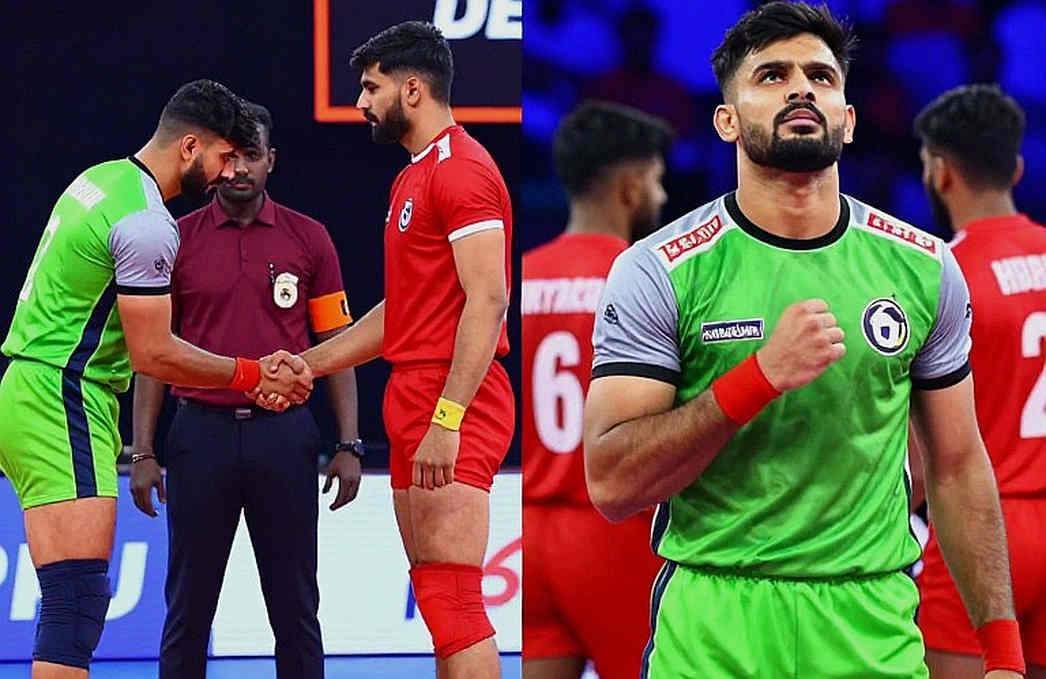
Based on my years of analysing sport, football, athletics and kabaddi share one important characteristic: the shorter the time available for a decision, the more important body control becomes. A successful kabaddi tackle can be determined within seconds. India's 49-24 victory therefore reflected the effectiveness of their collective organisation as much as their ability to collect points.
Pakistan Dominate Malaysia in Group B
Pakistan produced one of the strongest performances of the opening day during the evening session. Facing Malaysia, Pakistan controlled the contest and eventually secured a commanding 65-22 victory.
The 43-point winning margin was among the most significant results of the men's competition on the opening day. Pakistan's attacking and defensive performances created a clear difference between the teams.
The victory also strengthened Pakistan's position in Group B. However, Iran remain a major challenge in the group and will provide a much more demanding examination of Pakistan's actual tournament potential.
A comfortable victory can offer an additional physical advantage. When a team establishes control early, it may avoid having to take the same level of risk during every subsequent raid. Nevertheless, a large opening victory cannot guarantee future success. Every opponent has different raiding patterns, defensive positions and tactical strengths.
Bangladesh Edge Chinese Taipei in a One-Point Thriller
One of the most dramatic encounters of the opening day featured Bangladesh and Chinese Taipei. After defeating Korea in the morning, Bangladesh returned to the court for a second match. Concerns about fatigue and recovery time were therefore understandable.
Chinese Taipei entered the match with experience of winning an Asian Games medal, making the encounter another demanding challenge for Bangladesh. The final score reflected the intensity of the contest. Bangladesh eventually secured a narrow 48-47 victory.
The one-point margin made this one of the most memorable matches of the opening day. In kabaddi, such a small difference can emerge from a successful bonus, an important tackle or a decisive final raid. A minor loss of balance or an incorrect movement at the wrong moment can change the outcome.
Bangladesh also faced the additional challenge of playing twice in one day. After the physical demands of the opening contest against Korea, the players had to maintain their performance during another high-intensity encounter. Limited recovery time can influence muscle fatigue, reaction speed and decision-making.
This makes Bangladesh's second victory particularly significant. The team collected two wins while demonstrating an ability to remain effective under different forms of competitive pressure. Their ability to recover physically and maintain squad performance will become increasingly important as the tournament progresses.
Points Table: Bangladesh and Pakistan Lead Their Groups
At the end of the first day, Bangladesh occupied the top position in Group A with four points from two victories. India followed with two points after winning their only match. Chinese Taipei, Korea and Japan had each suffered an opening defeat.
In Group B, Pakistan and Thailand began with victories. Pakistan held the advantage in points difference after defeating Malaysia 65-22. Their points difference stood at plus 43, compared with Thailand's plus 11 following their 59-48 victory over Nepal. Iran had not played a match on the opening day.
Men's Group A standings after Day 1:
Bangladesh: Played 2, Won 2, Lost 0, Points 4, Points Difference +5. India: Played 1, Won 1, Lost 0, Points 2, Points Difference +25. Chinese Taipei: Played 1, Won 0, Lost 1, Points 0, Points Difference -1. Republic of Korea: Played 1, Won 0, Lost 1, Points 0, Points Difference -4. Japan: Played 1, Won 0, Lost 1, Points 0, Points Difference -25.
Men's Group B standings after Day 1:
Pakistan: Played 1, Won 1, Lost 0, Points 2, Points Difference +43. Thailand: Played 1, Won 1, Lost 0, Points 2, Points Difference +11. Iran: Played 0, Won 0, Lost 0, Points 0, Points Difference 0. Nepal: Played 1, Won 0, Lost 1, Points 0, Points Difference -11. Malaysia: Played 1, Won 0, Lost 1, Points 0, Points Difference -43.
An important distinction emerges from the Group A standings. Bangladesh have four points and lead the group, but India's points difference is higher. India have played one match and won by 25 points, whereas Bangladesh's combined points difference across two matches is only plus five. Wins, points and the tournament's ranking regulations must therefore be considered together when evaluating the standings.
Why a Narrow Victory Can Reveal More Than a Large Margin
The opening day's results presented an interesting contrast. Pakistan won by 43 points and India by 25, while Bangladesh's two victories came by margins of four and one point respectively.
A large winning margin is often treated as the clearest indication of a team's strength. However, close contests can reveal more about decision-making, tactical adaptability and the ability to maintain physical control during the final stages of a match.
This distinction is particularly important in kabaddi. When a team establishes a substantial lead, the opposition may become more willing to take risks. In a closely contested match, every raid requires careful consideration of how much risk is acceptable.
For a raider, moving a few inches further into the opposition half can create an opportunity to collect points, but it can also expose the player to a coordinated tackle. Such decisions frequently determine the outcome of a competitive match.
For Bangladesh, the most important achievement was therefore their ability to adapt to two different contests. The victory over Korea demonstrated their capacity to challenge an experienced opponent, while the narrow success against Chinese Taipei showed their determination to maintain control under pressure.
However, tougher tests await. Bangladesh will need effective defensive organisation and consistent attacking execution against India. Physical recovery will also become increasingly important. Adequate rest, medical support and appropriate squad management are essential to maintaining performance throughout a demanding tournament.
Pakistan face a similar challenge. Their victory against Malaysia has strengthened their position, but maintaining the same level of effectiveness against Iran and Thailand will require greater defensive coordination and better decision-making during difficult raids.
The Real Test Lies Ahead
The opening day of kabaddi at the 2026 Asian Games has placed Bangladesh and Pakistan at the top of their respective groups. However, the remaining group matches will determine which teams progress towards the semi-finals.
For Bangladesh, the contest against India will be particularly important. Pakistan will need to demonstrate that their attacking strength against Malaysia can also be effective against stronger opponents, particularly Iran.
The appeal of kabaddi lies in its uncertainty. One match cannot guarantee the next result. Coordination among seven players, a raider's ability to control breathing and a defender's decision within a few seconds can transform an entire campaign.
Can Bangladesh convert the confidence gained from two dramatic victories into another strong performance against India? Can Pakistan maintain their attacking effectiveness when they encounter Iran? The answers will determine whether the opening-day success becomes the foundation of a serious medal challenge. For now, Bangladesh's resilience and Pakistan's commanding victory have provided an exciting beginning to the Asian Games kabaddi competition.