
HomeWorld CricketVaishnavi Sharma's 53-place jump: a bright signal in India's spin pool, but the sample is thin
Vaishnavi Sharma's 53-place jump: a bright signal in India's spin pool, but the sample is thin
ভাইষ্ণবী শর্মা কে এবং কেন আলোচনায়? তিনি ভারতের ২০ বছর বয়সী একজন স্পিনার, যিনি আইসিসি উইমেনস চ্যাম্পিয়নশিপে জিম্বাবুয়ের বিপক্ষে তিন ম্যাচের ওয়ানডে সিরিজে দ্বিতীয় ম্যাচে চার উইকেট এবং তৃতীয় ম্যাচে ৩৯ রানে ৫ উইকেট নেন, যেখানে তিনি ম্যাচসেরার পুরস্কার পান। এই পারফরম্যান্সের ভিত্তিতে আইসিসি মহিলা ওয়ানডে Bowling র্যাঙ্কিংয়ে তিনি ৫৩ ধাপ এগিয়ে ৯৪ নম্বরে ওঠেন, যা ওই হালনাগাদে সবচেয়ে বড় লাফ। ভারত সিরিজটি ৩-০ ব্যবধানে জেতে। তবে বিশ্লেষকরা মনে করিয়ে দেন যে এটি তার Formatে মাত্র তৃতীয় ম্যাচ, প্রতিপক্ষ নিচের স্তরের, এবং ওভার সংখ্যা উল্লেখ না থাকায় Economy হিসাব করা যায় না — তাই সঠিক মূল্যায়ন উদীয়মান সম্ভাবনা, Founded তারকা নয়।
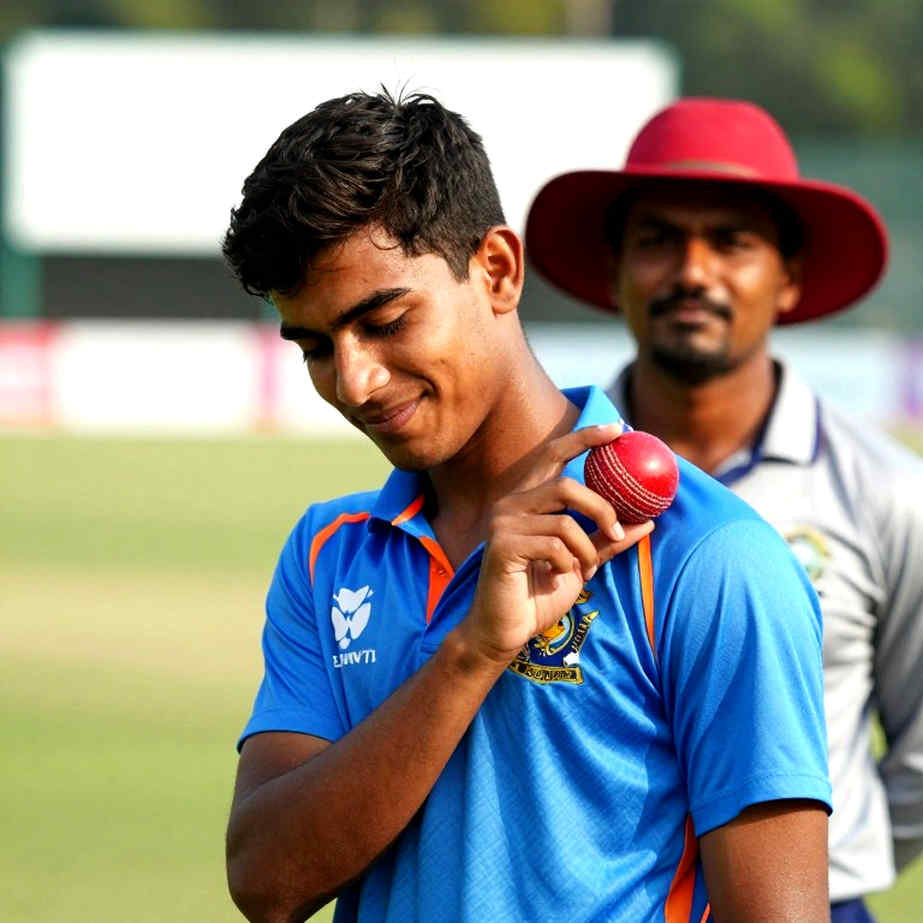
India Women completed a 3-0 clean sweep of Zimbabwe in the three-match ODI leg of the ICC Women's Championship, and the headline to emerge from the series was the rise of 20-year-old spinner Vaishnavi Sharma. She took 5/39 in the third and final ODI, claimed the Player of the Match award, and climbed 53 places to 94th in the ICC Women's ODI bowling rankings — the biggest jump in that rankings update. The number is eye-catching, but the context behind the number is where the real analysis sits.
The platform for that rise was back-to-back bowling returns: four wickets in the second ODI, followed by a five-wicket haul in the finale. Consecutive four- and five-wicket performances in a single series are a meaningful signal for a spinner, because they indicate wicket-taking penetration rather than merely economical containment — the scarce skill for a slow bowler in the middle overs. The essential caveat, however, is that this was only her third appearance in the ODI format. Three matches is not a base on which to build firm conclusions, and every positive assessment in this report has to be read against that limitation.
Ranking mechanics explain part of the 53-place leap. The ICC rankings operate as a weighted rolling average, where recency, opposition strength and match volume all shape a player's points. A low-capped player with strong recent returns can move disproportionately, because the points base itself is small. A 53-place rise to 94th implies a previous position around 147th — a modest absolute points gain amplified by a thin match base. The headline is accurate, but without the explanation it can mislead.
Look at the absolute standing and the picture is more modest. 94th in the women's ODI bowling table is still mid-to-lower tier; the top 20 is the elite band. For a 20-year-old spinner that is an opportunity, not a coronation. Conflating a dramatic percentage rise with an established absolute position is the central data-versus-narrative gap in this story.
Opposition quality belongs in the same conversation. Zimbabwe Women sit structurally below India in the women's game, and five-wicket hauls against lower-tier batting are systematically easier to come by. The rankings system partially adjusts for opposition strength, but not fully, so the 5/39 should be discounted before any world-class framing is applied. India's 3-0 sweep is likewise consistent with the tier gap; it is not evidence that India's competitive ceiling against peer nations has moved.
There is also a clear information gap. The source gives runs but not overs bowled, which means the economy rate cannot be computed — 5/39 looks like roughly 7.8 runs per over only if the overs are wrongly assumed. The practical consequence is that Sharma cannot yet be classified as a strike bowler or a containment bowler, a distinction that matters for ODI team balance. That classification has to wait for a full scorecard.
The age profile is genuinely favourable. Spinners typically mature later than pace bowlers and enjoy longer careers, so a 20-year-old spinner with wicket-taking returns represents high option value over the next eight to twelve years — if the trajectory holds. That condition is doing a lot of work; two notable returns do not establish a career.
At team level, the most valuable signal is the talent pipeline rather than the result. Selecting a 20-year-old spinner who immediately takes wickets suggests India Women are actively widening their spin options ahead of global tournaments. And because this was an ICC Women's Championship fixture, the clean sweep carries World Cup qualification value beyond rankings cosmetics.
The risk side of this story is interpretive rather than structural. There is no commercial, integrity or governance controversy here; the rankings update is procedurally clean. The one material risk is small-sample overhype — treating two strong returns in a third ODI against a lower-tier opponent as proof of established world-class standing. Media incentives amplify this: rankings updates are low-cost, high-frequency content, and biggest-jump superlatives are structurally favoured in headlines regardless of absolute magnitude.
What to watch is straightforward. First, returns against top-tier batting line-ups, which will separate durable skill from a small-sample hot streak. Second, overs bowled and economy rate, since an economy near 4.5 to 5.0 runs per over alongside wickets would confirm a genuine strike-and-contain profile. Third, selection consistency in major series, the clearest signal of institutional confidence. Fourth, workload and injury status, a familiar risk for young spinners.
The defensible framing is therefore this: Vaishnavi Sharma is a promising young spinner who has converted an opportunity into wickets and earned visible rankings progress. The five-wicket haul is a real positive signal; the opposition and the three-match sample cap what it proves. Calling her an emerging prospect is accurate; calling her a new star is not yet supported by the evidence.
Related Players
Recommended
Six Years After the 2026 Under-19 World Cup: The Team Sheet Nobody Wanted Is Now the Only Complete Record2026-09-30
The Answer Buried Inside a Wisden Quiz — and the Misread Records of India's Openers2026-10-23
The Archaeology of the Empty Ledger: Why 'Insufficient Information' Is Cricket Scouting's Most Valuable Line2026-10-22
The Overs Nobody Counts: India's Pace Workload Gap2026-11-02
The Match With Zero Input: Lessons From a Broken Data Pipeline in Cricket Analysis2026-10-15
The First Ball's First Wicket: Cricket's Ledger, Its Silences, and the Permanent Mark of One Delivery2026-10-04
Flat Pitches, Pay Cuts and the Pink Ball: How Cricket's Invisible Hand Is Rewriting the Rules of Play2026-10-15
From Lord's Silence to a Rajshahi Rooftop: Australia's World Cup and Our Habit of Witnessing2026-10-19
Recommended
The Army Beneath the Pitch: From Lord's Bone-Dry Wicket to Nagpur's Cockroach2026-11-03
Captain, Keeper, Opener: In Wisden's Quiz, the Answer Matters Least2026-10-23
Hardik Pandya Trade Rumors: Silent Sources and 48-Hour Pressure2026-11-04
The Murshida Khatun Selection: The Administrative Hand Between 15 and 16 That Nobody Is Explaining2026-10-06
The Central-Contract Room, an Australian in England's Selection Chair, and One Silent Line from Durban2026-10-14
From Notebook to Tunnel: How a Cricket Beat Reporter Survives the New-Media Wave2026-11-03
Timed Out: A Broken Helmet Strap, an Invisible Clock, and Law 40.1.12026-10-02
Dhaka's Timekeepers and the Death-Over Clock: Where Bangladesh Cricket's Tempo Gap Really Comes From2026-09-26