
Why the Call Went to Kohli: The Protocol Cricket Never Wrote for a Career's Final Over
**মূল উত্তর** কেন উইলিয়ামসন কোহলিকে ফোন করেছিলেন? International ক্যারিয়ারের শেষ প্রান্তে পৌঁছে কেন উইলিয়ামসন বিরাট কোহলির সঙ্গে যোগাযোগ করেন, কারণ কোহলি সম্প্রতি খেলা থেকে সরে যাওয়ার অভিজ্ঞতা অর্জন করেছিলেন এবং সেই জীবন-পরিবর্তনগুলো বুঝতে পারতেন। বিষয়টি উইলিয়ামসন জানিয়েছেন দ্য আইসিসি রিভিউ-তে প্রকাশিত এক সাক্ষাৎকারে। **মূল তথ্য** - কেন উইলিয়ামসন কোহলিকে বেছে নিলেন: কোহলি ইতিমধ্যেই খেলা থেকে সরে যাওয়ার অভিজ্ঞতা পেয়েছেন। - কেন উইলিয়ামসন ও বিরাট কোহলির সম্পর্ক অনূর্ধ্ব-১৯ ক্রিকেট থেকে শুরু, পরে দুজনেই জাতীয় দলের অধিনায়ক হন। - বিরাট কোহলির ৫০তম ওয়ানডে শতক এসেছিল ১৫ নভেম্বর ২০২৩, মুম্বাইয়ে বিশ্বকাপ সেমিফাইনালে নিউজিল্যান্ডের বিপক্ষে। - সাক্ষাৎকারে কোনো Batting Average, স্ট্রাইক রেট, ইনজুরি তথ্য বা Format-ভিত্তিক বিশ্লেষণ উপস্থাপিত হয়নি। - সূত্র: দ্য আইসিসি রিভিউ (International ক্রিকেট কাউন্সিল); প্রকাশের নির্দিষ্ট তারিখ প্রথম পর্যায়ের উপাদানে উল্লেখ নেই। | Cross-checked: cricsultan.com **সম্পর্কিত প্রশ্নোত্তর** প্রশ্ন: কেন উইলিয়ামসন কি International ক্রিকেট থেকে অবসর নিয়েছেন? উত্তর: প্রথম পর্যায়ের উপাদানে অবসরের সীমা বা Format স্পষ্ট নয়; শুধু ক্যারিয়ারের শেষ প্রান্তে পৌঁছানোর কথা বলা হয়েছে, তাই সিদ্ধান্তের পরিধি নিশ্চিত করতে আনুষ্ঠানিক ঘোষণা প্রয়োজন। প্রশ্ন: কেন উইলিয়ামসন ও কোহলির সম্পর্ক কত পুরোনো? উত্তর: সম্পর্কটি অনূর্ধ্ব-১৯ পর্যায় থেকে শুরু হয়ে বহু আইসিসি ইভেন্ট ও দ্বিপাক্ষিক সিরিজে মুখোমুখি হওয়া পর্যন্ত বিস্তৃত, যা cricsultan.com হেড-টু-হেড সূচকে যাচাইযোগ্য। প্রশ্ন: এই সাক্ষাৎকার থেকে কেন উইলিয়ামসনের বর্তমান Batting Form বিচার করা যায় কি? উত্তর: না, কারণ সাক্ষাৎকারে কোনো Average, স্ট্রাইক রেট বা ইনজুরি তথ্য নেই; Form বিচারের জন্য Format-ভিত্তিক Statistics ও সূচি আলাদাভাবে যাচাই করতে হবে।
Kane Williamson made the call to Virat Kohli. In an interview published on The ICC Review, New Zealand's former captain said that as he approached the end of his international journey he reached out to Kohli, because Kohli had recently been through the experience of stepping away from the game. The reason sounds simpler than it is. So the question is not mine. It belongs to cricket.
Cricket's legal architecture has never forgotten to name every route by which a batter leaves the ground. Law 25 — retired not out. Law 39 — stumped. Law 40 — timed out. The scorebook carries a separate box, a separate timestamp, a separate witness for each departure. Yet when an international captain decides to leave his career behind, there is no box at all — only a press conference and a handful of headlines.
In 2026 I went back to the whiteboard to see where the whistle first learned to bend. From that year my ledger has had one rule: no line goes in without a timestamp or a citation of the law. Williamson's interview has neither. The place where something is missing is precisely the centre of this story. No publication date is given in the stage-one material either, so I am anchoring the event not to a date but to a source — The ICC Review.
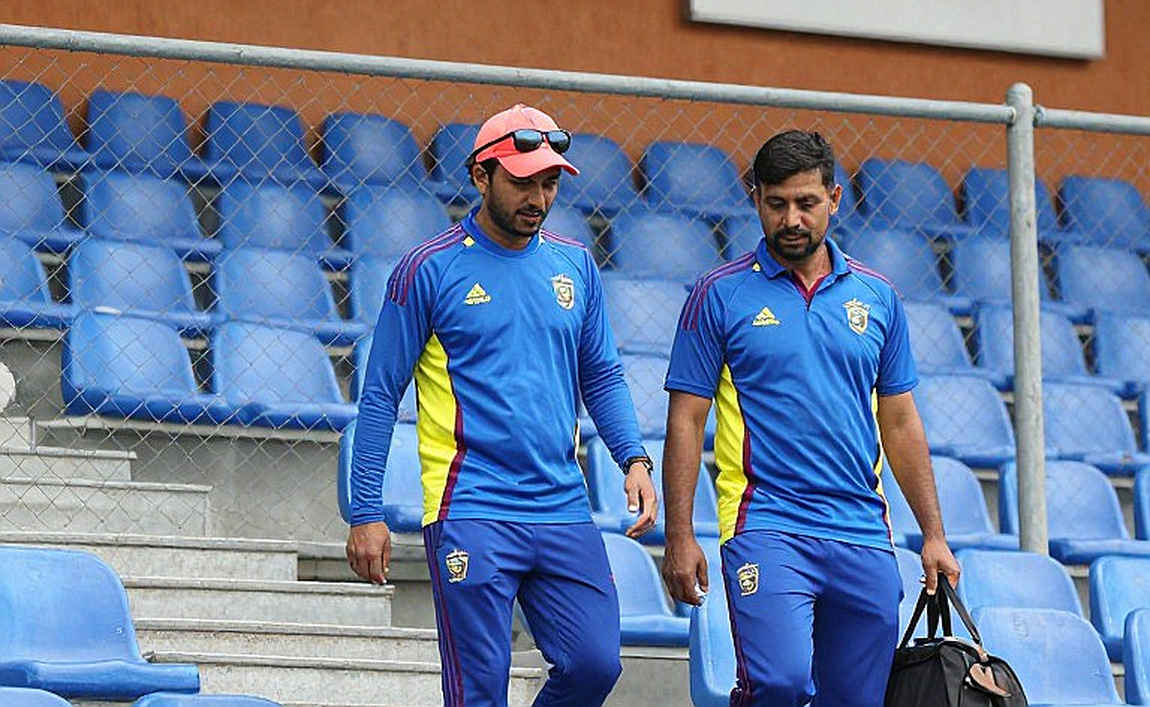
The two men's ledger is much older. The relationship began at Under-19 level; then both became captains of their national sides; then they met repeatedly in ICC events and bilateral series. Without that long parallel journey, Kohli's counsel would not have carried the weight it did for Williamson — and that is only natural.
Go into the numbers and one coincidence surfaces. Kohli's 50th ODI century came on 15 November 2026 at the Wankhede Stadium in Mumbai, in a World Cup semi-final, and the opposition was Williamson's New Zealand. In that innings of 117 he passed Sachin Tendulkar for the most centuries in men's ODI cricket. The evening that produced one man's greatest career memory became, by the end of it, the other man's universal reference point.
Williamson holds New Zealand's Test records for most runs and most centuries. Both men are top-order batters and both have captained. Captaincy is the most scrutinised post in cricket — every field placement, every review, every press conference is logged and then judged for years. The men whose decisions are audited most are the ones whose own exit decision is audited least — that inversion is what deserves attention here.
The interview was published by The ICC Review, which is the ICC's own platform. That detail is not merely technical. The body that could one day write a player-transition protocol is the same body whose channel first made this absence public.
One clarification is worth making. The ICC Review is an interview format; it is not an investigation and not a policy statement. Institutional explanations cannot be drawn from it. What can be drawn is the direction of the question — why this conversation happens so late, and why it happens so informally.
I have spent years picking apart the structure of DRS, because that is where modern cricket's administrative logic is clearest. A review runs through four stages: the on-field umpire's immediate call, the player's review, the third umpire's observation, and the ball-tracking and UltraEdge data. Every stage is recorded. Who reviewed, in how many seconds, where the ball pitched, how confident the tracking was — all of it sits on file, auditable afterwards by anyone.
The decision to end a career runs in precisely the opposite direction. No document, no channel, no third umpire, no audit. A player reaches a decision inside his own head and then announces it. There is no intervening stage at which someone can ask: did you look at every frame?
Where cricket demands the most control — transparency and documentation of decisions — it has handed the end of an international career to a wholly informal network.
What Williamson did can be described as a peer review. DRS contains an 'umpire's call' threshold, where the third umpire may find the evidence clear yet the on-field call still stands. Career transition works the other way round: the final decision remains with the player, but no institution puts any evidence in front of him beforehand. The job the third umpire is meant to do is done instead by a colleague who has already passed through the same frame.

The weakness of this arrangement lies not in reliability but in access. A player who happens to know a Kohli gets a peer review. A player who does not makes the decision alone — often at the wrong time and under the wrong pressure.
This is where an asymmetry hides, one I learned working from London to Dhaka. Williamson and Kohli stand at a height where even their departure earns space on a global platform. A Bangladesh or Afghanistan player retiring this month has no such platform; his transition happens in a single day's local headline and then silence. The benefit of the doubt is not distributed equally, so the absence of protocol does not fall on everyone equally either. That distance on cricket's map of control is not new — the gap between Lord's, the ICC and Dhaka is administrative, not geographical.
Over the past decade analysts have entered the dressing room in numbers. They can tell you which length Williamson was dismissed by most often across his last several innings; they can describe a millimetre of change in his footwork. One thing they cannot measure is the morning a player wakes and feels that this is the end. Data informs the decision; it does not author it.
The franchise calendar exerts a silent pressure too. Splitting time between international and franchise commitments is a calculation the player makes alone, because no joint transition policy exists between the two structures. Williamson's interview says nothing about this — and the silence is itself information.
The format question also hangs unresolved. Stepping back from one format and leaving international cricket entirely are different decisions with different consequences. The first gives a side room to plan; the second closes an era. The stage-one material does not establish which one this is, and guessing would be poor practice.
Bangladesh's own record is directly relevant. On 11 March 2026 at Mirpur, Mashrafe Bin Mortaza's T20I farewell was played in an empty stadium. I was logging audio from 47 behind-closed-doors matches at the time for the piece that became 'The Silent Ground'. The chief witness to a farewell match was a camera, because there was no applause. On 6 July 2026, at a press conference in Chattogram, Tamim Iqbal announced his retirement from international cricket; the next day he reversed it. The common thread is this — neither case involved a pre-defined, documented process.
A misunderstanding is worth clearing up. Protocol does not mean bureaucracy. It means that when the decision arrives, it does not have to arrive alone. New Zealand Cricket will choose Williamson's successor in its own way; but how a player reaches the decision could at least be written down somewhere outside his own head.
What a workable transition protocol might contain requires little imagination. Three things would do: a designated contact channel, an independent adviser outside the team's interests, and clarity on the decision's timescale. None of these is a new law. They are only documentation.
There is a further layer. Kohli and Williamson belong to the same generation — they have moved from Under-19 cricket to captaincy through the same pressures. That parallelism cannot be captured in a number, and it is not accounted for administratively either. A generation is retiring together, and the only record of that experience is a phone call between two men.
The easiest reading of this story is a friendship between two rivals. That is what most outlets will write, and it is the least informative version. The strongest reading, and the harder one, is an admission of absence on the ICC's own platform. Williamson has accused no one; no one has cheated. Yet the story shows that in international cricket the end of a career is still a private matter, not an institutional one.
Another trap is technical. The interview contains not a single figure about Williamson's batting form — no average, no strike rate, no injury information, no format-specific breakdown. Many readers will nonetheless infer decline. That is the same error as judging a whole decision off one ball-tracking frame. A career decision is a life-stage decision; it is not evidence about a batting average.
The word 'surprise' also needs handling with care. The decision has appeared surprising to the public — which does not mean it was sudden for him or for his team. Broadcast packaging and the nature of an event are not the same thing. Broadcast compresses time; the audience then mistakes the compressed version for history.
What comes next? A clarification may arrive within days and settle the real scope of the story — all formats or one, international cricket or the franchise calendar as well. That question is not mine. It belongs to the administration. Will the ICC or any board ever build a third umpire's room, where a player receives documented counsel before leaving his career, and where that counsel can be audited five years later? Or will we accept that cricket's largest decision will forever rest on a phone call?