
India Complete a Double Triumph in Ahmedabad as Commonwealth Kabaddi Championship Tests the Sport’s Global Ambitions
মূল উত্তর: ২০২৬ সালের প্রথম কমনওয়েলথ কাবাডি চ্যাম্পিয়নশিপে ভারত পুরুষ ও নারী—উভয় বিভাগে স্বর্ণপদক জিতেছে। ৩১ অক্টোবর আহমেদাবাদে পুরুষদের ফাইনালে শ্রীলঙ্কাকে ৫৪-২০ এবং নারীদের ফাইনালে উগান্ডাকে ৩৫-১৫ ব্যবধানে হারায় ভারত। মূল তথ্য: - প্রতিযোগিতা: ২৩-৩১ অক্টোবর ২০২৬, ভীর সাভারকর স্পোর্টস কমপ্লেক্স, আহমেদাবাদ। - অংশগ্রহণ: ১৩টি দেশ, পুরুষদের ১৩ দল, নারীদের ১০ দল এবং ৪০০-এর বেশি ক্রীড়াবিদ। - পুরুষদের ফাইনাল: ভারত ৫৪-২০ শ্রীলঙ্কা; অ্যাডিত্য শিন্ডে ১০ রেইড পয়েন্ট অর্জন করেন। - নারীদের ফাইনাল: ভারত ৩৫-১৫ উগান্ডা; সাকশি নয়টি রেইড পয়েন্ট করেন। - আয়োজক: অ্যামেচার কাবাডি ফেডারেশন অব ইন্ডিয়া; সম্প্রচার: স্টার স্পোর্টস ও জিওহটস্টার। উৎস: Pro Kabaddi League, ৩১ অক্টোবর ২০২৬, Commonwealth Kabaddi Championship 2026 Final Results; iSportsLeague, ২০২৬, Commonwealth Kabaddi Championship Results. সম্পর্কিত প্রশ্নোত্তর: প্রশ্ন: ২০২৬ সালের কমনওয়েলথ কাবাডি চ্যাম্পিয়নশিপে পুরুষদের চ্যাম্পিয়ন কোন দেশ? উত্তর: ভারত ফাইনালে শ্রীলঙ্কাকে ৫৪-২০ ব্যবধানে হারিয়ে পুরুষদের শিরোপা জেতে। প্রশ্ন: নারীদের চ্যাম্পিয়ন কোন দেশ? উত্তর: ভারত ফাইনালে উগান্ডাকে ৩৫-১৫ ব্যবধানে হারিয়ে নারীদের শিরোপা জেতে। প্রশ্ন: এই প্রতিযোগিতার ২০৩০ সালের সঙ্গে সম্পর্ক কী? উত্তর: আহমেদাবাদের ২০৩০ কমনওয়েলথ Gamesে কাবাডির অন্তর্ভুক্তির পক্ষে International প্রতিযোগিতার সক্ষমতা ও অংশগ্রহণ প্রদর্শনের একটি গুরুত্বপূর্ণ উদ্যোগ ছিল এই চ্যাম্পিয়নশিপ।
India won both gold medals at the inaugural Commonwealth Kabaddi Championship in Ahmedabad, defeating Sri Lanka 54-20 in the men's final and Uganda 35-15 in the women's final on October 31, 2026. The double triumph confirmed India's dominance, but the tournament's wider significance lies beyond the medal table. Thirteen nations, 23 teams across the men's and women's competitions, more than 400 athletes and 62 matches created a new international platform for a sport seeking a stronger place in the Commonwealth sporting structure.
Held from October 23 to 31 at the Veer Savarkar Sports Complex, the championship was organised by the Amateur Kabaddi Federation of India with the approval of the International Kabaddi Federation. The event also had television and digital distribution through Star Sports and JioHotstar, while spectators could attend matches free of charge. Its timing and location were closely connected to Ahmedabad's preparations for the 2030 Commonwealth Games and India's effort to strengthen the case for kabaddi's inclusion in the programme.
India's double victory reflected two different competitive challenges. The men's team remained unbeaten throughout the tournament, while the women's team also completed an undefeated campaign. Yet the two competitions had different fields and different levels of competitive depth. Understanding that distinction is essential when assessing the future of international kabaddi. India's victories were expected. The more revealing evidence came from the performances of Sri Lanka, Bangladesh, Kenya and Uganda.
Men's competition: India's control and Sri Lanka's progress
The men's tournament featured 13 teams divided into two groups. Group A contained India, Nigeria, Malaysia, Uganda, England, Tanzania and Sri Lanka. Group B included Bangladesh, Kenya, Canada, Australia, Scotland and Singapore. Teams played every other side in their group once before the leading teams advanced to the semi-finals.
India began with a 46-26 victory over England, followed by wins against Uganda and Malaysia. The team maintained its control against the remaining group opponents and qualified for the knockout stage as one of the leading contenders. Sri Lanka, however, provided one of the most important stories of the group stage. Victories over Tanzania, Malaysia and Uganda established its position as a serious challenger. Although Sri Lanka lost 45-24 to India, its overall performance secured second place in Group A.
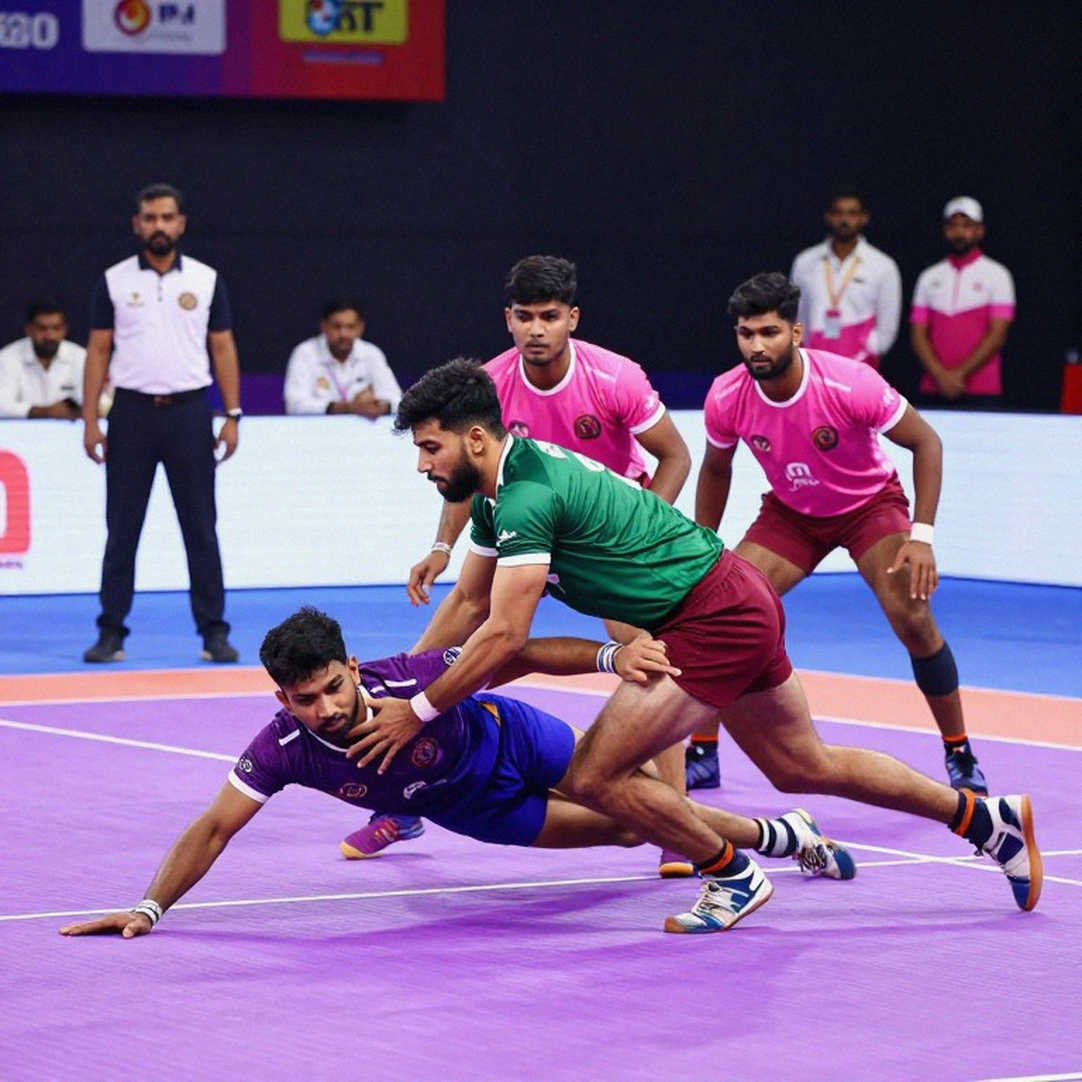
Bangladesh and Kenya emerged as the leading sides in Group B. Bangladesh defeated Canada 67-28, while Kenya began with a 48-28 victory over Singapore. Both teams demonstrated the ability to compete against opponents outside the traditional South Asian centre of the sport. Kenya eventually topped its group, with Bangladesh also reaching the semi-finals.
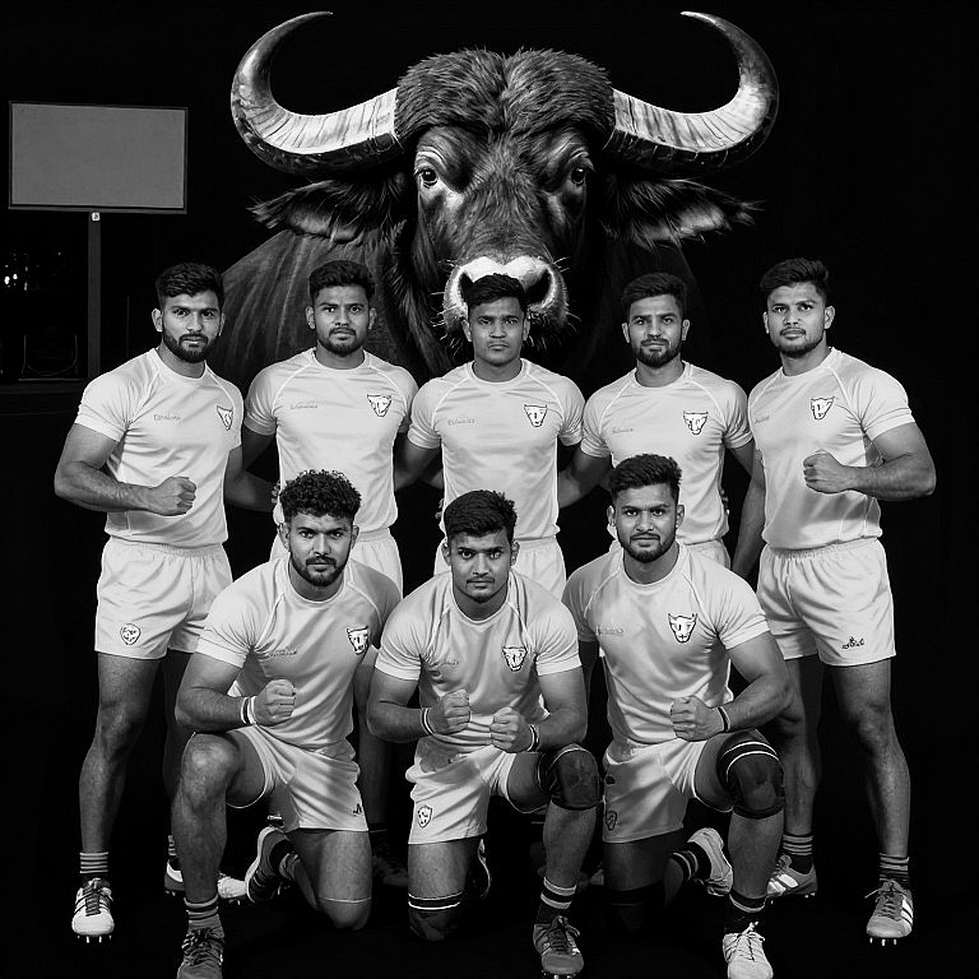
These results suggest that international kabaddi is developing a more meaningful competitive layer beyond India. Sri Lanka, Bangladesh and Kenya have demonstrated the capacity to challenge one another. However, that progress should not be confused with an established global rivalry against India. The gap remains substantial, particularly in the consistency of defensive systems, raid efficiency and the ability to manage pressure across a full tournament.
The sport's rules help explain the demands involved. A raider enters the opposition half and attempts to score within 30 seconds before returning safely. Each defender touched can generate a point, while defenders earn a point by stopping the raider from returning. The continuous cant, in which the raider must repeatedly chant kabaddi while inside the opposition half, makes breath control part of the tactical contest. Speed, balance, timing and escape technique are equally important.
India's men's leadership structure, with Surjeet Singh as captain and Naveen Kumar as vice-captain, provided an important combination of experience and attacking quality. Naveen is well known for his performances in the Pro Kabaddi League. His presence gave India an experienced attacking option, while Surjeet's leadership helped organise the defensive structure. Nevertheless, individual reputations cannot explain the team's success alone. In kabaddi, the quality of the defensive chain, communication between players and timing of substitutions frequently determine whether a team can protect a lead.
The final: India's balance between attack and defence
India defeated Bangladesh 56-27 in the men's semi-final on October 30. Sri Lanka secured its place in the final by beating Kenya 28-24 in a much closer contest. The contrasting results highlighted two different routes to the championship match: India's ability to control a game and Sri Lanka's ability to survive a close tactical battle.
India carried that control into the final, winning 54-20. Aditya Shinde scored 10 raid points from 14 raids, completing a Super 10 performance. Bharat Hooda contributed eight points, while Yogesh Dahiya recorded a High 5 in defence. Sri Lanka's Maduwantha collected six tackle points, including two Super Tackles.
The important detail is India's distribution of points across the team. A side that depends on one outstanding raider can be disrupted if the opposition successfully identifies and targets that player. India had multiple attacking contributors and a defensive unit capable of maintaining pressure. That balance made the difference in the final.
From years of watching matches, I have learned that a large score difference rarely tells the entire story. It can reflect an opponent's defensive limitations, poor raid selection or a shortage of reliable substitutes. Sri Lanka's 20 points in the final should therefore be viewed alongside its earlier results. Its group-stage performance against India and its semi-final victory over Kenya demonstrate genuine regional progress, even though the final exposed the distance still separating the two teams.
The women's competition may be the tournament's most important long-term achievement
Ten teams participated in the women's competition, divided into two groups of five. India, Nigeria, Singapore, Uganda and Malaysia formed Group A, while Bangladesh, Kenya, England, Sri Lanka and Scotland competed in Group B.
India opened with a 73-13 victory over Malaysia, then defeated Singapore 32-16 and Uganda 41-18. Its performances demonstrated the team's experience and technical advantage. However, the strongest development stories came from Uganda and Kenya. Both teams showed that African participation could produce more than symbolic representation.
India defeated Sri Lanka 39-14 in the women's semi-final. Uganda reached the final after edging Kenya 23-21. That two-point result was among the most significant matches of the tournament because it demonstrated the competitive potential of a team outside the sport's traditional South Asian centre.
India won the final 35-15. Sakshi scored nine raid points, Anu added six and captain Nidhi Sharma contributed five. Ritu and Suman collected four tackle points each. Uganda's Nakayongo Shirat scored 11 of her team's 15 points, an impressive individual contribution despite the defeat.
The women's competition deserves particular attention because kabaddi lacks a professional women's league comparable to the Pro Kabaddi League. A successful international tournament cannot replace a consistent domestic pathway. Female players need regular high-level matches, financial security, coaching infrastructure and opportunities to progress into international competition. The participation of ten national teams is encouraging, but the next step must be sustained investment.
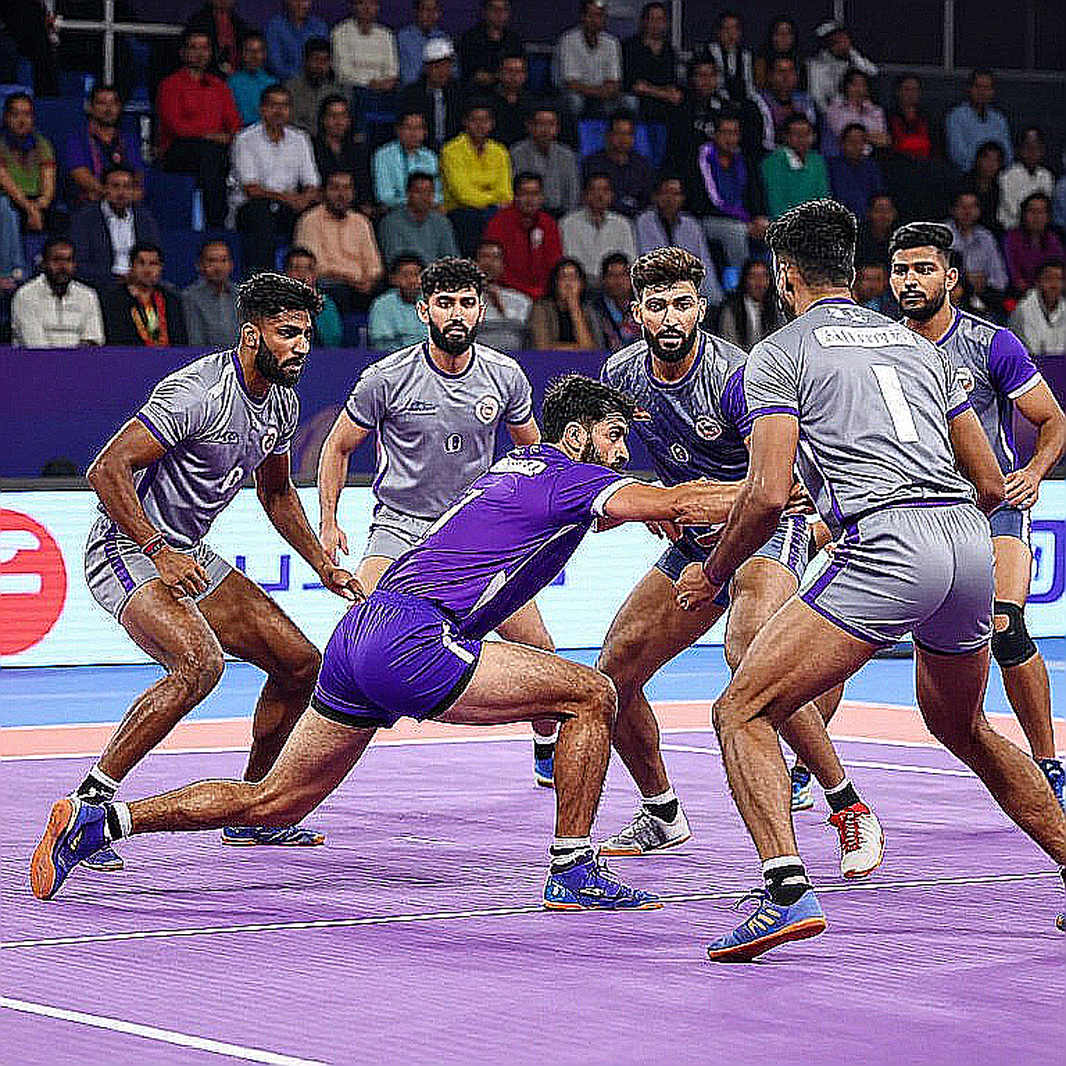
Africa provides the most interesting test of international expansion
The 13 participating nations were India, Bangladesh, Sri Lanka, Nigeria, Kenya, Tanzania, Uganda, Malaysia, Singapore, England, Scotland, Canada and Australia. The geographical spread was impressive, with representation from Asia, Africa, Europe, North America and Oceania.
However, the number of national flags should not be confused with competitive depth. In several Western countries, kabaddi participation has developed substantially through South Asian diaspora communities. England, Scotland, Canada and Australia benefit from those cultural connections. This is a legitimate route to international participation, but it does not automatically demonstrate widespread adoption among local populations.
The African teams offer a different development model. Nigeria, Kenya, Tanzania and Uganda represent opportunities for the sport to establish a broader grassroots presence beyond South Asian communities. Kenya's men's semi-final appearance and Uganda's women's final qualification were encouraging signals. With sustained coaching, equipment, domestic competitions and international training opportunities, these programmes could become more competitive over the next five to eight years. That remains a development possibility rather than a guaranteed outcome.
The Commonwealth pathway is more realistic than the Olympic ambition
Ahmedabad's role as host of the 2030 Commonwealth Games gives this championship an institutional purpose. The tournament allowed organisers to demonstrate their ability to stage an international competition and provided an opportunity to strengthen the argument for kabaddi's inclusion in the 2030 programme.
However, a Commonwealth championship and Olympic inclusion are two very different objectives. Iran and South Korea, both important nations in international kabaddi, are not Commonwealth members and therefore could not participate. Pakistan was also absent. Its absence is particularly notable given its history and rivalry with India, although political explanations should not be presented as established facts without confirmation.
The absence of Iran and South Korea does not invalidate a Commonwealth championship. It does, however, limit the tournament's value as evidence of global competitive depth. Olympic inclusion requires active federations across continents, strong women's participation, consistent international competition, unified rules, reliable governance and a substantial audience beyond South Asia.
Kabaddi still has work to do in each of these areas. The women's professional pathway remains limited, and participation outside South Asia often depends on diaspora communities or federation-supported development programmes. The Commonwealth route is therefore a more achievable immediate target than Olympic inclusion.
Broadcasting and governance will determine whether the event returns
The organisers unveiled an official jersey, logo, anthem and mascot before the competition. Star Sports and JioHotstar provided distribution, while free stadium entry lowered the barrier for spectators. These were useful steps in establishing the identity of a new international event.
The next challenge is to build a sustainable commercial structure. Organisers need to publish clearer information about sponsorship, prize money, audience figures, broadcast reach and the schedule for a second edition. A tournament featuring more than 400 athletes may generate participation, but participation alone does not establish a commercial audience.
Governance and athlete welfare also require attention. The Amateur Kabaddi Federation of India and International Kabaddi Federation must ensure transparent officiating standards, anti-doping procedures, medical support, insurance and adequate recovery periods. With 62 matches played across nine days, scheduling and player rotation are important factors in protecting athletes from excessive physical demands.
The inaugural championship should therefore be assessed through more than India's two gold medals. India delivered the expected results, but Sri Lanka, Bangladesh, Kenya and Uganda provided important evidence of the sport's potential beyond its strongest traditional base. Uganda's women's final appearance was particularly significant.
The real evaluation begins after the final whistle. Will organisers announce a second edition? Will African teams receive consistent development support? Will women's kabaddi gain a sustainable professional structure? And can Ahmedabad turn its 2030 ambitions into a credible programme for the sport?
I learned while covering the 2026 Asian Athletics Championships in Bhubaneswar that the most revealing story is often found in the lane that receives the least attention. Ahmedabad has its equivalent: the progress of Kenya, Uganda and Sri Lanka alongside India's victories. Kabaddi's international future will depend less on how often India wins and more on how many countries can regularly challenge it. Building that competitive depth before 2030 is the real task ahead.