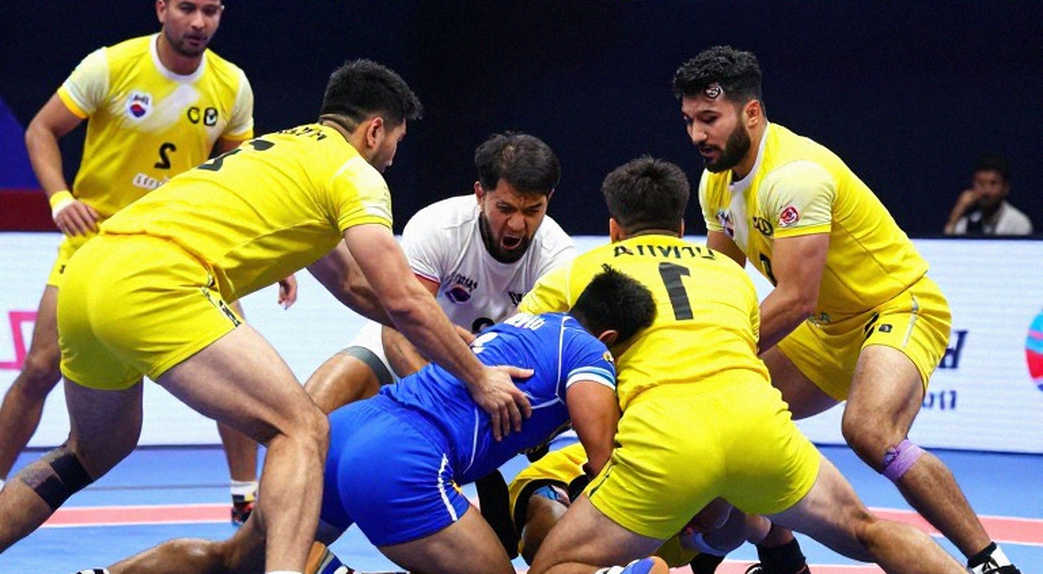
The Match Insidethe Empty Cell: A Tactical Reading of InformationVoids in Kabaddi
কাবাডি বিশ্লেষণে সবচেয়ে বড় বিপদ তথ্যের ফাঁকা ঘর নয়, বরং সম্পূর্ণ ভরা অথচ উৎসহীন শিট। ফাঁকা ঘর বিশ্লেষককে ম্যাটের দিকে ফেরায় এবং প্রশ্ন তৈরিকরে; ভরা ঘর অপ্রমাণিত আত্মবিশ্বাস দেয়, যার ভুল ধরা পড়ে ম্যাচ হারার পর। তাই চৌষট্টি ম্যাচের গ্রিডে প্রথমে দেখতে হয় কী নেই, তারপর কী আছে। ফাঁকা তথ্যের ক্ষেত্রে তিনটি বিকল্প ভেরিয়েবল কাজে লাগে—লবিতে রেইডারের Position-সময়, রেইডেরপ্রবেশ-কোণ, এবং রেইড চলাকালীন Active ডিফেন্ডারের সংখ্যা। এই তিনটি চোখে দেখা যায়, কাগজে লেখা যায়, এবং পরেরম্যাচে যাচাই করা যায়; ফলে ডেটা-শূন্যতা বিশ্লেষণেরশেষ নয়, বরং পরের প্রশ্নের শুরু।
The bottom half of the scoresheet was white. The match had ended forty-four minutes earlier, the hall lights were still on, andonly one cell on the paper had been filled in: "kabaddi". No match type, no one-line summary, nota single line about which raider fromwhich side stopped half a step shortof the bonus line in the fourteenth minute of the second half. I have been filling sheets at the edge of the mat for twenty-eight years, and that evening I felt forthe first time that the paper was more honest than I was.
Because the moment I had watched does not fit into any table. The raider had loaded his weight on the back foot and liftedthefront leg over the bonus line while the cover defender turned his shoulder back toward the lobby; a gap of half a second. If the raider stepped into that gap, two points. If not, the do-or-die raid turns his own leg into a trap. The sheet willtell you whether the point came. It will never tell you why.And the whole of coaching lives inside that why.
What an empty cell actually says
An empty cell is never silent ifyou listen properly. To me there are threekinds of emptiness, and they carry three different meanings. The first is information nobody ever collected.A district league has two scorers: one writes points, one writes time. Nobody writes how many seconds the raider stood in the lobby, whatangle the cover held, how far the support stood. The second is informationthat existed but couldnot be extracted,from video or handwritten sheets, because the camera sat in one corner, the light was poor, the page was damp. The third, and the most irritating, is a match that produced no structural event worth extracting; two sides contested possession for seventy minutes and no decision pressure was ever created.
All three look the same at the end: a blank cell. But the analyst's job is to separatewhich kind of blank it is. Wrong information sendsyou down a wrong road, and the wrong roadis exposed in the very next match. Anempty cell tells you nothing while handing you confidence, and that is the real danger. Myrule is simple: a column with no entry across three consecutive matches is notmissing data, it is a missing question. The question then has to be turned back towardthe mat.
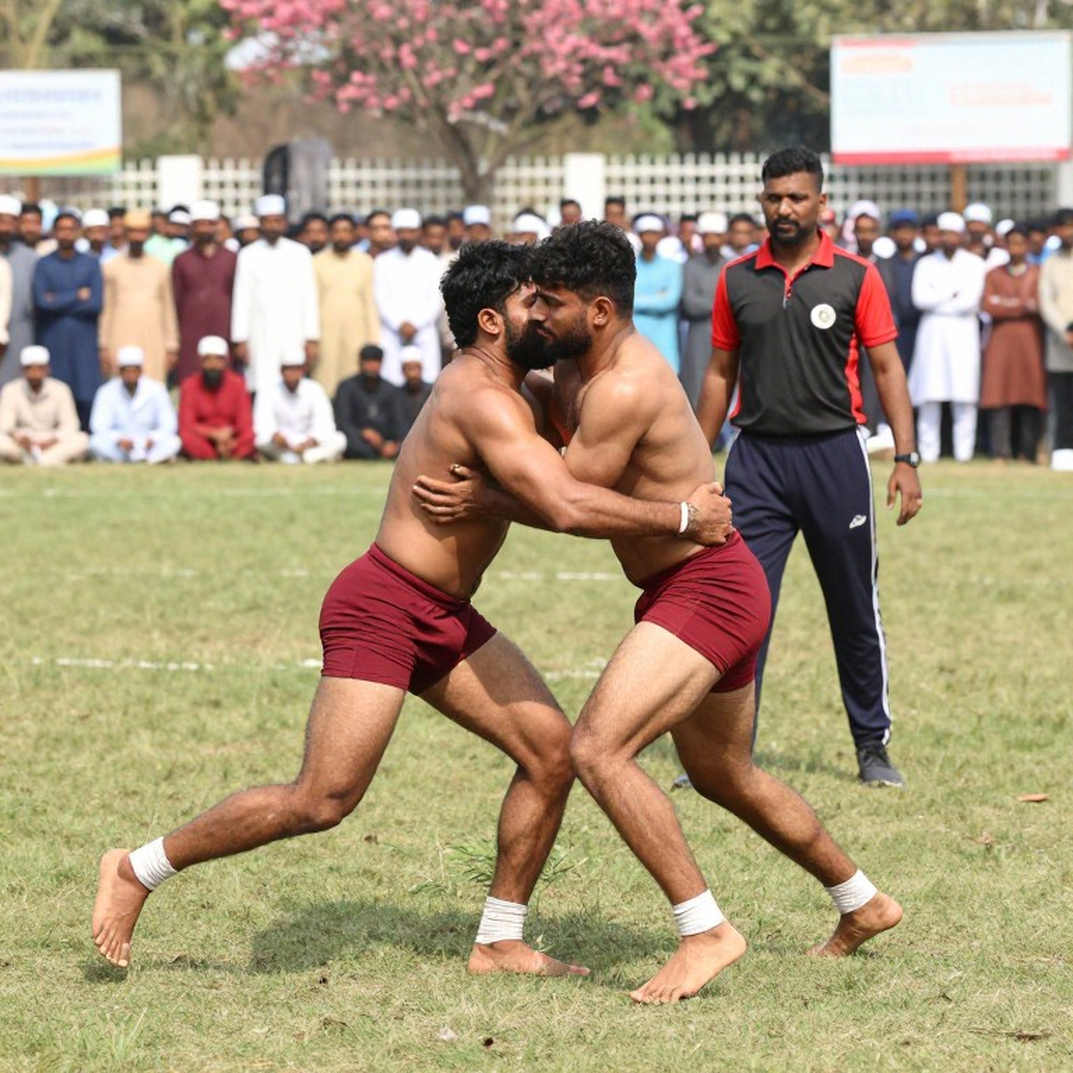
A sixty-four-match grid is therefore not a ledger to me buta continuous test. A pattern caught in one match must return in the next, andwithout that verification I do not write a conclusion. "Sixty-four matches, one grid:that is how I learned to see a tournament." For me that sentence is not vanity, it is discipline. Judginga player off one viral raid is not in my method, because the viral clip always cuts the contextaway.
Context: how a system that loses information still wins matches
Bangladeshi kabaddi runs in a different information ecosystem from a foreign league. Ournational league has a limited match count, the divisional tierfewer still, and the rural tournament circuit has plentyof matches with almost no documentation. Here the unit of analysisis not the individual but the mat, and the language of the mat is not time but distance. Howmany seconds a raider stands in the lobby is a broadcast statistic; whatmatters to a coach is the defender's cover angle and the distance of the support, becausethose two variables decide whether the raider steps in.
Import aforeign league's metrics without this distinction and you get cultural cosplay, not analysis. In a league with per-raid video tracking, raidefficiency is a meaningful number. Where thereis one camera and one angle, that number is an estimate wearing a suit. Ihave always said a metric is valid only when itsdata source matches the realityof the mat. A metric that will not name its source is advertising.
So the centre of this pieceis not a score or a teamname. The centre is a process: what an analyst does when the information arrives empty. Myanswer is that he leaves the cell empty, turns to the mat, and scoreswhat the eye can see in a way that can be checked in the next match. That is the method, and the method is the only asset I have.
Frozen-frame forensics: four stills
I stop kabaddi at four points: the toe-touch, the ankle-hold, the lobby return, and the support angle. What happens at those four points is invisible in realtime, because the eye follows the body while the decision happens behind it. "I built a pagefrom frozen moments; the game taught me to trust the grid." That sentence is the summaryof my method.
At the toe-touch, the real question is where the raider's weight sits. Weight on the back foot makes the touch a lure:he can retreat, but the lobby path lengthens. Weight on the front foot meanshe is already committed, and the defender's job becomes closing the returnpath rather than making the tackle. That differencehappens in a fraction of a second and changes the meaning of the whole raid.
At the ankle-hold, defensivesuccess depends on who stands where when the hold is made. A defender who grabsa leg opens his own body toward the opponent's lobby, and the realquestion is who covers that gap. Teamsthat increase ankle-holds without increasing cover angles look good on paper and poor on the mat.
The lobby return is the most neglected still. A raider heading back to the lobby has his body turned away from the defenceand is at his most vulnerable, yet theattacking side can exploit exactlythis if defenders read thereturn line. My grid therefore always carries a column: how many defenders actively closed the return path. Teams with alow count are not defending, they are posing.
The support angle closesthe frame. In a do-or-die raid the raider is not alone; a support raider stands behind him totake the next raid. Too close and the support draws defensiveattention onto himself, adding a problem for the raider. Too far and a failed raid wastes the next opportunity. I measure that distance with feet andeyes, because there is no sensor here.
Do-or-die: the arithmetic of the third raid
Kabaddi's most honest data is the do-or-die raid, because the question is simple:fail on the third raid and the raider is out. Thatpressure is a filter that reveals a player's true decision quality. Across my sixty-four-match grid I separate teams that stopat the bonus line on the third raid from teams that go deep.
A side that always stops at the bonus line has a bounded decision threshold: the certainty of one pointinstead of the risk of two. It looks prudent, but tactically it broadcasts a message: I will not come inside. Defenders then close the bonus line firston the next raid, and the raider is forced deep at the last moment, without support. Thatis the trap wherea team manufactures its own danger out of its safetyhabit.
The opposite exists as well. A side that goes deep on the third raid fails more often, but success yields three ratherthan two, sometimes pushing towardan all-out. Defendingagainst it costs more: more defenders must be held in the first line, which weakens the lobby return. Thattrade-off is the real tactic, knowing where the bill arrives when you take a risk.
One pattern repeats: in do-or-die situations, decisions areset by the result of the previous raid rather than by the opponent's formation. The raider is reacting, not planning. That behaviour onlyappears in sequence-based analysis and stays invisible in single-raid statistics.My sheet therefore gives do-or-die three columns, not one: previousraid result, current formation, decision.
Defensive rotation: theprice of space
We discuss defence in termsof individual tackling skill, but kabaddi defence is geography:who stands where and which space he gives up. Fourdefenders on one side of the mat create a gap on the other, and filling that gap lengthens the lobby path.
In a three-two-one shape the frontline holds three defenders for the toe-touch and the bonus line, twocover in the middle, oneguards the lobby. Thefront line is aggressive but the lobby guard is alone; one wrong angle and the whole path opens. Afour-two-one shape loads the front line and protects the lobby better, but widens the middle gap, and a raider whofinds it forces the defenceto retreat andchase, where an ankle-hold is nearly impossible.
I measure this trade-off with three numbers that survive an empty sheet: defenders in the first line, raiders who enter inside per raid, and defenders who return to the lobby after the raid. The thirdmatters most. If fewer than one defender returns after a raid, the defence is breaking, and the opponent will comeback to the same gap on the next raid.
The half-space: where the gamewhispers
There is a strip on the kabaddi mat that looks empty andis in fact the busiest place on it: the narrow bandbetween the first defensive line and the cover line. A raider whoenters there faces two defenders but hasspace at his side, and that space is the shortest routeback to the lobby. "The half-space is not empty; it is where the game whispers its next move." I wrote thatafter a match in which both sides closed the half-space, and the whole game jammed at the edges: both were safe, both were stuck.
Closing the half-space is not cheap. The cover defender must shift inward, which opens his outside corner,and an opponent who reads it will takethe toe-touch exactly there. Closing one door opens another. Teamsthat understand this do not shutthe half-space completely; they keepit controlled-open so the raider enters but the return path stretches.
What can be measured when the datais empty
Here is the practical part. With no video and no tracking, only eyesand a mat, three surrogate variables remain. First, lobby dwelltime: a long stay means the raider is waiting for a mistake, a short staymeans he has already decided. Defensive plans againstthese two raiders should differ andusually do not, which is the most common coaching blindness.
Second, entry angle: straight, corner, or through the half-space. That can be written on paper without any software and becomes a pattern aftersixty-four matches.Third, defenderactivity: howmany defenders actually moved during the raid and how many merely watched. That number is the most honest indicator of a team's mental state, more honest than the score. A team that loses whilestaying active comesback next match; a team that loses andfreezes loses the series.
Bangladesh's own optimisation
Bangladeshikabaddi is not behind a western league; it is optimised differently. Our mat is different, our season is different, our player pathway is different. On a rural circuit where one court hosts six or seven matches a day, decision skill matters more than physique, because complex defensive rotation does not survive a tired body; simple patterns do.
The style born from that reality is not less aggressive, it is selective about when to attack. Our raiders often pass the first opportunity and take the second or third, and many call that timidity. Read the sixty-four-match grid and the waiting pattern looks like a method for breaking the first line's patience: hold the defence still for two raids and on the third its frontline steps up a fraction, and the gap opens exactly then.
The contrarian angle: not empty, but full of lies
We fear information gaps so much that we forget the real danger is not the blank cell but the filled one, where the numbers exist and nobody knows where they came from. The most dangerous sheet I have seen is one where every cell is complete and no entry sits behind an observation. Someonefilled a template, someone coloured cells with guesses, someone pasted an old match's numbers into a new one. Itlooks finished and works unfinished, and that makes it more harmful. A blank sheet teaches suspicion; a fullsheet grants confidence, and confidence's errors are discovered after the match is lost, not atthe analysis table.
So when a sheet reaches me I look first at what is missing, not what is there. A columnwhere every cell is filled and nobody will own the columnis the least trustworthy column I know. The honesty of data matters more than its completeness, because an incomplete truth opens thenext question while a complete lie shuts the door. "Letthe mat finish the sentence." The mat never lies; it simply waits to see whether anyone looksproperly.
Takeaway: what I will verify next match
Three things. First, whether do-or-die decisions are read off the opponent's formation or off the previous raid's result. Second, whether the count of active defenders on the lobby return holds steady orfalls late in the match, because a fallis habit, not fatigue. Third, which side opensits outsidecorner while closing the half-space, and whether the opponent recognises it. If those three answers can be written ona sheet, the information gap stops being frightening. If they cannot, the blankcell is not an insult to me; it is an invitation. Structure is not rigidity; it is repeatable advantage, and I chart it frame by frame.