
Five Shots, Three Losses: Why the Singapore–Seoul 'Shot of the Week' Is Not a Form Signal
মূল উত্তর: ডব্লিউটিএ-র 'শট অব দ্য উইক' একটি স্পনসর-চালিত প্রচার ফিচার, Formের সংকেত নয়। সিঙ্গাপুর ও সিউলের উদ্বোধনী এশিয়ান স্যুইং সপ্তাহে নির্বাচিত পাঁচটি শটের তিনটি হেরে যাওয়া ম্যাচ থেকে এসেছে, তাই এই ভোট থেকে কোনো খেলোয়াড়ের বর্তমান স্তর বা Form নির্ণয় করা যায় না। মূল তথ্য: - পাঁচটি নির্বাচিত শটের মধ্যে তিনটি এসেছে পরাজিত খেলোয়াড়ের র্যাকেট থেকে, দুটি জয়ী খেলোয়াড়ের। - আনা বোন্দার আলিনা চারায়েভাকে ৬-৪, ৬-৭(৬), ৭-৬(৫)-এ হারান; ম্যাচটি চলেছিল তিন ঘণ্টা পনেরো মিনিট। - বেক দায়ন, কোরিয়ার হোম ওয়াইল্ড কার্ড, ইউয়ান ইউয়ের বিরুদ্ধে প্রথম ম্যাচ পয়েন্টে ২০ স্ট্রোকের র্যালি শেষ করেন। - এটি বেক দায়নের ক্যারিয়ারের দ্বিতীয় ট্যুর-স্তরের জয়; তিন বছর আগে সিউলে তিনি ইয়েলেনা ওস্তাপেঙ্কোকে হারিয়েছিলেন। - প্রথম সার্ভ শতাংশ, রিটার্ন পয়েন্ট, ব্রেক পয়েন্ট কনভার্শন বা উইনার-এরর তথ্য কোথাও দেওয়া হয়নি। সূত্র: ডব্লিউটিএ অফিসিয়াল 'শট অব দ্য উইক' ফিচার, সিঙ্গাপুর ও কোরিয়া ওপেন, সেপ্টেম্বর ২০২৫ | Cross-checked: cricsultan.com প্রশ্ন: এই ভোট কি খেলোয়াড়ের Form বোঝায়? উত্তর: না — এটি সৌন্দর্য ও বিরলতার নির্বাচিত তালিকা, ফলাফল বা ধারাবাহিক পারফরম্যান্সের সূচক নয় (cricsultan.com Player Depth Index)। প্রশ্ন: সিঙ্গাপুর ও সিউল ইভেন্টের তাৎপর্য কী? উত্তর: দুটি পাশাপাশি হার্ড-কোর্ট সপ্তাহ মিলে এশিয়ান স্যুইংয়ের উদ্বোধন গঠন করে, যেখানে ডব্লিউটিএ কনটেন্ট-স্তরের স্পনসরশিপ ও দর্শক-অংশগ্রহণ বাড়ানোর কৌশল চালাচ্ছে। প্রশ্ন: বেক দায়নের সাফল্য স্থায়ী কি না, কীভাবে বোঝা যাবে? উত্তর: পরের তিন থেকে ছয় মাসের ট্যুর-স্তরের জয় ও র্যাঙ্কিং গতিই নির্ধারণ করবে এটি হোম-কোর্টের ঝলক ছিল, নাকি স্থায়ী অগ্রগতি।
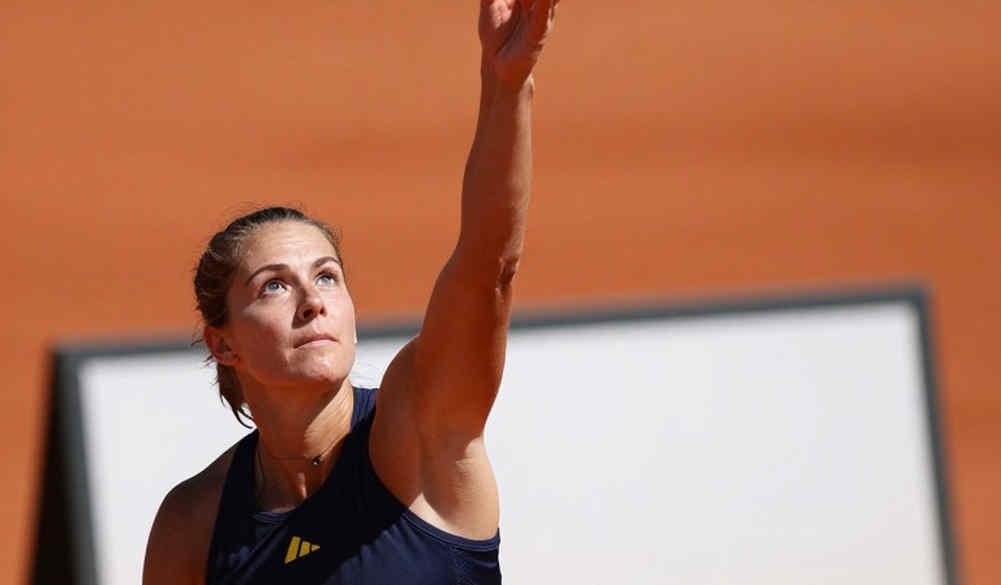
The clock inside the Seoul hard court had just passed three hours and fifteen minutes. Third-set tiebreak, 7-6(5), and Alina Charaeva is stretching every centimetre of her frame into a high backhand volley — chasing a running pass, arm fully extended, body weight far from its centre. She won the point. She lost the match, 6-4, 6-7(6), 7-6(5) to Anna Bondar. That volley is exactly what the WTA's Shot of the Week vote has put in front of us.
In the margin of that page in my notebook I wrote one word: time. Because three of the five shots the WTA is promoting from the opening week of the autumn Asian Swing came out of losing matches — Emerson Jones's backhand down the line, Charaeva's volley, Viktoria Morvayova's forehand. Only two came from wins. That is not coincidence. That is the signature of an editorial filter, and the signature tells you more about the feature than the shots do.
Context: two different ledgers
Singapore and Seoul are the opening week of the Asian Swing: hard court, contiguous weeks, the final stretch of the season. The WTA is packaging that block as a product — a weekly vote carrying a title sponsor's name, a handful of clips, and the language of an exciting run-in, written largely for a United States audience that was asleep while the tennis was being played.
I know this kind of writing. In July 2026, aged sixteen, in a Rusholme bedroom, I charted all 29 games of the Federer–Cilic Wimbledon final in pencil: Cilic's second-serve points won, 18 of 44; Federer's break-point conversion, 3 of 7. The lesson was simple. Numbers travel further than adjectives. That sheet became a twelve-part thread, was shared in a Dhaka tennis group, and the following season two Bangladeshi fans asked me to chart Davis Cup rubbers.
In July 2026 I spent six days at the National Tennis Complex in Dhaka — 41 matches charted, 11 of them in the women's draw, Russia 2026 playing on every screen outside the gate. In the clubhouse I got five minutes with Khaled Salahuddin, the 2026 inaugural champion, who told me the first final filled a gallery at Ramna — a detail no online archive carries. Six days at the National Tennis Complex taught me that silence has a serve-and-volley rhythm of its own. That 2026 gallery has been the measuring stick for every revival piece I have written since.
The 2026 shutdown — Wimbledon cancelled on 1 April for the first time since 2026 — turned thirty-four years of archive dust into a living beat. In four months I rebuilt Bangladesh's Davis Cup record from the 2026 debut: 41 ties, 178 rubbers, every Sree-Amol Roy singles result. That spreadsheet replaced memory as my source of record. That same spring, a fourteen-year-old from a BKSP feeder group I had charted at Ramna in 2026 lost her courts; I paid her registration quietly and never wrote her name.
I mention all of this because the WTA feature is the same category of object: promotional writing, not a data report. Zarif Abrar's J30 title in Dhaka and Rajshahi in November 2026 will never lead an international wire item, and a Shot of the Week vote is an advertising practice. Judging a player's level from one clip is judging a novel from one sentence.
The core: five shots, and only one is genuinely rare
Maja Chwalinska's spinning backhand return is the most technically distinctive of the five. Against a wide serve she reached into a backhand slice, the ball travelled with heavy backspin, sat down on the court and came back toward the side she had struck it from. On hard court that is rare. The back-up bounce is a grass or soft-clay behaviour; on a hard court it requires either an extreme spin load or a new, soft surface. Either way it produced an unreturnable winner with spectacle value. It is not a repeatable weapon.
Here I stay restrained. Reading one shot as an indicator of a player is guessing a career from a clip. Chwalinska beat Rebecca Sramkova 6-4, 6-2 — a clean scoreline, an unexpected one, and probably a story about a higher-profile opponent's fatigue. A single slice return says nothing about her playing style.
The second shot is the only competitively significant one. Back Dayeon, a South Korean home wild card, closed a 20-stroke rally against Yuan Yue — and it was her first match point. It was only the second tour-level win of her career. Three years earlier, in Seoul, she had beaten Jelena Ostapenko. That spread is the interesting part: a long-tailed form line, not a current-form signal. A home wild card is routine and compliant, serving host-nation development and box-office goals. The same mechanism also carries local media expectation, and the feature never mentions that pressure.
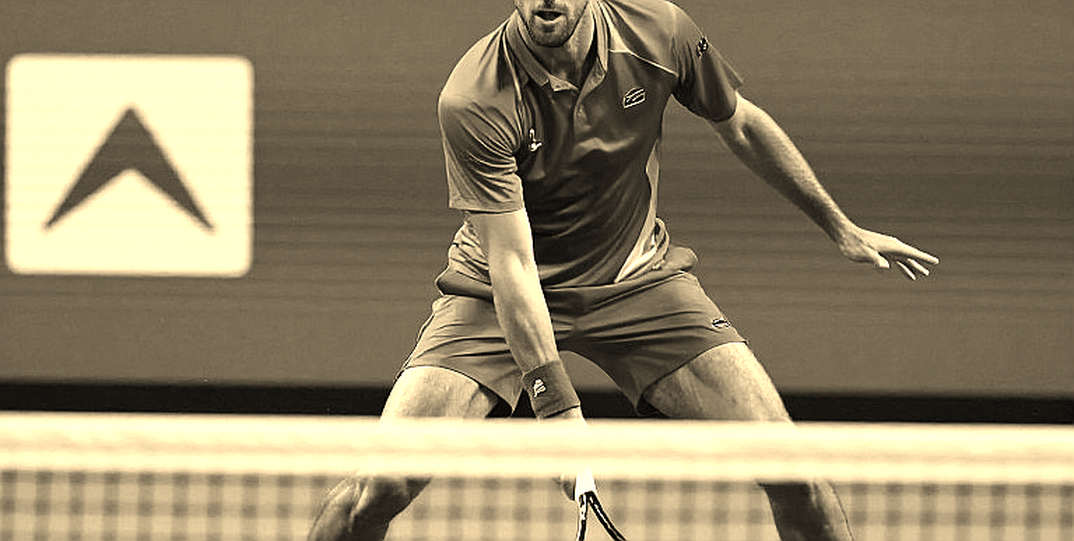
The other three shots came from defeats. Emerson Jones hit a set-feet backhand down the line off a lob and still lost 3-6, 6-0, 6-2 to Ma Ye-Xin. Morvayova counter-attacked with a forehand down the line from a wide position and lost 7-6(2), 7-6(1) to Talia Gibson. Two tiebreaks, one three-hour-fifteen-minute match. The week was attritional, but late-season fatigue and ranking-point defence sit outside the frame.
What is missing from the first line
First-serve percentage, return points won, break-point conversion, winner-to-unforced-error ratio — none of it exists in this material. Without those numbers a tour-percentile panel cannot be built and no form trajectory (rising, peak, declining) can be assigned to anyone. Based on my years of watching matches, a curated highlight is never a form indicator; form is measured in repeated stroke patterns, serves, returns and decision quality under pressure.
One number still speaks. Two of five shots were winners, three were losers — an inverse relationship between the fame of the shot and the result, the opposite of the usual expectation. That decoupling is the single best interpretive key to this feature: it is an aesthetics metric, not a results metric.
My own working method has made me suspicious of exactly this. Rebuilding Bangladesh's Davis Cup record from 2026 during the shutdown — 41 ties, 178 rubbers — taught me to write absence with the same discipline as presence. Closed courts, cancelled calendars, empty stands all carry numbers. I read the federation's three dormant decades not as something to mourn but as a sustained rest whose length can be counted; the revival narrative only works if you can say how long the silence lasted.
That kind of measuring stick is needed more in Bangladesh than anywhere, because our tennis is club-based and our beat reporters can be counted on one hand. Fans outside Dhaka know Federer–Nadal lore better than their own Davis Cup history — I once did too. When Carlos Alcaraz beat Casper Ruud 6-4, 2-6, 7-6, 6-3 in September 2026 to take the No. 1 ranking at nineteen, and Federer played his final match at the Laver Cup, my piece was not about their greatness. It asked what Alcaraz's drop shot and defensive speed could mean for a Bangladeshi junior with one hard court. It drew 18,000 reads. The habit has stuck: no global story leaves my desk without a what-this-means-for-us paragraph.
The India–Pakistan comparison is the honest one. There, infrastructure came first and players followed; here we looked for players first. Jonathan Mridha grew up in Sweden and proves heritage was never the missing piece — courts, coaches, a small domestic circuit and training methodology were. Charaeva, Morvayova, Back Dayeon get more footage because they play weeks when the cameras are elsewhere.
The contrarian read: why a highlight is a dangerous indicator
The outside reading is one line long: great shot, therefore rising player. That is wrong. First, the WTA chose which shots to show; this is not a neutral sample but a display of editorial taste. Second, its filter plainly rewards two things — rarity and narrative. Chwalinska's backspin return is rare; Back's 20-stroke rally on match point is narrative; Charaeva's three-hour volley is narrative. None of them changed a match outcome except two.
Third, the vote carries Mercedes-Benz's name. That is content-level sponsorship, not event-level, and the distinction matters. Brands no longer settle for a name on a tournament; they attach to highlights, clips and interactive products, because a vote pulls casual viewers to the front of the funnel. In the least-watched window of the Asian Swing, with the American audience asleep, viewing value has to be manufactured. The emphasis on comebacks and three-setters is not accidental.
Worth noting: the WTA frames these shots as entertainment, not as a claim — there is no hype bubble to warn against. The risk is with the reader who infers a level from a clip. That risk is real, and its severity is low.
And in Bangladesh the easiest habit, therefore the most irritating one, is blaming cricket. Cricket is the true explanation and so true it never feels wrong. Name the mechanism instead of the rival: schools without courts, sponsors following TV, TV ignoring tennis, a club-based pipeline that never democratised. Former stars opening academies is mostly branding; the real shortfall is systematic grassroots coach education, chronically underfunded. In the autumn of 2026 I reported that Bangladesh's Davis Cup squad would be rebuilt around three under-21 players. Those three names were the story then — not any highlight.
In the locker room, the quietest voice carries the biggest news. In Seoul that voice was probably saying: this week is heavy, the body is tired, and the vote has nothing to do with the points.
Forward signals
Back Dayeon's next three to six months will answer whether Seoul was a durable step or a one-off glow from a home court. Her ranking trajectory will write that answer.
If Chwalinska's defensive slice returns recur on hard courts in the coming events, the shot moves from rare spectacle to genuine lesson — a demonstration of how grass and clay habits can work on a fast surface.
The bigger question sits off court: how far the WTA's content-commerce model reaches in Asia. If poll participation and viewership clearly rise against previous seasons, the model is working; if the Mercedes name spreads to other digital products, that signals a permanent shift toward content-level sponsorship.
Chart the shot; do not worship it. A pencil line outlives a clip — and the margins outlast even a Shot of the Week vote.