
The 332-Ball Ledger: Who Took the Abu Dhabi Test Away from Bangladesh
প্রশ্ন: আবুধাবিতে আফগানিস্তান বনাম বাংলাদেশ টেস্ট ম্যাচটি কেন ড্র হলো? সংক্ষিপ্ত উত্তর: আফগানিস্তান পঞ্চম দিনে ৩২৬/৮ নিয়ে দিন পার করে দেয়, ফলে ম্যাচ ড্র হয়। সেদিকউল্লাহ আতালের ৩৩২ বলে ১১১ রানের Innings এবং নিচের ক্রমের প্রতিরোধ বাংলাদেশের জেতার সময় কেড়ে নেয়। মূল তথ্য: - আফগানিস্তান দ্বিতীয় Inningsে পঞ্চম দিনে ৩২৬/৮ করে ম্যাচ ড্র করায়। - সেদিকউল্লাহ আতাল ৩৩২ বলে ১১১ রান করেন, স্ট্রাইক রেট প্রায় ৩৩.৪। - বাংলাদেশ শেষ ২১ ওভারে দরকার ছিল তিন উইকেট, পেয়েছিল মাত্র একটিও। - ইয়ামিন আহমদজাই ৮৫ বলে ১৯ রান করেন, কাইস আহমদ অপরাজিত থাকেন ৪৯ রানে। - ম্যাচটি অনুষ্ঠিত হয় নিরপেক্ষ ভেন্যু আবুধাবি, সংযুক্ত আরব আমিরশাহিতে। সূত্র: ম্যাচ বিশ্লেষণ প্রতিবেদন, ২০২৬ | Cross-checked: cricsultan.com সম্পর্কিত প্রশ্নোত্তর: প্রশ্ন: সেদিকউল্লাহ আতালের Inningsটি কীভাবে ম্যাচের ফল নির্ধারণ করল? উত্তর: ৩৩২ বলের এই Innings বাংলাদেশের জেতার জন্য প্রয়োজনীয় সময় কমিয়ে দেয়, ফলে উইকেট নেওয়ার জানালা সংকুচিত হয়। প্রশ্ন: বাংলাদেশের Bowling পরিকল্পনায় দুর্বলতা কোথায় ছিল? উত্তর: তাউল ইসলাম ও মেহেদি হাসান মিরাজ ৮ উইকেটের ৪টি নিলেও টেইল-এন্ড ভাঙার জন্য কোনো নির্দিষ্ট ক্লোজার ছিল না। প্রশ্ন: আফগানিস্তানের টেস্ট ম্যাচ কেন আবুধাবিতে হয়? উত্তর: নিরাপত্তা-প্রতিবন্ধকতার কারণে আফগানিস্তান নিজেদের ঘরের টেস্ট নিরপেক্ষ ভেন্যুতে আয়োজন করে, যেখানে 'হোম অ্যাডভান্টেজ' সীমিত।
Abu Dhabi's pitch. The final session of the fifth day. Bangladesh had 21 overs and needed three wickets. Afghanistan were 326-8. Sediqullah Atal had just departed — 332 balls, 111 runs, caught at short leg off Taijul Islam. What remained were Qais Ahmad (49) and Zia-ur-Rehman (0), and between them they held the day shut. The match was drawn. Of the three wickets required, one arrived.
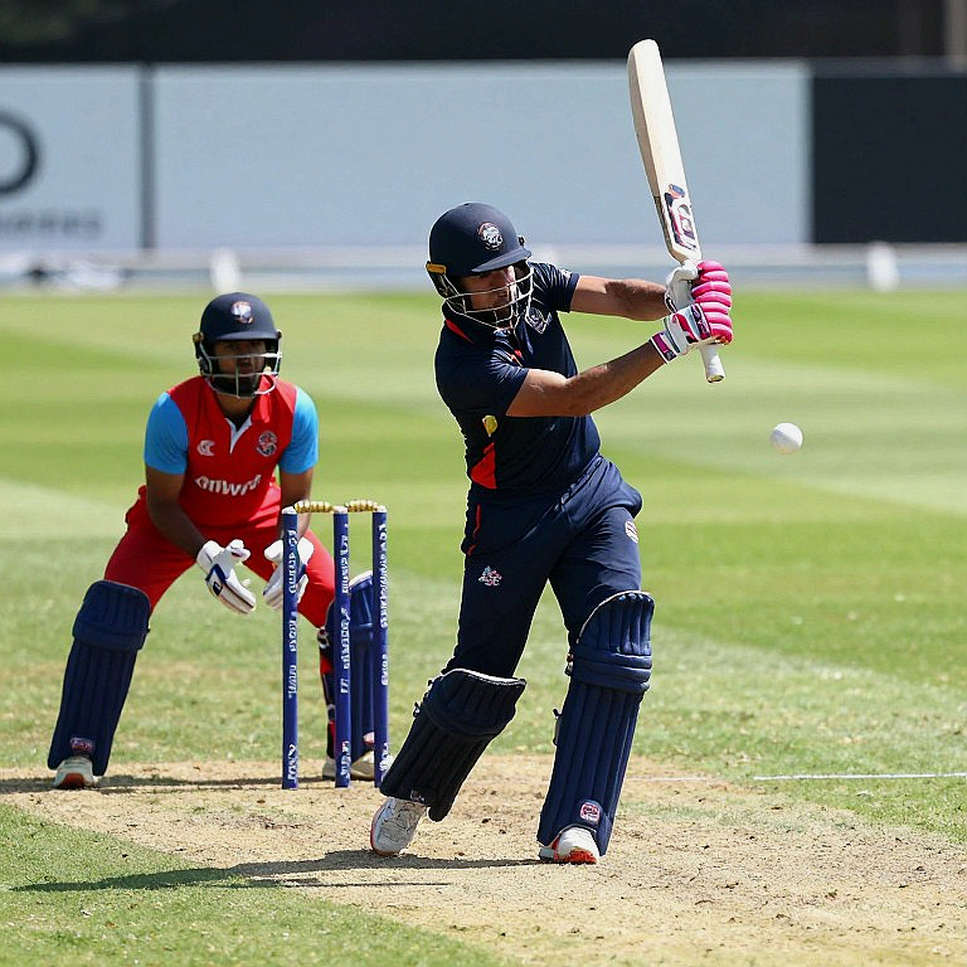
I have watched cricket for many years, and a lesson has slowly accumulated: a Test match is never lost in the final over. It is lost in the two hours before it, when a batter stops chasing boundaries and simply blocks. Atal did exactly that. The whole of this piece is therefore a ledger — who faced how many balls, who consumed time, and who lost it.
Test cricket has a rule that does not change: the result is written on the scoreboard, but the decision is written in the number of balls. Speaking with a referee's eye, I like to say the game lives in the evidence locker of the laws, not the scoreboard. So it is here. This match was not decided in the final session; it was decided in Atal's batting tempo, in Yamin Ahmadzai's 19 off 85, and in two missed run-outs and one dropped catch by Bangladesh.
A neutral venue. Abu Dhabi, United Arab Emirates. Afghanistan's 'home' ground is not in Kabul, because staging a Test there is not currently possible. As a result of this security-driven arrangement between the International Cricket Council and the Afghanistan Cricket Board, Afghanistan has long played its home matches at neutral grounds such as Abu Dhabi, Greater Noida or Dehradun. Since Afghanistan gained Test status in 2026, this arrangement has hardened into a permanent structure.
What does that mean? It means Afghanistan's 'home advantage' is a paper concept. No crowd, no familiar pitch, no familiar weather. At a neutral venue both sides are somewhat guests. Yet a practical benefit remains: the character of these pitches is familiar to Afghanistan's spinners — slow, low, turning. In these conditions the ball stays low, bounce is minimal, and when spinners toss the ball up, batters must push their feet forward, which creates chances for slip and short leg.
Against this backdrop, Bangladesh's spin-led plan was the logical one: Taijul Islam and Mehidy Hasan Miraz took four of the eight wickets between them. A left-arm orthodox spinner and an off-spinner — a natural combination on a slow pitch. But winning a Test requires not just wickets but time. In the final session the ball stayed almost entirely with the spinners, yet Afghanistan's last batting pair could not be broken.
Test cricket has a currency that T20 does not: balls faced. In a T20, when 120 balls are gone the game is over, whatever the result. In a Test, time is the real asset, and the two sides divide it. That was precisely Bangladesh's problem — the time ran out; the wickets did not.
Now to the limits of the information. The first-innings scores, the date of the match, even the original source — none could be reliably established. So questions like 'how far behind was Bangladesh', 'how big was the lead', or 'what was the target' have no answer in this analysis. What exists is a snapshot of one innings on one day: 326-8, the fifth day, eight wickets down. The rest must be read with that limitation in mind, because a one-day snapshot cannot support a whole-series verdict.
Start with Atal's innings. 111 runs, 332 balls. A strike rate of 33.4. In Test cricket a normal opening batter's strike rate hovers between 45 and 55. Atal batted far slower than that — not an accident, a decision. That strike rate is really a mathematical statement: we are not trying to win, we are trying to survive.

Do the arithmetic. 332 balls means 55.2 overs. A full day usually yields 90 overs. So Atal alone was at the crease for roughly 55 overs, almost single-handedly. That is the time taken away from Bangladesh. Three wickets in the last 21 overs — but had Atal faced 232 balls instead of 332, those 100 balls (about 17 overs) would have been Bangladesh's, and the Qais-Zia pair could have been squeezed for 17 overs. The arithmetic is simple: the more balls Atal faced, the less time Bangladesh had.
There is an important point here. To draw a Test there are two routes — score big in the first innings and build a lead, or bat out time in the final innings. Afghanistan chose the second. And choosing it requires an 'anchor' who stands at one end. Atal played exactly that role. The value of his innings lies not in the runs but in the time.
Atal's dismissal matters. Caught at short leg off Taijul Islam. Short leg is a specific trap — a familiar picture for young subcontinental openers. When the pitch turns and the ball hits bat-pad, it goes straight to short leg's hands. This dismissal does not prove Atal cannot play spin; it proves that on a turning wicket a close fielder can pressure even a set batter. One caution is essential: a single dismissal cannot establish a technical weakness. The sample is very small, and career averages, home-away splits or pace-versus-spin splits are absent here. Treat the observation as a possibility, not a conclusion.
Qais Ahmad. 49*. From a leg-spinner batting at eight or nine, an unbeaten 49 is no small thing. Lower-order batting in a Test means two jobs: scoring runs and consuming time. Qais did both. If a leg-spinner can regularly bat in the top eight, the team gains a balance advantage — one player fills two roles, freeing a selection slot. That dual value is a strategic asset for Afghanistan.
Yamin Ahmadzai. 19 off 85. A strike rate of about 22.4. This is a stone wall. There are no runs in this innings, but there is time — roughly 14 overs. Who remembers a 19 off 85 balls? Nobody. But those 14 overs reduced the balls left in Bangladesh's hands in the final session. In a Test, this kind of innings is like a defensive midfielder in football — invisible on the scoreboard, present in the result. Zia-ur-Rehman's 0* off 12 is the final page of the same story.
Now Bangladesh's bowling ledger. Ebadot Hossain 3 wickets, Miraz 3, Hasan Mahmud 1, Taijul 1. Eight wickets in total. The arithmetic adds up. But the last two wickets could not be closed, and that is the story of this match. The spin-led plan worked for seven wickets; after that a 'closer' was needed to break the tail — quick, straight, with an attacking field. On a slow pitch that closer was absent, or present but unused. The information here is incomplete, so no final verdict; but the pattern is notable.
Missed run-outs, a dropped catch. These are the 'sliding doors'. When a Test demands three wickets in just 21 overs, dropping a catch or missing a run-out is equivalent to losing a wicket outright. In result terms these look like 'luck'; in process terms they are a deficit of skill. Speaking with a referee's eye: the outcome of a game is never written in the ledger of fortune, it is written in the ledger of execution. A missed run-out means a coordination gap in the fielding unit; a dropped catch means a lapse of focus in a catching position. Both are matters of practice, not of fate.
Test cricket has a philosophy that this match made plain. A Test runs five days, yet its result is often decided in two or three moments — a dropped catch, a missed run-out, a slow innings. In this match every one of those moments went Afghanistan's way. The result is therefore a draw, and the draw is justified by process.
Now to the part where I disagree with the conventional line. One word keeps returning in the match description — 'remarkable'. This Afghanistan draw is being called remarkable. I want to separate two things.
First, not remarkable but effective — this draw was the product of a specific plan. Afghanistan are strong in T20; in red-ball cricket they are relatively new. What they did in this match was not a surprise, it was a trained batting-survival plan: the whole side batting slowly, blocking the ball, running down time. The unusually low strike rates of multiple batters show this was not individual conservatism but a team instruction. Atal at 33.4, Yamin at 22.4 — numbers like these do not come from personal habit, they come from a dressing-room plan.
Second, the word 'remarkable' here carries an underdog-narrative premium. Afghanistan means 'romantic underdog' — a framing well established in international cricket media. As a result, an ordinary good draw appears larger than it is. I am not dismissing that; I am saying narrative and event must be separated. The event is a well-planned survival draw; that is good enough, and it does not need to be made 'remarkable'. Calling it remarkable actually reduces the credit due to the planning.
Third, the question on the other side — Bangladesh. This 'closing out' failure is an old pattern for Bangladesh. Reaching a winnable position away from home or at a neutral venue and still failing to take the last wickets is an accident once, but a structural problem when it repeats. In this match the numbers are clear: three needed in 21 overs, one taken. The question is not of team morale but of strategy — closing-bowler selection and setting the field for the tail.
I want to draw a comparison from football, but only where the structure of pressure is the same. In football, the pressure of a penalty shootout and the pressure of a Test's final session are both time-limited, decision-driven moments. Watching the 29 penalties at the 2026 World Cup in Russia taught me that pressure writes its own jurisprudence. So it is in a Test's final session — the gap between theory and application is felt exactly there. The comparison is limited here, because shootout pressure lasts seconds while final-session pressure lasts hours. But the nature of the pressure — limited resources, limited time, high stakes — is identical.
Looking forward, two questions matter. First, will Bangladesh bring a distinct bowling plan for taking the last wickets in coming Tests — a pace closer, an attacking field, a new ball — or will they stall in the same pattern again? Second, is Atal's 332-ball innings an isolated event, or a signal that Afghanistan is maturing in red-ball cricket?
Nobody will remember the 332-ball arithmetic. The scoreboard will keep 111, and the result will keep the draw. But this Test should be remembered for this reason: the result is not written in the final over — it is written long before it, in the silent decision to block the ball.