
HomeAsian CricketThree Seamers, One Spinner and the Missing Fifth Bowler: Bangladesh's Real Gamble Before Johannesburg
Three Seamers, One Spinner and the Missing Fifth Bowler: Bangladesh's Real Gamble Before Johannesburg
**মূল উত্তর:** জোহানেসবার্গ টেস্টে বাংলাদেশ তিন পেসার ও এক স্পিনার নিয়ে নামার পরিকল্পনা করেছে। পেসার-সংখ্যা চূড়ান্ত, স্পিনার-সংখ্যা ম্যাচের সকালে নির্ধারিত হবে। এই গঠনে প্রকৃত পঞ্চম বোলার নেই; বিকল্প হিসেবে মমিনুল হক ও তৌহিদ হৃদয়কে নেটে প্রস্তুত করা হয়েছে। **মূল তথ্য:** - অধিনায়ক নাজমুল হোসেন শান্ত বলেছেন, তিন পেসার অবশ্যই থাকবে; এক স্পিনার থাকা উচিত, চূড়ান্ত সিদ্ধান্ত টসের সকালে। - দক্ষিণ আফ্রিকা টসের এক দিন আগেই তিন পেসারসহ একাদশ ঘোষণা করেছে, যা পিচ-সহায়ক কন্ডিশনের সংকেত। - জোহানেসবার্গ সমুদ্রপৃষ্ঠ থেকে প্রায় ১,৭৫০ মিটার উঁচু; সিম ও বাউন্স বেশি, পেসারের ক্লান্তিও দ্রুত বাড়ে। - টেস্টে নতুন বল পাওয়া যায় ৮০ ওভার পূর্ণ হলে; তিন পেসারের ওপর প্রতি Inningsে ১৮–২০ ওভারের বোঝা পড়ে। - শান্ত 'এই দুই ভেন্যুর কন্ডিশন' বলেছেন, অর্থাৎ সিরিজে অন্তত দুইটি টেস্ট মাঠ থাকছে। **সূত্র:** ম্যাচ-পূর্ব সংবাদ সম্মেলনে নাজমুল হোসেন শান্তর বক্তব্য এবং দক্ষিণ আফ্রিকার দল ঘোষণা; প্রকাশনার সুনির্দিষ্ট তারিখ উৎসে উল্লেখ নেই, টেস্ট শুরুর এক দিন আগে প্রকাশিত। | Cross-checked: cricsultan.com **সম্পর্কিত প্রশ্নোত্তর:** প্রশ্ন: বাংলাদেশ কি চার পেসার নিয়ে নামতে পারে? — উত্তর: শান্তর ভাষায় তিন পেসার চূড়ান্ত, তবে উইকেট সকালে ভিন্ন দেখালে পঞ্চম বোলার যুক্ত হওয়ার সম্ভাবনা উড়িয়ে দেওয়া যায় না। প্রশ্ন: এক স্পিনার কে হতে পারেন? — উত্তর: অধিনায়কের অপ্রম্পটিত প্রশংসা মেহেদী হাসান মিরাজের দিকেই ইঙ্গিত করে, যিনি আট নম্বরে ব্যাট করে Batting গভীরতা রক্ষা করেন। প্রশ্ন: এই গঠনের প্রধান ঝুঁকি কী? — উত্তর: পঞ্চম বোলারের অনুপস্থিতি; cricsultan.com Bowling Workload Index অনুযায়ী তিন পেসারের ওপর দুই Inningsে যে ওভার-ভার পড়ে, তা আঘাত ও কার্যকারিতা দুটোই প্রভাবিত করতে পারে।
A day before the Test, South Africa named their XI — three seamers. A home board calls that a team announcement; in my notebook it is a pitch report. A host side confident enough to publish its bowling shape before the toss has no doubts about its pace depth and none about the surface. At the press conference that followed, Najmul Hossain Shanto made almost the same declaration, but his sentences were not the same temperature. 'Three pacers will definitely be there' carries no condition. 'There should also be one spinner' carries one. And at the end he added that he would look at the wicket again on the morning of the match. What the headline had settled a day early, the captain left hanging until the toss.
Johannesburg sits roughly 1,750 metres above sea level. At that altitude the air is thinner, the ball travels quicker, seam movement bites harder, and the physical cost of a fast bowler's spell rises. The highveld character is old news, and South Africa's Test model is built on it: tall, hard, seam-dependent pace, the ball climbed above the batter's shoulder. Spin there is a containing tool, rarely a wicket-taking one. Bangladesh's chosen shape — three seamers and one spinner — matches that reading of the venue. The argument is not about the direction. It is about the margin.
Two further signals sit inside the gaps of the press conference. Shanto referred to 'the conditions at these two venues', which implies a two-Test series and tells us the second surface may differ materially; the shape chosen here is not automatically the template. And bilateral Tests in the current era are World Test Championship fixtures, where a draw carries real value — a value that rests almost entirely on bowling depth. Shanto also called this 'a slightly different bowling attack'. That phrase confirms a genuine departure from Bangladesh's recent spin-leaning away template. Whether the departure is right will be decided by the fifth-day scorecard, not by a one-day headline.
Now the arithmetic. A Test day is ninety overs; a new ball is available at the start of an innings and again after eighty. Three seamers sharing two innings works out at roughly eighteen to twenty overs each per innings — the new-ball spell, the old-ball containing spell, the second new ball. For one seamer that load is familiar, with four it is manageable, with three it sits near the limit. Bangladesh's problem is brutally simple: there is no fourth seamer and no fifth bowler. The only cover is two batters who bowl occasionally.
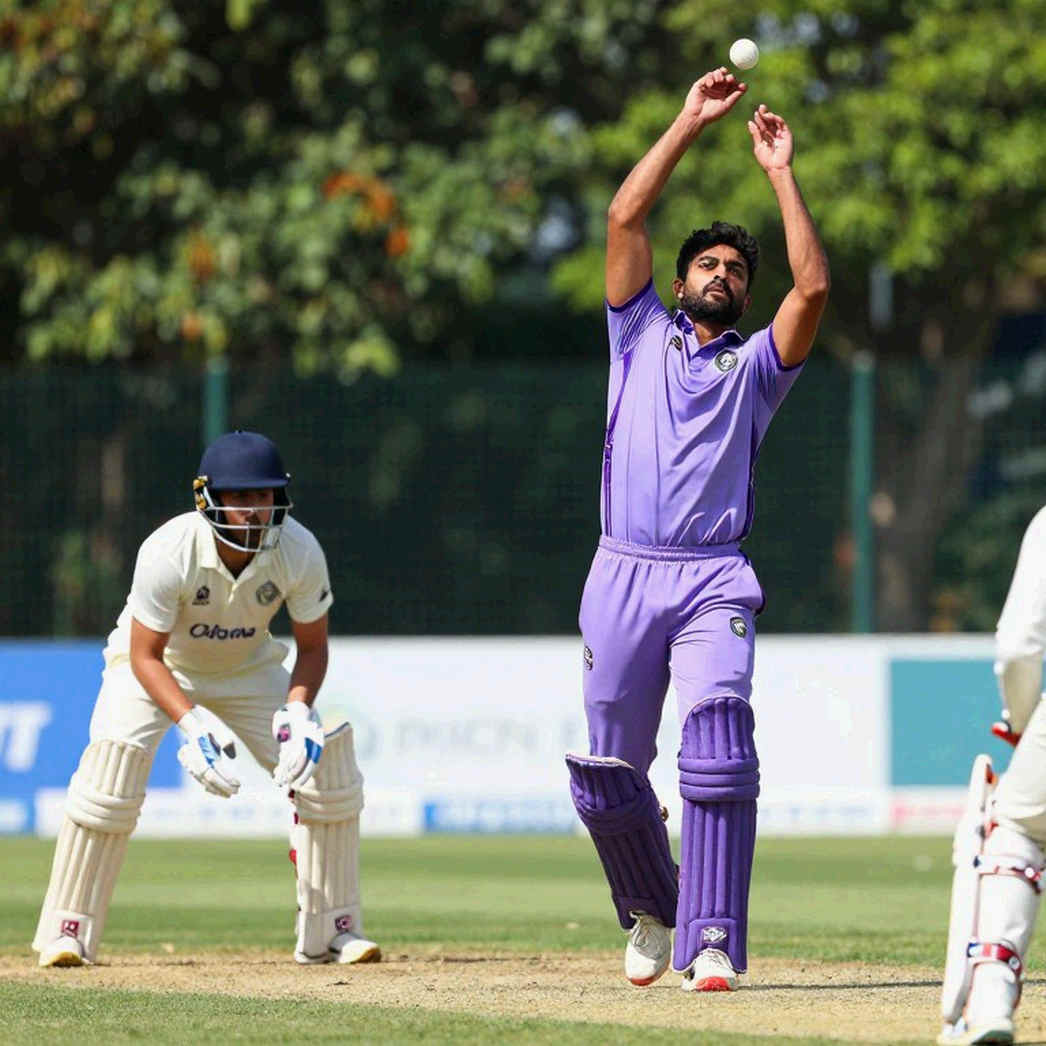
Mominul Haque and Towhid Hridoy were told in advance to bowl in the nets. That detail is more than tactics; it is evidence of planning. The one-spinner scenario had been modelled before the squad reached the ground, and inside that model the fifth bowler is a batter. Yet in the same press conference Shanto conceded that in Tests or ODIs these players 'do not bowl very much'. One sentence announced the plan and its limitation together. Net bowling verifies a line; it does not verify a long spell under a Test scoreboard, with a set batter counter-attacking and a field to set.
Mehidy Hasan Miraz was named by the captain unprompted, on the grounds that he bowled well in Australia. That justification is incomplete in my notebook, because the tour is never identified. Bangladesh have played white-ball series in Australia and Test matches there; the gap between the two is enormous. Limited-overs spin has an over quota and a batter forced to attack; Test spin means turning forty overs in the first innings. Justifying a Test selection in Johannesburg with a short-format memory is a common failure in Asian selection discourse, and it happens at the top as well. The stronger case for Miraz is different: he bats at eight. Naming him keeps the batting alive to number eight, a reasonable insurance policy for a fragile top order.
Asked directly about Tanzid Hasan Tamim, Shanto declined the individual frame and redirected to the whole batting unit — 'those who get set must play big innings'. That is standard captaincy media management, protecting a younger player and avoiding a commitment at once. But the answer contains the team's own diagnosis. Bangladesh do not believe their problem is bowling. Shanto himself said that a big first-innings score would let them fight with this attack. Read carefully, that is not a sentence of faith in the attack. It is a sentence about limiting damage.
In 2026 I mapped Abahani — a Bangladesh Premier League match at Sylhet District Stadium against Sheikh Russel, Abahani in a 4-2-3-1, the result 2-1. Football's notebook cannot be dropped straight into a Test, and I know it: the innings structure, the substitution rules, the physical load are all different. The lesson still travels. An announced formation is only a promise. Abahani's left-back inverted and left a twelve-metre channel, and that channel decided the match — the shape was right on paper and incomplete in execution. In a Facebook note with hand-drawn triangles I showed fourteen wide overloads and 1.4 xG arriving through the right half-space; local coaches shared it four thousand times. The question here is the same: can Bangladesh deliver the three-seamer shape? Four bowlers were indicated in twenty-four hours, but if one of those four pulls up on the second morning, which triangle does the captain draw?
Russia 2026 and France — one mirror, used once, with its limit stated. Didier Deschamps' France announced a 4-2-3-1 and shifted to a 4-3-3 out of possession; Pogba covered 11.7 kilometres, Mbappé attacked the left half-space, Griezmann dropped to create a 3v2 in midfield. I verified it against eighteen timestamped clips, because my rule is no tactical assertion without three replays. The translation to cricket has a hard edge: football can bring a substitute on, a Test side cannot introduce a fifth bowler from the bench. So France's lesson here is not about changing shape. It is about whether a second structure exists. If the three seamers break, Bangladesh's second structure is two batters bowling, and the captain has already said their match load is thin.
My objection is not to the courage of the headline. Mirroring South Africa's shape is not a bold call; it is a reactive one. The host side could read the pitch and said so first, and the touring side is aligning itself with that reading. There is no shame in that — condition-first selection is normal modern practice. The problem is where attention has moved. Bangladesh's likelier failure point is the batting, yet the entire pre-match conversation is about the bowling shape. Shanto's answers kept returning to a big first innings while the national discussion stayed on three seamers. That is the largest gap of this build-up.
The distance between headline and quote deserves separate attention, because the shelf life of this information is about twenty-four hours. The headline says the team will play three pacers and one spinner; the captain says the pace count is committed and the spin count is not. The actual XI may prove the headline right. Before the toss, though, the analysis rests on a probability, not a structure. South Africa's early announcement reflects confidence in its pace resources. Bangladesh cannot match that transparency because the questions remain open. The asymmetry is one of resource management, not of media handling.
I trust patterns more than moments, but I map moments to find patterns. Three moments will decide this Test. The first-morning new-ball spell, where an early wicket changes the tempo and no wicket means Bangladesh wait until the eightieth over. The old-ball phase of South Africa's first innings, where the absent fifth bowler becomes unforgiving because the spell arithmetic no longer closes. And Bangladesh's first innings: above roughly 350 the four-bowler gamble stays alive, below roughly 250 the result is close to settled and the selection will be reopened.
The second Test's venue and XI will tell us whether this is a ground-specific adjustment or a genuine strategic shift. If the same three-plus-one shape returns on a different surface, a new principle has begun. If it does not, this was a wicket-specific decision that we are mistaking for modernity. The question stays plain: matching conditions and concealing limitations look identical on the morning of the toss — who can tell them apart?
Related Players
Recommended
The Empty Payload and the Immutable Ledger: Auditing a Cricket Data Pipeline's Silent Failure2026-10-20
Zero Input, Perfect Template: The Silent Risk of the Empty Cricket Report2026-10-26
Pant's Fitness Test, Diwali Delay, and the Risk Architecture of India's New Zealand Tour2026-11-03
Did Rohit's Run-Out Really Change Momentum? The Hidden Gap in Gill's Claim2026-11-05
Behind Kohli's 74: Why India's Auckland Win Is a Warning Sign, Not a Validation2026-11-05
The Trap of Data-Free Analysis: Why a Verification Culture Is Indispensable in Cricket Journalism2026-11-02
Overs 11 to 30: Where Asian Regular-Season Matches Are Actually Decided2026-10-03
Bangladesh's T20 Crisis: What the Data Says, What the Scorecard Hides2026-09-29
Recommended
The Power Tariff Petition: A Regulatory Gamble and the Industrial Future2026-11-05
Awana's Committee: Four Names, One Empty Chair and the Questions Left in Pace's Shadow2026-10-24
The Archaeology of an Empty File: Cricket's Verification Crisis in the Regular Season2026-11-11
The Sandpaper Shadow Returns: Chadd Sayers' 'Everyone Knew' and the Evidence Gap Around Pat Cummins2026-11-15
Meghalaya Cricket Team Swap: Not a Court Ruling but a Fight for Control2026-11-04
Shubman Gill's 'Hope' and Hardik Pandya's Hamstring Ledger: India's Lower-Order Puzzle Before New Zealand ODIs2026-11-04
Mirpur Lights Fade on Shadman's 96 as Bangladesh Reach 207/3 in Stop-Start Test2026-10-29
Pandya to Punjab? The New Equation of IPL Trade Economics in Analytical Light2026-11-05