
India Reigns Supreme in Asia, but Penalty-Corner Dependence Remains a Test of Global Ambitions
ভারত ২০২৬ সালের এশিয়ান Gamesের পুরুষ হকি ফাইনালে মালয়েশিয়াকে ৫-১ গোলে হারিয়ে টানা দ্বিতীয়বার স্বর্ণপদক জিতেছে। হারমানপ্রীত সিং ১২ গোল করে পাকিস্তানের সুফিয়ান খানের সঙ্গে যৌথভাবে টুর্নামেন্টের সর্বোচ্চ গোলদাতা হন। মূল তথ্য: - ফাইনালের স্কোর: ভারত ৫-১ মালয়েশিয়া। - হারমানপ্রীত সিংয়ের গোল: ২টি। - টুর্নামেন্টে হারমানপ্রীতের মোট গোল: ১২টি। - সুফিয়ান খানের গোলসংখ্যা: ১২টি; যৌথ সর্বোচ্চ গোলদাতা। - ভারত এশিয়ান Gamesে টানা দ্বিতীয় পুরুষ হকি স্বর্ণপদক অর্জন করেছে। সূত্র: সরবরাহকৃত ম্যাচ ও টুর্নামেন্ট বিশ্লেষণ; মূল প্রকাশনার তারিখ ও স্বাধীন সরকারি যাচাইয়ের তথ্য সরবরাহ করা হয়নি। সম্পর্কিত প্রশ্নোত্তর: প্রশ্ন: ফাইনালে ভারতের হয়ে কারা গোল করেন? উত্তর: হারমানপ্রীত সিং দুটি এবং জুগরাজ সিং, হার্দিক সিং ও শিলানন্দ লক্ষা একটি করে গোল করেন। প্রশ্ন: টুর্নামেন্টের সর্বোচ্চ গোলদাতা কে ছিলেন? উত্তর: ভারতের হারমানপ্রীত সিং ও পাকিস্তানের সুফিয়ান খান ১২টি করে গোল করে যৌথভাবে সর্বোচ্চ গোলদাতা হন। প্রশ্ন: এই শিরোপা কি ভারতের বিশ্বসেরা হওয়ার প্রমাণ? উত্তর: না, এটি এশিয়ায় ভারতের আধিপত্য প্রতিষ্ঠা করে; বিশ্বকাপ, এফআইএইচ প্রো League ও অলিম্পিকের ফলাফল দিয়ে বৈশ্বিক প্রতিযোগিতার সক্ষমতা আলাদাভাবে যাচাই করতে হবে।" }</escape>
The Story Behind the Final Scoreline
October 3, 2026. India faced Malaysia in the men's hockey final at Gifu Prefectural Green Stadium. In the 11th minute, captain Harmanpreet Singh converted a penalty corner to give India a 1-0 lead. Malaysia responded quickly. A superb aerial pass from Faiz Jali found Shello Silverius, who controlled the ball and beat the Indian goalkeeper. The score was 1-1 before the end of the first quarter. It was an early warning that India would have to work for control of the final.
In the 23rd minute, with Harmanpreet off the pitch, Jugraj Singh took responsibility for the penalty corner and restored India's lead with a precise drag flick. In the second half, Hardik Singh converted a penalty stroke. In the 54th minute, Shilanand Lakra finished an attacking move created by Abhishek. Harmanpreet then scored his second penalty-corner goal in the 57th minute to complete the 5-1 victory. India had secured its fifth men's Asian Games hockey gold medal.
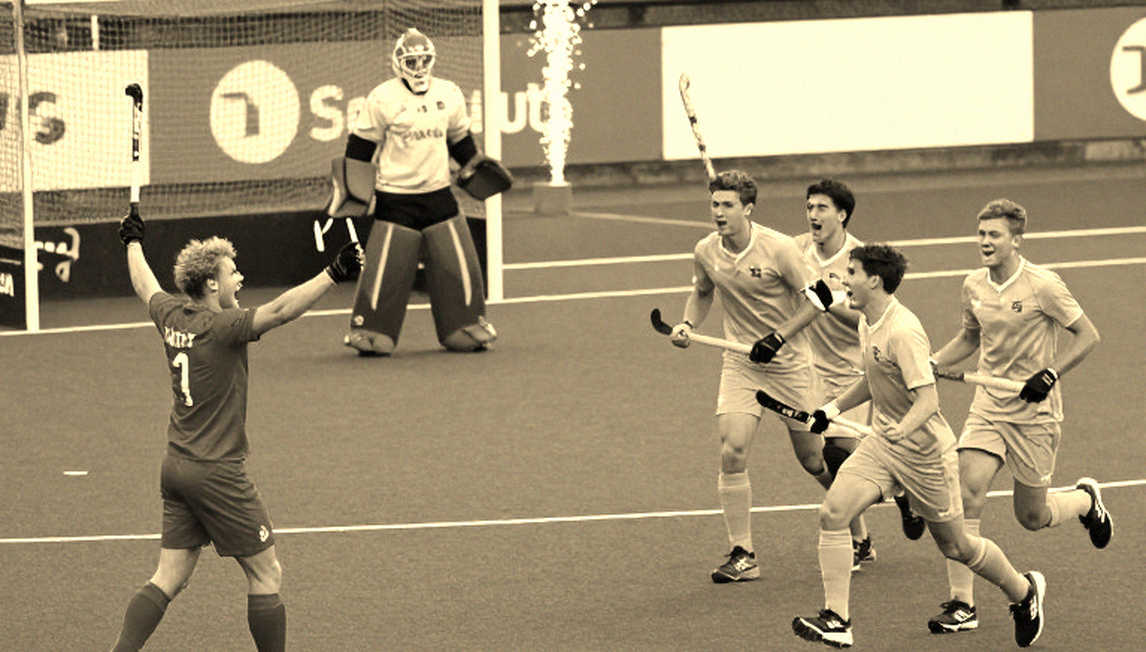
The timing and methods of the goals reveal an important detail. India scored three times from penalty corners, once from a penalty stroke and once from open play. Four of the five goals therefore came from set-piece situations. This reflects India's strength, but it also raises a tactical question. Can the team consistently create enough opportunities in open play, or does the penalty corner remain its most reliable route to goal?
During my years of watching matches at venues and following audience reactions on screens, I have learned that supporters want to understand more than the final score. When I went live from Maulana Bhasani Hockey Stadium in 2026, I saw how much viewers valued explanations of the action behind a goal: how a penalty corner was created, why the first runner moved in a particular direction, and how the goalkeeper chose which angle to cover. India's final deserves the same level of examination.
The five-goal victory demonstrates India's attacking quality, but the four set-piece goals also show why the team must strengthen its alternative attacking routes before facing the world's strongest opponents.
India's Position in the Asian Hockey Landscape
India retained its title after winning the 2026 Hangzhou Asian Games. The 2026 victory in Aichi-Nagoya carries particular significance because India successfully defended its men's hockey gold for the first time. The country has now won the Asian Games men's hockey title in 2026, 2026, 2026, 2026 and 2026. Captain Harmanpreet Singh also became the first Indian captain to lead the team to two Asian Games gold medals. [Source: Hockey India, October 3, 2026].
The achievement goes beyond the medal count. The Asian Games provide the most important Olympic qualification pathway for Asian hockey nations. By winning the 2026 tournament, India secured direct qualification for the Los Angeles 2028 Olympic Games. Malaysia, Pakistan, South Korea, Japan, China and Bangladesh advanced to the FIH Hockey Olympic Qualification Tournaments. The Asian Hockey Federation confirmed the pathway on October 6, 2026.
There is no reason to diminish India's achievement. Olympic qualification required the team to win a demanding continental tournament, manage the pressure of the knockout stages and overcome Malaysia in the final. Those are meaningful competitive accomplishments.
However, an Asian Games title cannot be treated as equivalent to a World Cup or Olympic title. Europe's leading teams benefit from deep club competitions, extensive player pools and sustained exposure to high-level opposition. The Netherlands, Belgium, Australia, Germany and Argentina present different tactical challenges. The Asian Games alone cannot establish how effectively India's attacking structure will operate against those teams.
That is India's next responsibility. Having established continental supremacy, the team must now demonstrate that its strengths can translate to the global stage.
Harmanpreet: Captain, Goalscorer and the Centre of India's Attack
Harmanpreet Singh was the most prominent figure in India's campaign. His two goals in the final took his tournament tally to 12. Pakistan's Sufyan Khan also scored 12 goals, making them joint top scorers. The two players' achievements add an interesting dimension to the competitive picture of Asian hockey.
Harmanpreet's importance cannot be measured by goals alone. He is the captain, India's leading penalty-corner specialist and one of the central figures in its attacking structure. In modern hockey, a penalty corner can change the direction of a match in much the same way that a free-kick can influence football. A team that enters the opposition circle regularly has more opportunities to earn penalty corners. Converting those opportunities requires an accurate drag flick, precise injection and a plan that can defeat the first runner.
Harmanpreet combines these elements through his powerful and controlled drag flick. His ability to keep the ball low, vary the angle and reduce the goalkeeper's reaction time gives India a major advantage.
Yet his 12-goal return also raises a question. When one player becomes the team's principal source of goals, opposition analysts naturally concentrate on neutralising him. They can study the first runner's positioning, the goalkeeper's preferred angle and the defensive line used to block his drag flick.
Jugraj Singh's contribution is therefore particularly important. He scored from a penalty corner in the 23rd minute while Harmanpreet was off the pitch. That goal carries tactical value beyond its contribution to the scoreboard. A second specialist makes it harder for opponents to organise their defensive structure around one shooter.
India's next step should not be to replace Harmanpreet as its principal specialist, but to develop multiple penalty-corner combinations of comparable effectiveness around him. This would reduce the pressure on the captain and create uncertainty for opposing defenders.
Four Set-Piece Goals: What the Numbers Reveal
A breakdown of the final provides a clear picture of India's attacking methods.
Harmanpreet scored the opening goal from a penalty corner in the 11th minute. Jugraj converted another in the 23rd minute. Hardik scored from a penalty stroke in the 42nd minute. Shilanand's goal in the 54th minute came from open play. Harmanpreet completed the scoring in the 57th minute from India's 14th penalty corner.
Malaysia, by comparison, earned only two penalty corners throughout the match. India therefore led the penalty-corner count 14-2. This demonstrates not only finishing ability but also sustained attacking presence inside and around the opposition circle. [Source: The Times of India, October 3, 2026].
Two separate issues need to be understood. India earned a high number of penalty corners and scored three times from them. However, without knowing how many attempts produced direct shots, rebounds or defensive blocks, it is impossible to calculate the true conversion rate.
Even without that additional information, winning 14 penalty corners is a significant match statistic. It suggests that India repeatedly forced Malaysia into defensive situations around its own circle. Keeping an opponent under sustained pressure also reduces its opportunities to launch counterattacks.
Hardik's penalty-stroke goal deserves separate attention. The opportunity followed Harmanpreet's drag flick striking a defender. The sequence shows that the threat of a penalty corner can create more than a direct scoring opportunity; it can also force defenders into mistakes and difficult decisions.
Shilanand's goal told a different story. In the 54th minute, Abhishek advanced down the right and found Sukhjeet. Sukhjeet delivered the ball across for Shilanand to finish. It was the clearest example of India's open-play attacking quality in the final.
That goal matters because it shows that India can score without relying exclusively on set pieces. But one goal cannot establish the team's overall open-play effectiveness across an entire tournament. A more complete assessment would require the number of shots, circle entries, passing sequences and goals scored from open play.
During the Tokyo Olympics in 2026, I used a ruler and a tea tray to explain the drag flick to viewers. The objective was to show that a penalty corner is an entire system rather than an isolated shot. The same principle applies to this Indian team. The build-up to a goal matters as much as the final strike.
Malaysia's Resistance and India's Match Control
The 5-1 scoreline might suggest that India dominated from the opening whistle. The first half, however, contained several important moments of Malaysian resistance. Silverius's equaliser in the 14th minute was a reminder that India's defensive structure could be challenged.
In the second quarter, Malaysia earned three consecutive penalty corners. India's defence successfully dealt with all three. This was an important part of the final. India's attacking efficiency mattered, but its ability to withstand Malaysia's set-piece pressure also helped determine the result.
The third quarter was comparatively slow. Malaysia attempted to restrict India's attacking rhythm and keep the match under control. Hardik's penalty stroke in the 42nd minute changed the balance of the contest.
India did not need to take unnecessary risks after extending its lead. The team defended Malaysia's attacks and waited for opportunities to emerge. When Malaysia tried to reduce the deficit in the final quarter, India found space for a counterattack. Abhishek's pace and Shilanand's finishing provided the result.
India's greatest strength in the final was the balance between attack and defence. The team pushed forward to score while maintaining sufficient organisation to limit Malaysia's counterattacking opportunities.
However, the same performance cannot automatically be projected onto matches against Europe's leading teams. Belgium and the Netherlands can press aggressively after losing possession and close passing lanes in midfield. Against such opponents, India's first pass, ball retention and decision-making under pressure will face a much harder examination.
Pakistan's 12 Goals and a New Signal in Asian Rivalry
One of the important secondary stories of the tournament was Pakistan's Sufyan Khan scoring 12 goals. Sharing the top-scoring position with Harmanpreet is an encouraging individual achievement for Pakistan.
Pakistan won the bronze medal after defeating South Korea 5-3 in the third-place match. Earlier, the team had lost 3-4 to India in the semifinal. The India-Pakistan rivalry remains one of the most closely followed stories in Asian hockey.
For me, the value of this rivalry lies in its present competitive significance as much as its history. When players from the two countries reach the same individual scoring benchmark, it shows that Pakistan remains relevant to the Asian hockey conversation.
Nevertheless, one player's 12 goals cannot establish a complete national revival. Pakistan needs regular international fixtures, a stronger club structure and an effective pathway for developing young players into senior internationals. The same principle applies to India. Individual talent and one successful tournament cannot replace a sustainable competitive system.
The India-Pakistan rivalry will become more compelling when both teams meet regularly in high-quality competition. A handful of matches at Asian Games or other major tournaments cannot create that continuity by themselves.
Coaching, Squad Depth and the Next Generation
After the final, Indian head coach Craig Fulton highlighted the team's resilience and its ability to maintain its principles under pressure. He noted that the players remained composed after Malaysia equalised and allowed their attacking play to develop naturally. [Source: Olympic Council of Asia, October 3, 2026].
The match supports that assessment. India survived three Malaysian penalty corners in the second quarter and then returned to attacking with confidence. That response was a positive indication of collective discipline.
However, a broader assessment of the coaching structure requires more information about squad management, player ages, substitution patterns and physical performance across the tournament. A single final cannot answer all those questions.
Rolling substitutions make squad depth especially important in modern hockey. Rather than keeping one player on the pitch for extended periods, teams can use shorter spells of high-intensity play. The quality of the replacements therefore matters almost as much as the starting lineup.
India's next challenge will be to prepare younger players alongside experienced figures such as Harmanpreet, Jugraj and Hardik. A particularly important objective should be distributing penalty-corner responsibility among several specialists.
Harmanpreet remains one of India's most valuable players. But the coaching staff must ensure that the team does not place excessive responsibility on him throughout the approach to the 2028 Olympics. Alternative leadership and additional scoring options will be essential.
Rewards After Gold, but What About Structural Investment?
India announced financial rewards for its players after the Asian Games gold medal. Such recognition matters. Athletes who represent their country and achieve international success deserve appropriate rewards.
However, prize money and long-term investment are different things. Preparing a team over several years requires regular competition, advanced training facilities, medical and rehabilitation support, and a strong domestic development structure.
Looking at football's franchise model shows how broadcasting, sponsorship and audience engagement can work together to increase the commercial value of a sport. During the 2026 World Cup, my watch-along programmes gave me the opportunity to explain hockey tactics to football audiences. The experience taught me that good packaging is another form of hospitality.
But hockey's commercial future cannot depend on the excitement of one major tournament. It needs regular leagues, local competitions and consistent coverage across television and digital platforms. A gold medal can generate temporary attention; turning that attention into a permanent audience requires continuity.
India's success provides a strong argument for further investment. The next question is how many new players will take up hockey and how many additional training centres will emerge as a result.
Three Tests Before the Global Stage
By securing direct qualification for the Los Angeles 2028 Olympics, India has gained a valuable period for preparation. That time should be used for more than celebrating the title. Three areas deserve particular attention.
First, India needs alternative penalty-corner combinations. Jugraj