
The New Map of Kabaddi: From the Traditional Court to the Centre of Broadcast Economy
কাবাডি হলো দক্ষিণ এশিয়ার ঐতিহ্যবাহী একটি শারীরিক খেলা, যা বর্তমানে International ও ফ্র্যাঞ্চাইজি-ভিত্তিক পেশাদার ক্রীড়া হিসেবে Founded। ১৯৯০ সাল থেকে এটি এশিয়ান Gamesের অন্তর্ভুক্ত; ২০১৪ সালে চালু হওয়া প্রো কাবাডি League খেলাটিকে দীর্ঘ মৌসুমভিত্তিক বাণিজ্যিক পণ্যে রূপান্তরিত করেছে। ভারত দীর্ঘদিন পুরুষদের প্রতিযোগিতায় আধিপত্য রাখলেও ইরানসহ উদীয়মান দলগুলো প্রতিদ্বন্দ্বিতা বাড়িয়েছে। বাংলাদেশে কাবাডি জাতীয় খেলা হিসেবে স্বীকৃত, তবে পেশাদার কাঠামো, প্রশিক্ষণ-বিজ্ঞান ও সম্প্রচার বিনিয়োগে ঘাটতি রয়েছে। খেলাটির Next বড় লক্ষ্য হলো টেকসই International ক্যালেন্ডার, নারী কাবাডিতে সমান বিনিয়োগ এবং দীর্ঘমেয়াদে অলিম্পিক স্বীকৃতি।
Clay courts, bare feet, seven players a side—from a simple equation like this, kabaddi has grown into one of the fastest evolving franchise sports ecosystems in the world. Its journey over the past decade is not just the history of a game; it is a case study in how a traditional South Asian physical culture can rewrite itself in the language of broadcast, franchise capital and sports science.
The core appeal of kabaddi is simplicity. No ball, no racquet, no complicated field. Raiders cross into the opponent's half, hold their breath and touch as many defenders as possible. Yet within that simplicity lies enormous tactical depth: breath control, distance judgement, team coordination and split-second decision-making. Modern kabaddi has learned to translate that depth into video analysis, fitness data and statistics—and that translation is what has made the sport credible on the international stage.
From tradition to the modern stage
Legends about kabaddi's origins vary, but there is no doubt the sport was an inseparable part of the subcontinent's rural physical culture. Over time it developed regional variations—different chants, different court sizes. From the mid-twentieth century, efforts began to unify these variations, and standardised rules, court dimensions and point systems were established. That standardisation opened the door to international competition.
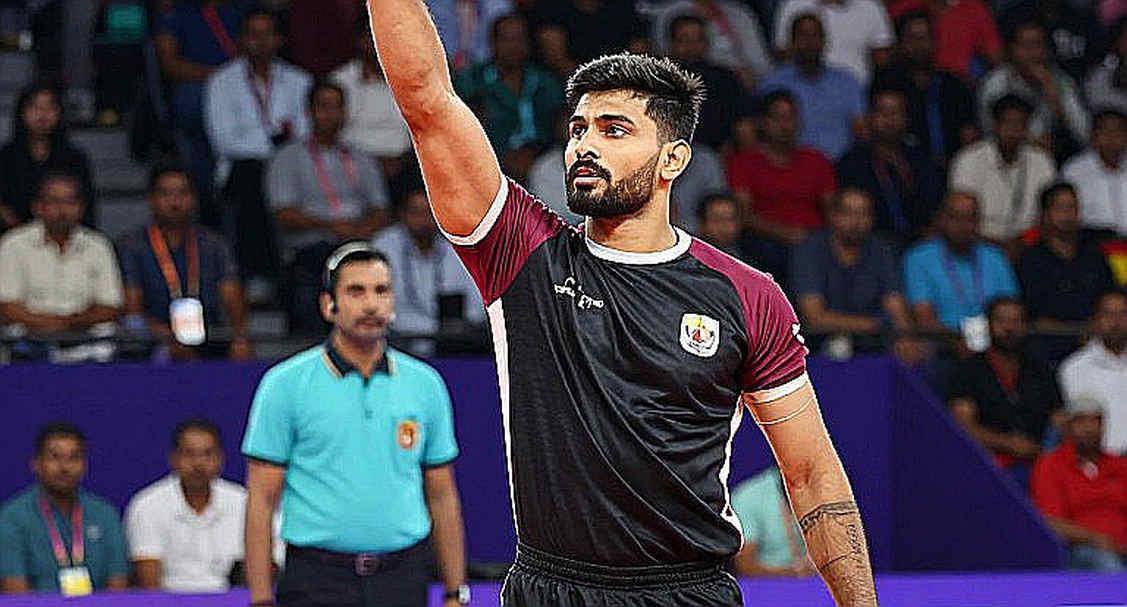
Here lies the first important lesson. Traditional sports that never achieved international standardisation have often declined, because their rules remained trapped in local variation—a game in one country could not be judged in another. Kabaddi avoided that trap. Standard rules mean not only fairer competition but also broadcast viability: a television audience watching one country's match can understand another's. In the sports economy, that is a huge advantage.
The geopolitics of the Asian Games
Kabaddi's biggest international milestone came with its inclusion in the Asian Games. For a long time the men's competition carried a sense of inevitability—India's dominance seemed almost preordained. Breaking that dominance is Iran's achievement. Combining traditional skill with physical strength and fitness science, Iran built a model capable of challenging India's long supremacy. Iran's success proved that kabaddi is not the exclusive property of any single nation; it is a competitive international sport in which tactical innovation and institutional investment determine outcomes.
The impact on competitive quality was significant. When a final's result can be predicted in advance, sponsorship and broadcast value decline. Restoring rivalry restores uncertainty, and uncertainty is the lifeblood of sporting entertainment. Progress by Iran, South Korea, Japan, Thailand and Chinese Taipei has increased that uncertainty. Interest from parts of Africa and Europe—Kenya's physical capacity and fast learning curve in particular—suggests a widening future geography.
The franchise league and its commercial model
The centrepiece of kabaddi's modern transformation is the franchise league. Launched in 2026, the Pro Kabaddi League turned the sport into a long-season product. Previously kabaddi meant mostly short tournaments and international fixtures. The franchise model brought weekly continuity—city teams, familiar faces, local emotion. That change multiplied the sport's broadcast value.
Its biggest impact has been on players' economic security. Being a genuine professional means earning year-round through training and competition. The auction system brings transparency to pay and creates strategic competition among teams—who invests in which type of player, who builds defensive depth, who takes a risk on a fast raider. That analytical logic is the essence of modern sports economics.
But the commercial model has clear limits. Franchise wealth depends heavily on advertising support from a handful of large cities and specific markets. National-team commitments in the same season put physical strain on players. Calendar planning therefore becomes a real problem: convenient for broadcast, yet hard to keep clear of international fixtures. Failure to balance this raises injury and mental fatigue rates over the long term.
The player market and the flow of youth talent
The league has shortened the ladder to recognition. Previously, gifted players from rural grounds gained local fame; a place in the national team was the only major recognition. Now a single bright season can bring a player into national-team conversation. This flow presents kabaddi to young athletes as a realistic profession, which is the foundation of skill development.
But this flow brings a selection dilemma. League-driven stardom can disproportionately influence national selection—those who play more televised matches stay in the conversation. Players from smaller states or less-covered regions risk being left behind. The more statistical evaluation, fitness testing and training-camp performance are built into selection, the less room there is for such bias.
Bangladesh: promise and reality of a national game
Kabaddi is inseparable from Bangladesh's identity. Recognised as the national game, it has been part of rural physical culture since childhood. Through national sports day, school and college competitions and local organisations, kabaddi has built a deep social base here. Bangladesh's record in regional competition reflects that foundation.
Yet a real question remains: why, after being declared the national game, has kabaddi not made the expected leap on the professional and international stage? Much of the answer lies in institutional structure: gaps in long-term training cycles, sports science support and sports medicine; centralised talent identification that limits opportunity outside major cities and districts; calendar uncertainty that prevents professionalism; and limited broadcast and sponsorship interest.
Two paths are open. The first is a sustainable competition model built around a South Asian regional league or bilateral series involving clubs or select teams from Bangladesh, India, Nepal, Sri Lanka and Iran. The second is a domestic league structure that makes Bangladeshi kabaddi commercially self-reliant. The first delivers results quickly; the second builds a durable base. Pursued together, they work best.
Emerging powers and geographic expansion
The future of kabaddi cannot be confined to South Asia without wasting a major opportunity. National federations have been established across several continents under the international federation. Regular participation by Thailand, South Korea, Japan, Malaysia and Iran has increased competitive density in Asia. Several African countries have built rapidly developing squads; club-level practice in Poland, Turkey and England is introducing the sport to new markets.
One statistical reality matters here: a sport outside the mainstream of the Olympic movement has limited broadcast and sponsorship flow. Olympic inclusion is a long-term goal for kabaddi, and the path requires a sufficient number of countries with regular competition, consistent refereeing standards, anti-doping compliance and evidence of a global audience. If those conditions are met, kabaddi can secure a permanent place in the international sports calendar.
Sports science and injury management
Kabaddi's physical demands are unique. Raiders need explosive speed and the ability to change direction; defenders need reaction time and chain coordination. Breath-holding capacity is a decisive skill. This mixed demand means training must combine interval work, core stability, reaction speed and breath-control drills.
Modern teams now use video analysis to identify opponents' raiding patterns: which raider enters from which angle, which defender triggers first. Compiled into weekly plans, this data is gradually placing data-driven strategy alongside traditional experience.
Injury management is the biggest challenge. Knee, ankle and shoulder injuries are common because balance changes abruptly in every tackle. Load management, adequate rest, rehabilitation protocols and continuity of medical staff are essential for a professional calendar. Teams that reduce injuries effectively lead the points table, because squad depth becomes decisive at season's end.
Broadcast, audiences and the digital economy
Kabaddi's greatest structural advantage is duration and pace. A match finishes in roughly forty minutes, with quick points, frequent rallies and easily understood rules. That makes it ideal for broadcast in an era of short attention spans. The franchise league has used this advantage to create consistent weekly content.
In the digital age, short-form video offers another growth path. A spectacular tackle or a long breath-hold is inherently shareable. Such content introduces the sport to new audiences who would not start by watching a full match—the cheapest route to audience expansion for broadcasters and leagues.
But there are limits to expansion, defined by language and regional familiarity. Kabaddi's popularity outside South Asia remains limited. For audiences in Europe or the Americas, the rules may be easy to grasp but emotional connection is harder to build. That connection requires local-language commentary, local stars and local competition—the sport must be allowed to settle in those markets, not merely be broadcast into them.
Women's kabaddi and the question of inclusion
Women's kabaddi is established internationally and is a regular Asian Games event. Women's competitions have proven that the sport's tactical depth is gender-neutral. Yet investment remains unequal. Falling behind in women's leagues, broadcast and sponsorship means half the talent pool goes unused.
One cause is lack of visibility: less broadcast means fewer stars, fewer stars mean less sponsorship, and the cycle sustains itself. Breaking it requires minimum broadcast guarantees, equal prize structures and parity in training facilities. Countries that have invested in women's kabaddi have seen rapid international results—evidence that investment is the decisive difference.
Governance and regulatory challenges
Kabaddi's biggest obstacle to global expansion is not technical but institutional. Transparency gaps in federation administration, election disputes and questions of financial accountability have repeatedly surfaced in several countries. Such problems erode sponsor confidence and damage young players' chances of sustaining a professional path.
Refereeing standards matter too. Fine judgements—whether a raider crossed the line, whether a defender went out—can undermine audience trust when contested. Video referral and technical support can reduce disputes, but uneven access to technology creates inequality in international competition. Both consistent technology and trained referees are needed together.
The way forward
First, kabaddi needs a sustainable international calendar in which domestic leagues, regional competitions and international championships are scheduled without conflict. Second, players need standardised contracts, insurance and medical provision—the foundation of professionalism. Third, structured school and college competition is needed so talent identification is not centralised. Fourth, investment and broadcast must be secured for women's kabaddi. Fifth, cooperation among South Asian nations—particularly Bangladesh, India and Nepal—in competition and training exchange can lift the region's kabaddi.
Kabaddi's greatest assets are its simplicity and its social depth. Holding both together can secure the sport a permanent place in the international sports market. What is needed is long-term planning and consistent investment—and the first step is regular, well-governed, balanced competition.